Want Your eBook to Sell? Read On.

[found on inboundpro.net; by ]

“14 Invaluable Tips For Writing Ebooks That Sell

1. Lisa from Niche Website Success says:

“Take the time to survey your core audience to ensure your book meets their needs.  We often assume we know what people want, but you never really know unless you ask.

Prior to writing my eBook, I used my email list to survey my subscribers.  The feedback was invaluable and inspired much of the content in the book. Not to mention, it’s a great way to win over your readers.  They ask.  You deliver.”

2. Steve from Steve Aitchison says:

“Ask your audience what type of ebook they would like before writing one word of your ebook.  I have made the mistake of writing an ebook, thinking, this is a great idea my readers will love this, only to find that they didn’t love it.  The ONLY way to find out what type of ebook your readers will like is to ask them.  You can do this in a blog post, an email to your subscribers, or use social media  better yet ask them using all three.

Another thing is, make your ebook look fantastic.  Presentation is everything and you want to give a professional looking ebook with a great cover.  A lot of ebook creators write their book in a word document and turn it into a pdf without much thought for presentation.  In this day and age of information overload, you need a great cover to catch the readers eye, a great title to capture their imagination, and a great presentation on the inside.  It’s well worth spending a few hundred dollars to get a professional to design your ebook once you’ve written it.

One last thing, get someone to proof read your ebook.  Again, I’ve made this mistake of not getting an ebook proof read only to find I get lots of emails pointing out errors in my book.  If you don’t get it proof read it shows you’re not willing to invest that little extra to make it look and read great, and this will come across to the reader.””

To see more excellent advice from InBoundPro.net, click HERE

[found on http://www.inboundpro.net/how-to-write-ebooks-that-sell]

Featured Writing Addict: Katie Savage

Katie Savage

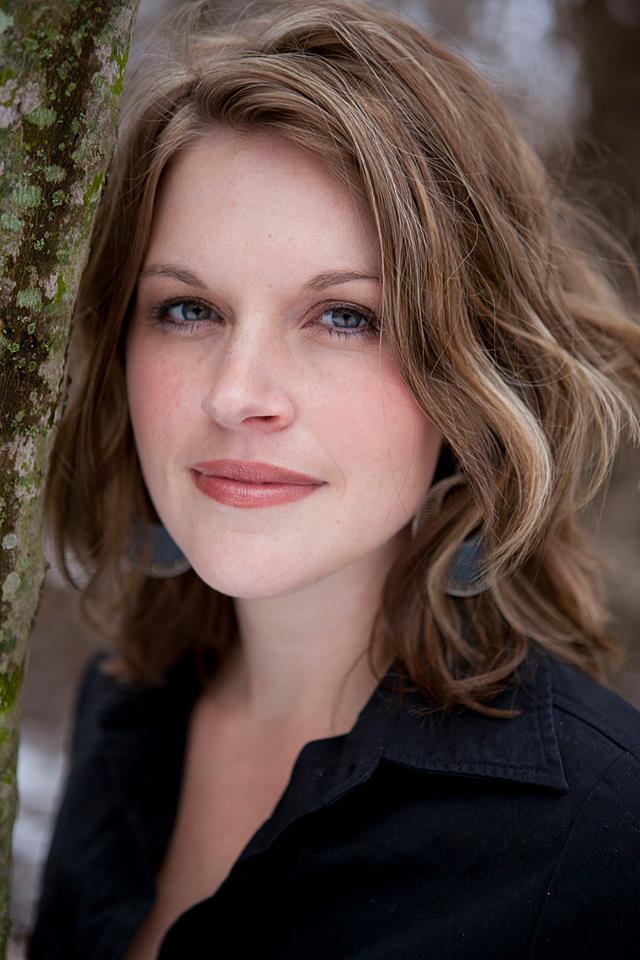
1081979_10200633667577147_1051736652_nKatie Savage was born into the Protestant Evangelical Christian tradition and has been writing about it ever since. (Although she will refuse to show you any of her prayer journals from high school. Those are totally embarrassing.)  Katie has a BA in Creative Writing and English Education from Point Loma Nazarene University.

After college, Katie spent time teaching high school and junior high English and earning her MFA from the University of Kansas. She and Scott now live in Kansas City, with their two children, Miles and Genevieve. They are members of Redemption Church, where Scott is the associate pastor. Grace in the Maybe: Instructions on Not Knowing Everything about God is her first book.

What’s Katie Savage’s Genre?

Personal essays about faith, with a style somewhere between Anne Lamott and Ann Voskamp

What’s on Katie’s Heart?

“It seems to me that somewhere in the recent future, many Christians have begun to feel pressured to know all of the answers when it comes to God. I remember seeing a T-shirt in a Christian bookstore that said, “God said it. I believe it. That settles it.” When I was a girl, that sounded great! But as I’ve matured in my faith, I’ve come to realize that there is a great deal of mystery and unknowing when we talk about God. This is not a lack of faith—the acknowledgment that we don’t know all the answers about how God operates—in fact, I think the realization has deepened my faith and has helped me to understand, in the depths, that God is so much bigger and more holy than we have the capacity to gauge. Grace in the Maybe is all about how we can find glimpses of God’s nature in the everyday movements of our lives, in each spiritual season of faith, regardless of whether this gives us answers to anything.”

What is Katie Savage’s book about?

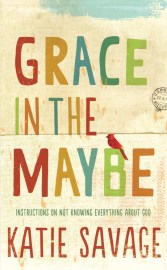
Grace in the Maybe: Instructions on Not Knowing Everything about God

Grace in the Maybe CROPPED

Excerpt from the book: “There was a time when I knew everything about God. I was young (you’re not surprised) and relatively arrogant (now you’re really not surprised). My team always won when we played Bible trivia games in my church youth group. I knew the stories of Jonah and Daniel and Saul like they were my own family stories; I could quote the most popular Bible verses; I memorized the order of the biblical books and could spell all their names. Somewhere along the way, I lost all that knowledge about God—or at least I began to realize how much there was to learn. Each day I was a Christian seemed to be a step backward in understanding my faith. I started acknowledging the questions in my heart, began discussing those questions with friends and fellow saints, as those in the church are called, however undeserving the label may sometimes seem. And I discovered, after whining about how difficult all of this Christian stuff was, that the mystery of not knowing was also absolutely, undeniably wonderful.”

What Others Are Saying:

“Katie Savage is smart, funny, and a little bit sassy. She writes with a feminine voice… vibrant, earthy, and honest enough to appeal to both genders. When I read her work I find myself hoping that if I don’t take myself too seriously, maybe even I can see God. ” 
(Tim Suttle, pastor, author of Public Jesus)
 
“Although I myself am not religious, I found this wonderful collection to be thought provoking and often hilarious—Katie writes with humility, warmth, and complete candor. She knows how to tell a story, and I have no doubt that her smart observations and searching honesty will soon make her the favorite writer of many readers.” 
(Laura Moriarty, author of The Chaperone)
 

To reach Katie Savage, buy her books, or schedule a book-signing event:

What Real Authors Use For Tools

[found on flavorwire.com; by Alison Nastasi]

“It’s no secret that writers can be quite particular about their writing tools. Some might call it an obsession or fetish, but the pens, pencils, notebooks, and other implements that authors have used to create their most famous works endlessly fascinates us. After reading an ode to the beloved Eberhard Faber Blackwing 602 pencil, adored for its smooth, firm graphite, we had to find out more about the tools of the literary elite. Take notes, and save your pennies to purchase these writing instruments for yourself.”

To see these incredible writing tools listed from Flavorwire, click HERE.

[found on http://flavorwire.com/410384/the-writing-tools-of-20-famous-authors]

Curious Forge

“Our job as writers is to be as curious as a child, to see things for the first time, and to never assume. We must always be willing to surrender our idea of the story to allow the larger story to emerge. We are seeking to understand the nature of things, the underlying forces at work.” 

― Alan Watt, The 90-Day Novel: Unlock the story within

Need A Writing Prompt?

[found on dailywritingtips.com; by Simon Kewin]

“Where To Find Writing Prompts Online

The internet is a wonderful source of writing prompts. There are sites dedicated to providing them which a quick search will turn up. Examples include :

There are also numerous blogs that offer a regular writing prompt to inspire you and where you can, if you wish, post what you’ve written. Examples include :

There are also many other sites that can, inadvertently, provide a rich seam of material for writing prompts – for example news sites with their intriguing headlines or pictorial sites such as Flickr.com that give you access to a vast range of photographs that can prompt your writing.

If you’re on Twitter, there are users you can follow to receive a stream of prompts, for example :

Another idea is just to keep an eye on all the tweets being written by people all over the world, some of which can, inadvertently, be used as writing prompts.

How To Make Your Own Writing Prompts

You can find ideas for writing prompts of your own from all sorts of places : snatches of overheard conversation, headlines, signs, words picked from a book and so on. Get used to keeping an eye out for words and phrases that fire your imagination, jot them down and use them as writing prompts to spark your creativity. You never know where they might take you.”

For more great information on writing from DailyWritingTips, click HERE.

[found on http://www.dailywritingtips.com/writing-prompts-101]

Schedule…or Never Make It

[found on authormedia.com]

“How to Make a Writing Schedule That Works For You

Pull out one of those giant calendars from Office Depot (or use a Google Calendar to sync with your smartphone). Start putting your deadlines in red on the calendar and then place the calendar somewhere next to your writing zone. Consider these deadlines sacred; the world will stop if you don’t make them.

If you don’t have a deadline, get one. Writers wither without deadlines….

Once all the deadlines are on the calendar page, see if there are any recurring themes within the articles. If there are, consider making that your theme for the month. This will not work in every scenario, but if a theme appears, take advantage of it. Think of it as the foundation of the platform you are developing that month.

Creating an editorial calendar may take a few hours, but it will save you time in the end.”

For more great tips on writing from AuthorMedia, click HERE.

[found on http://www.authormedia.com/how-to-creat-a-writing-schedule-that-works-for-you]

The Mind-Picture of a Novelist

“By his very profession, a serious fiction writer is a vendor of the sensuous particulars of life, a perceiver and handler of things. His most valuable tools are his sense and his memory; what happens in his mind is primarily pictures.” 

― Wallace Stegner, On Teaching and Writing Fiction

Finish Your Book…Already

[found on josephfinder.com; by Joseph Finder]

“1. Just write it. Fix it later. That means: don’t worry about word choice or grammar. Don’t worry about getting your facts right.

2. You do have time — if you really want to do it. You have a full-time job? A family? Carve out an hour or two early in the morning before the rest of the house gets up, or before you go to work. Or at night, if you’re not too wiped out to write. Try to make this a regular time slot — do it at the same time each day, for the same amount of time. Make it a habit. I know a number of writers who finally started making enough money from their writing to be able to quit their day jobs, only to discover that, as soon as they started writing full time, they suddenly became far less efficient. All that time stretching before them in the day — the two hours of writing per day they used to squeeze in here and there now took them eight hours. There’s something to be said for not having a lot of free time to write. It tends to make you more efficient.

3. Writing is a job. Treat it like one. I don’t work at home; I have an office, and I go there to write. If you don’t have an office, you should set aside a place that is just for you and your writing – the attic, the basement, a corner of the laundry room with a screen around it. If you treat your writing like work, your family and friends should do the same, and be more respectful of that writing time. No one thinks twice about interrupting a hobby, so make it clear that it’s not a hobby; it’s work. It’s your time.

4. Be ruthless in managing your time. This is the biggest problem most writers have. I have a big old hourglass on my desk for use on those days when I’m tempted to check my Facebook page. I upend it and don’t let myself get up until the sands of time have run out.

5. No e-mail! E-mail is truly our modern curse. It interrupts our attention span, fragments our concentration. Sign off. Do not let yourself check your e-mail or go online. Use an hourglass or a kitchen timer (if the ticking doesn’t drive you crazy) for 30 minutes or an hour, during which you may not do anything but write. In order to write you really need to get into the zone, and to get into the zone you need to be distraction-free. I love e-mail — but it’s the enemy!

6. Set interim goals. A full-length novel can be anywhere from 75,000 to 150,000 words, or even longer. If you think about having to write 75,000 words – 200 pages – you’ll freak yourself out. But if you write 1,000 words a day, you can finish the first draft of a novel in less than three months, even if you take some weekend days off.

7. Work toward a deadline. Everyone needs deadlines. Parkinson’s Law says that work expands to fill the time allotted; among my author friends, I know only one who regularly turns in manuscripts before they’re due (she was probably like that in school, too). The rest of us need deadlines. My publisher sets mine, but even before you’re published, you will find that your own life gives you natural deadlines: finish that draft before you leave for your next vacation, before you turn 40, before your next high school reunion.

8. Reward yourself. In The Fine Art of Feedback, I write about the challenges of getting and processing feedback – but while you’re writing, it’s not unusual for your brain to second-guess everything you’re doing. Override this by promising yourself rewards for getting work done. “When I hit 5,000 words, I’m going to the movies,” or even, “When I finish this paragraph, I can have another cup of coffee.” It worked in kindergarten and it works for me now.

Go to it, and good luck. Next time someone hears you’re writing a novel and tells you that they have a great idea for one, you can just smile and nod and think to yourself, Yeah, but I’m actually writing one . . .”

For more excellent information on writing from Joseph Finder, click HERE.

[found on http://www.josephfinder.com/writers/tips/just-write-the-damned-book-already]

It Takes A Writer….

“People talk about books that write themselves, and it’s a lie. Books don’t write themselves. It takes thought and research and backache and notes and more time and more work than you’d believe.” 

― Neil Gaiman, Smoke and Mirrors