
Featured Writing Addict: Ginger Scott

Ginger Scott

GingerHeadshot-March-2013_crop

Ginger Scott is a writer and journalist from Peoria, Arizona. Her debut novel, “Waiting on the Sidelines,” is a coming-of-age love story that explores the real heartbreak we all feel as we become adults throughout our high school years. The story follows two characters, Nolan (a Tomboy with a boy’s name) and Reed (the quarterback she wishes would notice her), as they struggle with peer-pressure, underage drinking, bullying and finding a balance between what your heart wants and what society says you should want—even if you aren’t ready.  The follow-up sequel, “Going Long,” is out now, and available on Amazon, Barnes & Noble, iBooks, Kobo and more.

Scott has been writing and editing for newspapers, magazines, and blogs for more than 15 years. She has told the stories of Olympians, politicians, actors, scientists, cowboys, criminals, and towns. For more on her and her work, visit her website at www.littlemisswrite.com.

When she’s not writing, the odds are high that she’s somewhere near a baseball diamond, either watching her 10-year-old field pop flies like Bryce Harper or cheering on her favorite baseball team, the Arizona Diamondbacks. Scott is married to her college sweetheart, whom she met at ASU (fork ’em, Devils).

What’s Ginger Scott’s Genre?

Romance, New Adult, Young Adult

What’s  Ginger Scott’s Inspiration?

“It’s impossible to settle on just one book or author. I’m inspired by Fitzgerald’s bravery in Gatsby and the raw honesty at the heart of Judy Blume’s coming-of-age story Forever. When it comes to more contemporary authors, I’m inspired by how real Curtis Sittenfeld’s book Prep is—this story doesn’t pull any punches in how it captures adolescence and young emotion, and that’s something I constantly reminded myself of throughout my writing process.”

What are Ginger Scott’s books about?

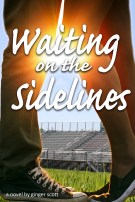
Waiting on the Sidelines
WaitingCover11-13

Nolan Lennox is a girl with a boy’s name, and she’s always been fine with that. Her great expectations for high school collapse on her when she’s teased and tortured by the cruel popular girl, who only makes Nolan’s wounds deeper by dating the quarterback and hometown hero who has stolen Nolan’s heart. Can Nolan strike a compromise between her own integrity and the boy she loves? And can she make him notice her before it’s too late?
 
Waiting on the Sidelines is a story of hope, honesty and those powerful, first true loves—the ones worth holding onto at any cost.
 
Amazon | Barnes & Noble  | Kobo | Smashwords | iBooks |
LittleMissWrite.com | Facebook | Twitter | Goodreads | Email |
[See what Ginger had to say about our editor!]


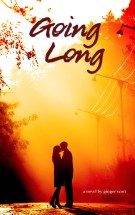
Going Long
GOING LONG COVER FINAL_GE-1
 
“They fell in love in high school and found their way back to one another despite the odds.
 
But can first loves really be forever?
 
For Reed Johnson, the dream was always football. But then Nolan Lennox took over his heart. Is he willing to give up his first love just to keep his true love?
 
Or will he be too late?
 
Amazon | Barnes & Noble  | Kobo | Smashwords | iBooks |
LittleMissWrite.com | Facebook | Twitter | Goodreads | Email |
[See what Ginger had to say about our editor!]


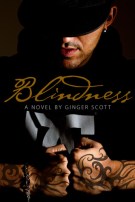
Blindness
20347484

It takes a while to know who you really are. And when you lose your way, sometimes it’s hard to find it again.

Charlie Hudson was on the verge of figuring that out when her dad—the only parent and friend she ever had—died suddenly. She was barely 18, and she was alone. So she went for easy—playing life safe, running away from a home that harbored nothing but bad memories and challenges, and loving a man who would take her away from it all forever.

It’s funny how chance takes over when you need it most. And that’s exactly what brought Cody Carmichael into her life. A former motocross super star, Cody was now happy to be living the blue-collar life, spending his days finishing up school and his nights under the hood of some classic car, just trying to keep everything his father taught him alive. Cody and Charlie were living parallel lives, until they finally collided. And the moment he smiled at her, Charlie knew he was the one who would change everything. But was she willing to take the risk?

Cody saw through it all. He saw her—all of her. But would letting him in be too much to take? And if Charlie let herself love him—really love him—could he love her back?

Amazon | Barnes & Noble  | Kobo | Smashwords | iBooks |
LittleMissWrite.com | Facebook | Twitter | Goodreads | Email |
[See what Ginger had to say about our editor!]


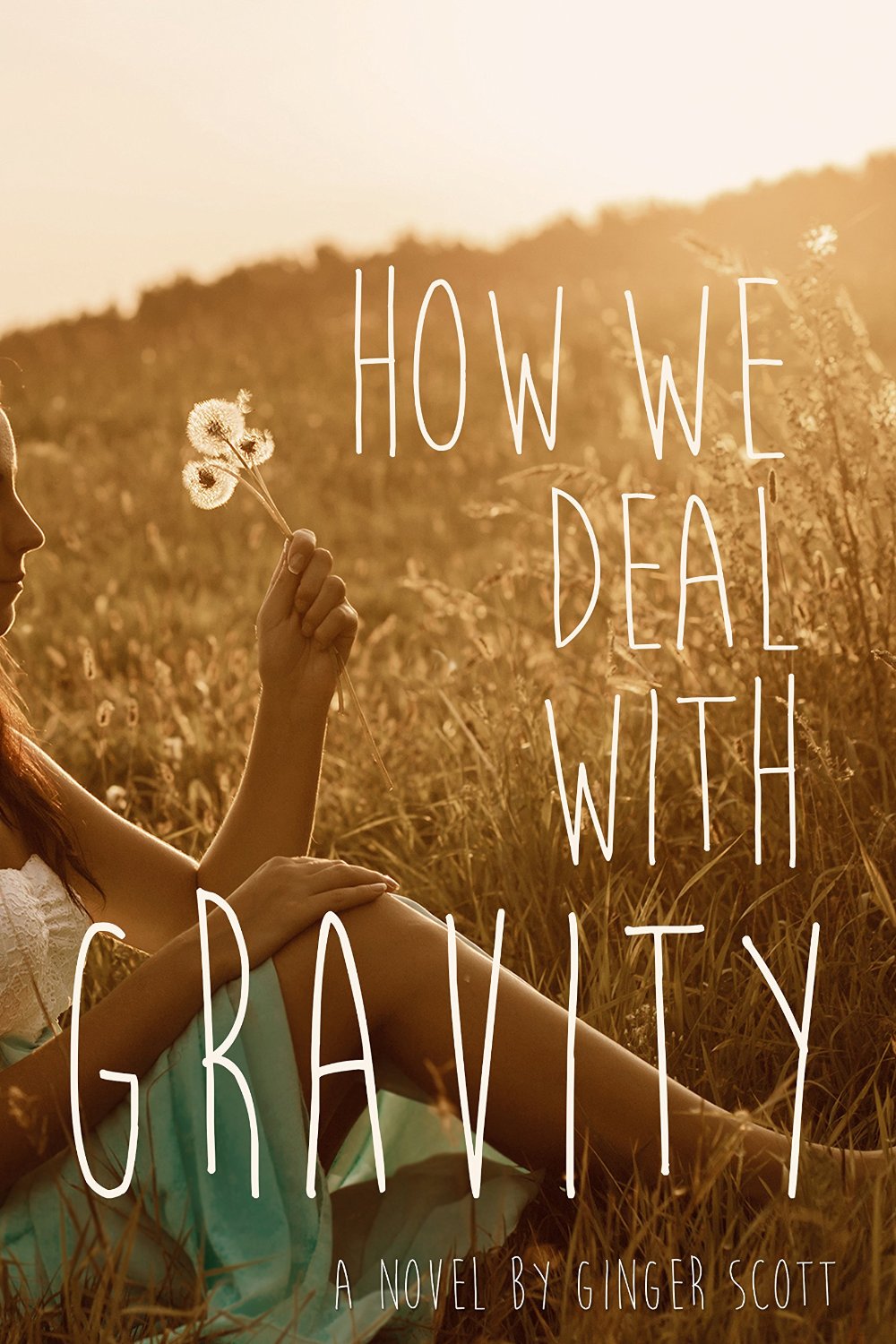
How We Deal With Gravity
918OrX5-oeL._SL1500_

When her son Max was diagnosed with autism, Avery Abbot’s life changed forever. Her husband left, and her own dreams became a distant fantasy—always second to fighting never-ending battles to make sure Max was given opportunity, love, and respect. Finding someone to fight along side her wasn’t even on her list; she’d come to terms with the fact that she could never be her own priority again.

But a familiar face walking into her life in the form of 25-year-old Mason Street had Avery’s heart waging a war within. Mason was a failure. When he left his hometown five years ago, he was never coming back—it was only a matter of time before his records hit the billboard charts. Women, booze, and rock-n-roll—that was it for him. But it seemed fate had a different plan in mind, and with a dropped record contract, little money, and nowhere to go, Mason turned to the only family that ever made him feel home—the Abbots.

Avery loved Mason silently for years—until he broke her heart…completely. But time and life have a funny way of changing people, and sometimes second chances are there for a reason. Could this one save them both?

Amazon | Barnes & Noble  | Kobo | Smashwords | iBooks |
LittleMissWrite.com | Facebook | Twitter | Goodreads | Email |
[See what Ginger had to say about our editor!]


Tell Ginger you heard about her on editingaddict.com!


A Good Editor

“A good editor will not just point out errors; she explains them, providing you with an education to enable you to perform a stronger rewrite. For instance, if your manuscript includes point-of-view violations—a major reason for fiction rejection—she will offer a thorough explanation of the concept and provide easy-to-understand examples. A good editor will encourage you and compliment you on your strengths, but she will not hold back in showing you where you need improvement or are making repeated mistakes. She does not expect you to know all the book publishing rules for copyediting—that’s her job. But she does try to help you understand some basic underlying principles that you might need to learn in order to be a better writer. A good editor knows your book is your “baby” and that you have poured many hours into writing it, but her goal is to help you make that book the best it can be, and sometimes that requires you, the author, to make drastic changes. In other words, a good editor is “on your side” and wants to help, but she is mostly concerned with getting your book in the best shape possible.”

— C. S. Lakin / critiquemymanuscript.com

Writer’s Block Begone

Here are some ideas to fight writer’s block. Tell us if you have any to add!

David Alm on writer’s block:

“Writer’s block is as much a part of being a writer as banging your head against the wall in frustration when publisher’s don’t return your calls. I jest, but seriously — it doesn’t matter how successful you are or what kind of writing you do; if you’re a writer, you’ve been stuck.

Not anymore, if the makers of Write or Die have anything to say about it. The app, now available for $9.99, aims to keep you on task by threatening you with some pretty dire consequences if you stop churning out copy. Set it to “kamikaze” mode, and it will begin deleting words you’ve already written after 45 seconds of no activity.”

—David Alm / Contrary Blog

13 authors views on Writer’s Block from FlavorWire:

    • “Suggestions? Put it aside for a few days, or longer, do other things, try not to think about it. Then sit down and read it (printouts are best I find, but that’s just me) as if you’ve never seen it before. Start at the beginning. Scribble on the manuscript as you go if you see anything you want to change. And often, when you get to the end you’ll be both enthusiastic about it and know what the next few words are. And you do it all one word at a time.” – Neil Gaiman

Click to view the other 12.

Strategies for overcoming writer’s block:

“Taking notes

Jot down ideas and phrases as they occur to you. Free yourself from paragraphs and sentences for the moment–use flow charts, arrows, boxes, outlines, even pictures. Right now, you are worried about getting things down before you forget them.

Freewriting/Brainstorming

When you’re not just blocked, when you’re stonewalled, try freewriting. Sit down for ten minutes and write down everything you can think of about your topic. The object is to write without stopping for the whole ten minutes. If you can’t think of anything to say, write “blah, blah, blah” over and over. If other things occur to you as you write, go ahead and record them, even if they are not directly related to your topic. These distractions may be part of what is keeping you blocked.

Freewriting is good for uncovering ideas–it’s a good way to nudge “inspiration.” But the main purpose of freewriting is to get you moving! Most of what you write in those ten minutes will go in the recycling bin, but you’ll be warmed up and your serious writing should go more smoothly.

Brainstorming resembles freewriting but is more goal-directed. You start not only with a topic, say PROFS, but also with a goal: What do new users need to know about this system? Then allow yourself to jot down ideas for a set amount of time without censoring any possibilities and without striving for perfect prose. When the “storm” has passed, you can rearrange ideas, put thoughts into complete sentences, edit, and polish.

Piecework

Sometimes, starting at the beginning induces Perfect Draft Syndrome. It may be easier to get started if you approach the task sideways. If you’ve got a plan for the article or manual, choose a section from the middle or a point you know well and start there. Then do another section. After you’ve gained some confidence, you can work on the opening and smooth out the transitions.

What I Really Mean Is (WIRMI)

When you’re stuck in a quagmire trying to find the perfect phrase, switch to What I Really Mean Is and just say it the way you think it. Once you know what you mean, it is easier to refine the phrasing.

Satisficing (satisfy + suffice)

You “satisfice” when you take the first reasonable solution instead of searching endlessly for just the right word or sentence. If you’re unhappy with the choice, you can bracket it and promise yourself you’ll fix it later.”

—Writer’s Tips from css.illinois.edu

Query Letter Help

[found on maxbarry.com; by Max Barry]

“The Query Letter

The idea of a query letter is to take this book you’ve written, this incomparable masterpiece that took five years and destroyed your marriage, and summarize it on a single piece of paper while still leaving enough room in the margins for a publisher or agent to scribble, “Sorry, not for us.” You have to try to pitch your book in such an intriguing way that the publisher immediately writes back to you, demanding to see sample chapters (or the entire manuscript). This may sound tough to do, but in truth it’s even harder. Your query needs to stand out from the other 80 the editor is going to read that day, but avoid amateurish gimmicks, like $50 bills.

There are plenty of good web sites on how to write a query letter and approach agents/editors. Some of them are:

One thing you must do is say what sort of book you’ve written. This is what agents/editors will be scanning for when they read your letter: is it a thriller, a comedy, a rural human drama? Most writers, including me, find this very difficult to do, and tend to produce descriptions like, “It’s kind of a futuristic science-fiction comedy-come-romance set in Medieval France with a strong anti-war message.” This is why authors should be banned from describing their own novels.

So I suggest enlisting help: have your friends read your book and ask them what novels they think it’s similar to. Then at least you’ll have a rough genre to start from. Also, for practice, try to describe your book in a single, short sentence. Ask people if it sounds interesting, and rework it until it does.

This is very much personal opinion, but I think a good description often combines something common (“It’s a detective story”) with something original (“where the PI has a terminal illness”). The common part grounds the story, letting us know what ballpark it’s in. The original part shows it’s something special.

Update (May-07): If you’re interested, I’ve posted my old query letter, which I sent out while agent-hunting in 1998. It’s kinda cringe-worthy reading it now, definitely over the top, but since it worked…”

For more great info from MaxBarry, click here.

[found on http://maxbarry.com/writing/help.html]

Write With Passion

[found on fuelyourwriting.com; by Kim Phillips]

“Passion in writing becomes even more important in print or online, where the reader can’t be influenced by your tone, eye contact, or body language.

Michael Stelzner, who writes for the online magazine Social Media Examiner, is flat-out crazy about social media.  It’s not just his business; he’s in love with it, and it shows.  Contrast the corporate blog of Michael Hyatt, CEO of Thomas Nelson Publishers, with that of Bill Marriott of the eponymous hotel chain and decide who loves his job more.

Some tips for writing with passion…

Write about something you understand. It’s not likely you’re going to have strong feelings about something you’re not familiar with.

Know who you’re writing for. This should always be the case, but it will be helpful if you know what you have in common with the reader.  If you’re a 55-year-old man writing for mommies about toys, you’re going to have to think about what experiences you share.

Don’t load up your writing with facts and stats. Unless you’re writing a blog for engineers, most people would rather know the meaning of the data and how it can help them.  If you’re writing about homelessness, describe one homeless family’s experience and leave out the chart.

Find your indignation. There’s nothing like a little righteous anger to get the juices flowing.

Tell a story. Relate not only what happened, but how you felt about it.  Be vulnerable:  people will consider it brave, and they will come with you.

Admit that you don’t have a clue. That happens so rarely that the reader will be intrigued.

Be yourself. You have a unique point of view and a voice that is not exactly like anyone else; that’s interesting.  Are you edgy?  Self-deprecating?  Thoughtful?  Irreverently funny?  The local curmudgeon?  Then be that.

If you want to engage people, get them on your side.  If you don’t care, why should they?”

For more tips on writing from FuelYourWriting, click here.

[found on http://www.fuelyourwriting.com/writers-embrace-your-passion]

One Word. Find it.

“Whatever one wishes to say, there is one noun only by which to express it, one verb only to give it life, one adjective only which will describe it.  One must search until one has discovered them, this noun, this verb, this adjective, and never rest content with approximations, never resort to trickery, however happy, or to vulgarisms, in order to dodge the difficulty.”

—Gene Fowler