How to Organize and Develop Your Writing Ideas

 Guest Blog by J. D. Scott


You may have had ideas come to you in a flood, or you may labor over them until they’re fully delivered, but they all have one thing in common: they need to be developed into literature. So let’s go over some techniques to help you make the transition from a great idea into a great piece of writing!

ORGANIZING YOUR IDEAS:

  • Do you have a lot of creative ideas for writing?
  • Have you thought of more than you have time to develop?
  • So what do you do with them all?

~ Write them down: An outline or a paragraph for the more complicated ideas, or a sentence describing the simpler ones, will help you retain your thoughts later.

~ Keep them organized: Index cards, filing cabinet, files on your computer, a binder. If you have multiple categories, you may want to divide them by color-coding the subject files.

~ Choose a subject: Now you have to pick! Consider the big ideas first. You may be able to combine a few into one story, but too many will confuse your reader. More is not always better! Consider your target audience, and focus in on that one idea. I would not recommend starting several writing projects at once. You could bounce from story to story, never finishing anything—or worse, get discouraged and give up all together.

DEVELOPING YOUR IDEA:

Now that you have your idea, it’s time to get writing! But how can this small seed develop into a thriving story? Here are some ideas…

Find a Writers Group: In person, or online.

Talk it out: One of the best ways I’ve found to develop a story is to talk it over, then talk it over again, and then some more! Have lunch with a friend or spouse, and share your ideas with them. Call another writer; you could be a sounding board for each other’s work. Using a tape or digital recorder can also be helpful. The idea is that sometimes listening to your thoughts out loud can be enough to get you moving forward in your plot.

Try Visualization: Play your story out in your mind like a movie. This is a powerful and creative processing tool. Picture your characters—what they look like, the environment they’re in, and what your senses are hearing, seeing, touching, smelling, and tasting. If you can picture it, it will be much easier to write. Photographs that represent settings or characters that you’re working on can also inspire you.

Sketch or Doodle: Even if you don’t consider yourself an artist, this can be very helpful. You could draw anything from a character, a setting, such as a castle or house, or even an aerial view of the land your work is set in. They don’t have to be worthy of publication; they’re simply to help you “see” your story better.

Charts and Graphs: This could come in many forms, from: a family tree showing genealogy, a timeline with a sequence of events, a chart with the climactic moments of your story, or a graph of your characters’s personality traits. The point is, it has to make sense to you and help your writing to move forward.

Storyboarding: This is simply using still pictures (photographs or drawings) to tell a story. Screenwriters and cartoonists commonly storyboard, however, it can be a very effective tool to lay out the storyline of a book. This could also be done in small sections on a dry-erase board. You don’t have to be great at sketching; you are simply creating images that are significant to you, or using words or word groups to keep track of where you are in your story. Including character descriptions, geology, dialog, or location can also be helpful.

Puzzle-making: This method consists of writing down storylines on strips of paper so that you can shuffle events around until you’re happy with the sequence. It can also be used to arrange a family tree, show relationships between characters, or just to keep track of your ideas. This can be time-consuming, however, it’s a great way to show the flexibility in your plot.

In writing, the hardest obstacle to overcome by far—is SITTING DOWN AND DOING IT! Our lives are busy, and we have many demands on our time, but if you are able to carve out a time each day—or even a couple times through the week—you will be pleasantly surprised with the outcome. I hope these ideas have been helpful to you, and have sparked your creativity.


Meet our Guest Blogger, J. D. Scott:
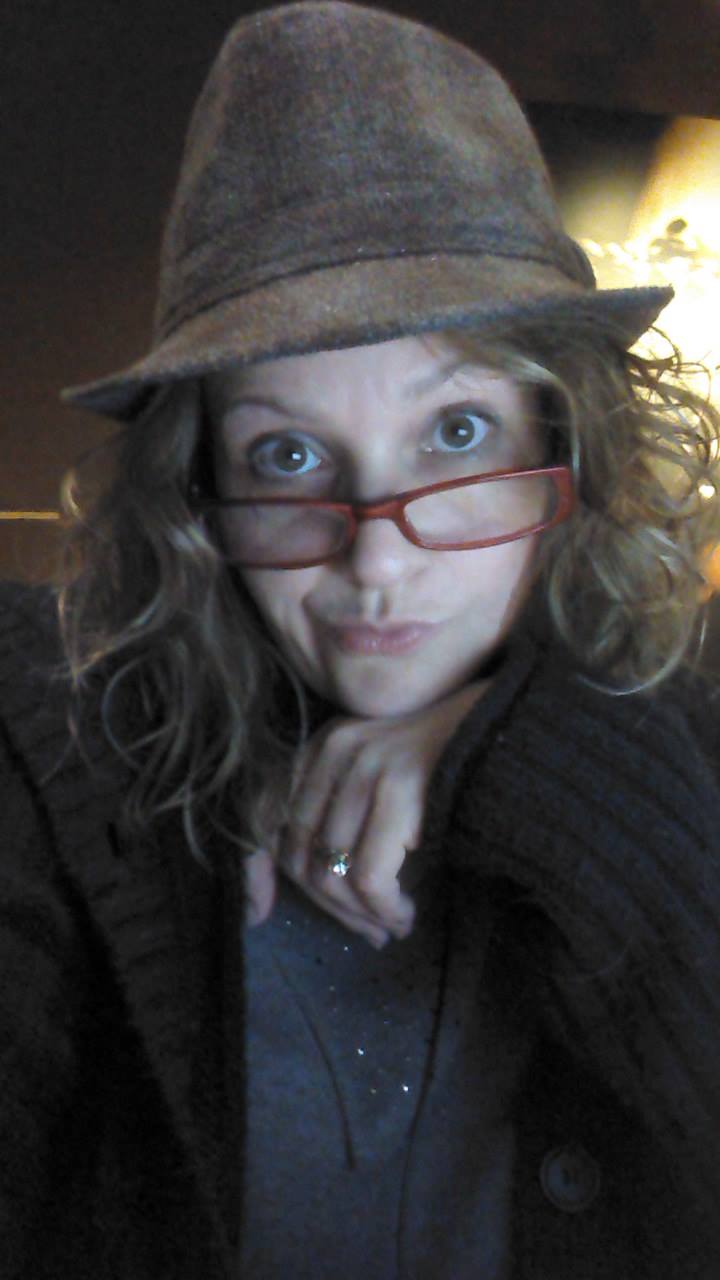
 

1398565_625686540810471_203956950_oJ. D. Scott is the organizing member of Abba’s Writers in Phoenix, Arizona. She leads, instructs, and teaches critiquing and story development to its members.

In 2013, J. D. Scott became part of the team at A Book’s Mind as a Publishing Consultant. She enjoys working alongside writers, helping them fulfill their dreams of becoming published authors.

Before being bit by the writing bug, J. D. Scott spent 20 years working with children as a nanny, mentor, camp counselor, and youth-group leader. With a heart for today’s youth, she set out to write books that both entertain and inspire them to rise above the current culture and see their true value.

She continues to live out her life’s passions of writing, publishing, and counseling/mentoring women and children.

Amazon | Barnes & Noble  | JDScottNovels | Blog | 
 | Facebook | Twitter | Goodreads | Email |


[See what J. D. Scott had to say about our editor!]


How to Sell Your Books

[found on lloydlofthouse.org; by Lloyd Lofthouse]


“How I sold almost 2,000 books in twenty hours…

If you are a serious author—indie or traditional—then you’re in business and should have an internet platform. The simplest platform might just be a blog, or it could be more complex with a combination of a website, blog, Facebook page, Twitter account, and an Amazon author page, etc.

Once an author has an internet platform, there’s one more step to seriously consider—to advertise. Although I have been a guest on thirty-one, traditional radio talk shows, advertised in a regional magazine, held several author events in brick and mortar bookstores, earned awards from literary contests and been on several book blog tours, the only two marketing methods that resulted in immediate, measurable sales was through blogging on iLookChina and buying e-mail blasts from BookBub and/or Ereader News Today.”

To read the rest of Lloyd Lofthouse‘s article, and to add his blog to your toolbox, and bookmark the link, click HERE.

[found on http://lloydlofthouse.org/2014/06/19/how-i-sold-almost-2000-books-in-twenty-hours/]


Strategy for Writer’s Block

[found on entrepreneur.com; by Catherine Clifford]


“In many cases, the more important the writing task, the more the would-be writer freezes up. The result can be something of a Mobius strip of anxiety turned into fear turned into more anxiety, and what you’re left with is a blank page.

To help you work through writer’s block, consider the strategies below…

Don’t wait for perfect words. If every sentence has to be a flawless work of art, then you will sit in fear. The sweat might pour, but the words won’t come. Just start writing words on the page. Know that once you have started, you can go back and revise what you have. But until you start, you will never know where you are trying to go. If you are writing on a tight deadline, it is even more critical that you let go of the notion of immediate perfection. One writer friend of mine offered the analogy that writing is like cleaning a messy room: the only way a large mess gets cleaned up is to start tidying one small corner at a time.”

To see the rest of the writing strategies from Catherine Clifford, and to bookmark her articles for your toolbox, click HERE.


[found on http://www.entrepreneur.com/article/233264]


Don’t Fear Your Editor

[by Billi Joy Carson, Senior Editor/ Editing Addict]


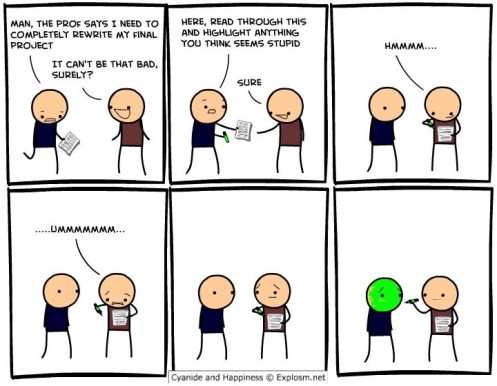
Often, editors are presumed to do this to writers:


unnamed


Editors are members of your team—like coaches—wanting YOU (the author) to succeed. They are paid to find mistakes, errors, and faults, in order to make you a stronger and more successful author. They are not paid to pat you on the back, tell you how amazing you are, and do a little flattering dance to your glory—that is part of the marketing team’s job [haha!]. Your editor is not your friend—they aren’t there to encourage you by cheering your good points. They are there to point out the ugly and sloppy aspects that need help, that need polishing and fixing.

Don’t fear your editor. The editors are here for the authors. They aren’t going to highlight your face green (as the comic above suggests), but they are going to help you see the errors and weaknesses in your writing. Then (hopefully), you learn and grow, and become a stronger writer—which leads to an amazing author. A good editor can be a great teacher; make sure you treat their insights and time as valuable, because it is priceless.

Your editor will pick apart your work, but it doesn’t mean you are a bad author. It means your editor wants you to be better. Coach Lou Holtz, the winningest (yes, that is a word) college football coach, is known for tearing into his BEST players. He would pick them apart mercilessly. Why? Because he saw untapped potential. He wanted his players to improve beyond where they were. Even when they were good, he knew they could be great. A great football player is remembered, and people come to see them. A good football player is cheered for the one game, but no one comes back. Your editor wants your readers to come back.

Always pay your editor for their work. A great editor slowly reads through your book, flushing out the mistakes, making notes for the author, fixing the punctuation and grammar, checking with the author on flow and logic issues, researching quotes for accuracy, making sure your book aligns with the standard for publishing (per the Style Guides)….

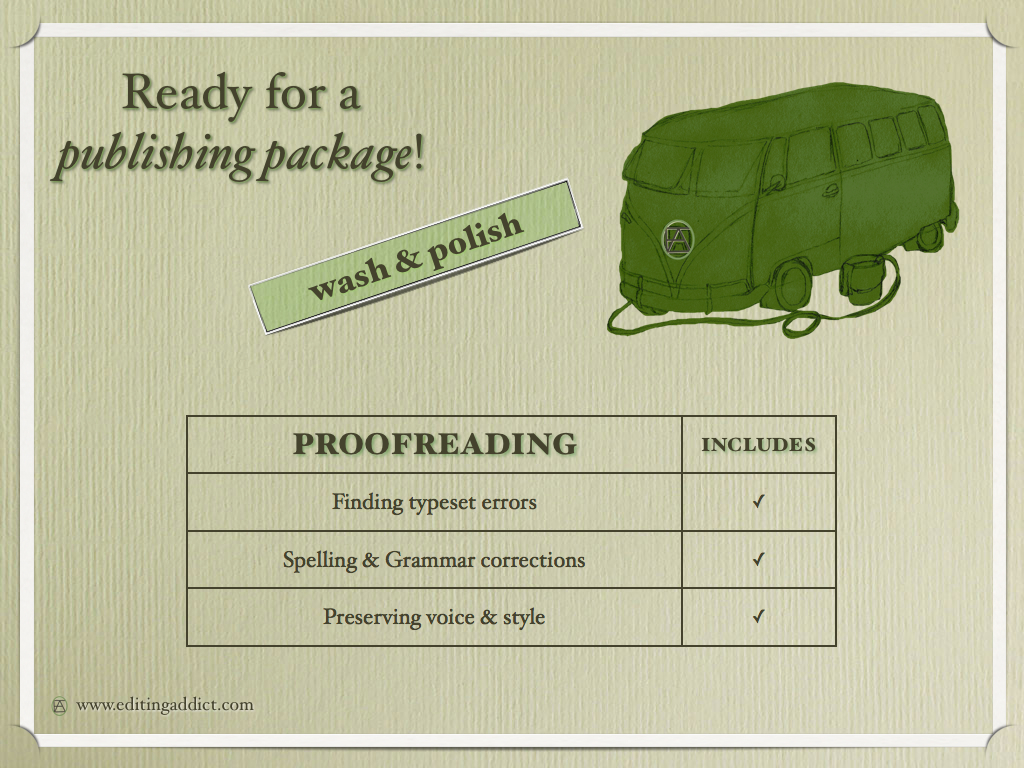
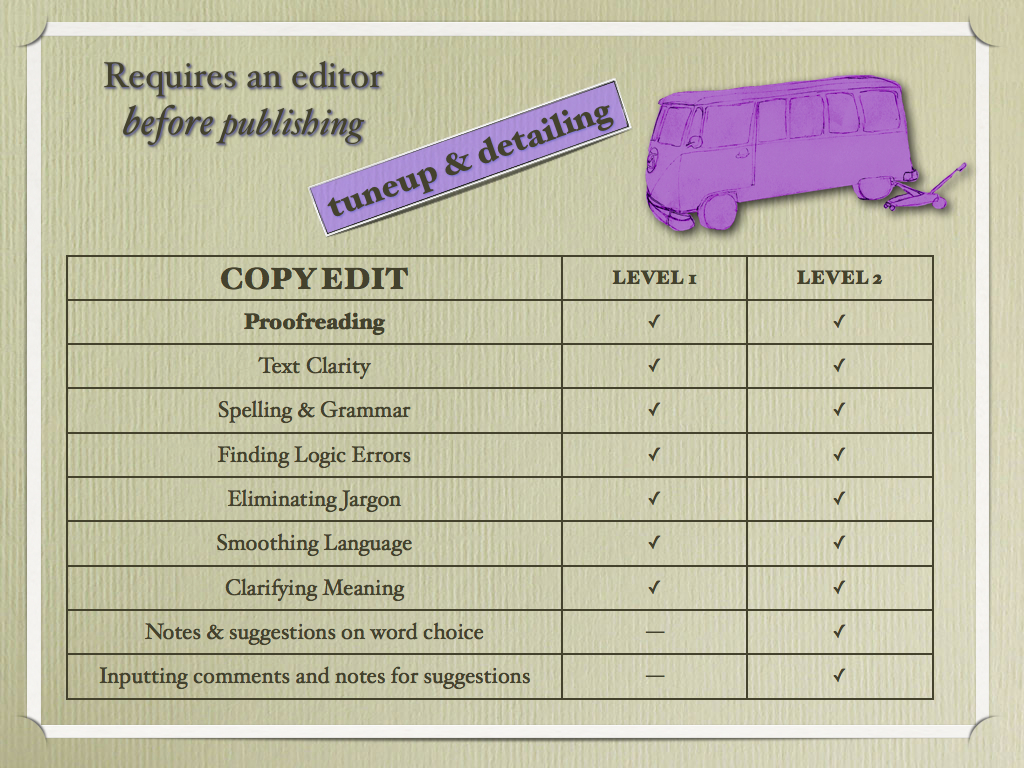
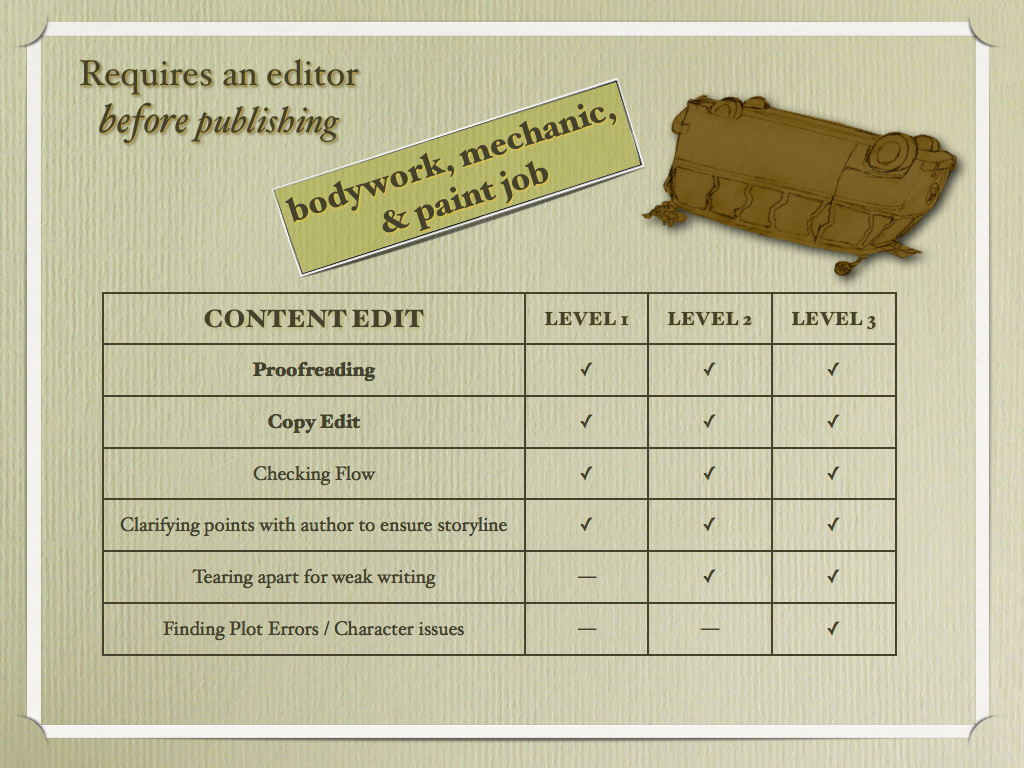
How much your editor will do for your book, is dependent on which level of editing you have paid them for—just like taking care of your vehicle. If you take your car to a car wash, but you really wanted them to replace your muffler, you are going to be surprised. More than likely, they will leave a note on your receipt that you have a muffler dragging behind your car—but they will not have done anything for it, except wash and polish it. Know what you need (which editing package) and then be willing to pay for what you need. It will be worth it.


EditingAddict Slides.004 PROOFREADING


EditingAddict Slides.006


EditingAddict Slides.008


If you need a quote on your editing project, contact our senior editor, Billi Joy Carson.

[by Billi Joy Carson, Senior Editor / Editing Addict; artwork by Keely Mitchell]


14.08.03-BJC-sm


Questions for our editor, Billi Joy Carson, to answer next time:

← Back

Thank you for your response. ✨

Simple [decluttered] Writing

William Zinsser on the need for simplicity in writing:


“Clutter is the disease of American writing. We are a society strangling in unnecessary words, circular constructions, pompous frills and meaningless jargon.

Who can understand the clotted language of everyday American commerce: the memo, the corporation report, the business letter, the notice from the bank explaining its latest “simplified” statement? What member of an insurance or medical plan can decipher the brochure explaining his costs and benefits? What father or mother can put together a child’s toy from the instructions on the box? Our national tendency is to inflate and thereby sound important. The airline pilot who announces that he is presently anticipating experiencing considerable precipitation wouldn’t think of saying it may rain. The sentence is too simple—there must be something wrong with it.

But the secret of good writing is to strip every sentence to its cleanest components. Every word that serves no function, every long word that could be a short word, every adverb that carries the same meaning that’s already in the verb, every passive construction that leaves the reader unsure of who is doing what—these are the thousand and one adulterants that weaken the strength of a sentence….”


William Zinsser’s book, On Writing Well, is an excellent resource for writers of all kinds. You can find it here.

Market the Author

[by Billi Joy Carson, Senior Editor/ Editing Addict]

Editor Tip: Market the Author

If you are an author, a blogger, or a copywriter…then correct spelling, punctuation, word use, and grammar is a necessity in all areas of your writing…books, blogs, marketing, advertisements, social media, queries, submissions, letters, and emails.

Why…?

I can hear the horrified gasps, feel the eyes rolling—doubt and fear from writers everywhere. Panic in the streets.

Before you throw your hands up, and stop reading, let’s look at the WHY behind this necessity.


You are always marketing YOU.


Your books come and go, but you, the author, remain constant. You are the first line of defense when it comes to marketing yourself—which you are doing every day, every time you write…anything.

You are marketing not only to readers, but to publishers, agents, editors, and your fellow authors who would network with you. You are marketing your writing ability—yes—but you are ALSO marketing your organization capabilities, your attention to details, your desire for accuracy….

What if you don’t care about details and accuracy? Publishers do.

Publishers, editors, and agents notice. In this world of instant access, through social media and blogs, your everyday comments and posts are seen.


If an author can’t be trusted to use the right word in 140 characters, why would they trust the author with a 300-page book?


Agents, editors, and publishers (oh my!) have deadlines. Organization is a big part of that. Make it appear you are organized—even if you have to fake it.

Here are some excellent tools to keep close to you, always. I suggest bookmarking them, as well as storing them on your smart phones and tablets—wherever you write, post, and email.

OneLook.com

  • Dictionary compilation of over 1000 dictionaries
  • Correct spelling not needed
    • It offers options for word spelling
    • Shows several dictionaries, with links.
  • Breaks search answers into four categories
    • General
    • Business (language)
    • Computing (language)
    • Slang*
      • *Words that haven’t made it into traditional dictionaries will show up here.
      • *Caution: When writing items for publishing (versus informal social media, emails…), only use a Chicago Manual of Style approved dictionary, like Merriam-Webster.

Other dictionaries:

Thesaurus:

Grammar:

  • Grammarly.com (not CMS approved, but still a great tool)
    • Copy/paste text in box—it shows grammar errors and weaknesses
  • Guide to Grammar & Writing
    • Quick lookup for parts of speech, word use, and grammar rules

Style Guides:


Questions for the editor to answer next time:

← Back

Thank you for your response. ✨

[by Billi Joy Carson, Senior Editor / Editing Addict


Bound by Fear

 Guest Blog by H. Squires


I am a writer, an author, and storyteller. It took me a long time before I could utter those words either on paper or in conversation. I was bound by fear—afraid of being judged, ridiculed, laughed at, or simply disregarded. My voice climbed only as high as the paper stacked.

From the time I was a child, I enjoyed writing. Rarely, did I share my work with others—or even let people know my love of words. I only allowed family members to read my stories.

After I wrote my first novel, I fantasized about being published—which actor(s) could star in the movie, and the potential revenue it could generate—but I didn’t spend too much time in “La-la-land”. Instead, I got busy writing the second novel, and by the third, I felt my work should be published. I was ready to share it with the world. However, I wasn’t sure if it was good enough to move forward.

I knew my husband and daughters enjoyed the stories, but I felt their opinions were biased. After all, they were my family. I needed others to give me their honest opinions. I had many unanswered questions pertaining to grammar, continuity, and the lack of clarity when it came to editing. Even though I considered myself [somewhat] good at grammar, I wasn’t sure if I remembered everything from school. Does the story make sense, flow right, and keep the reader engaged? You can do only so much research from the privacy of your home. I needed help—actual, human, face-to-face support.

One of the first things I did was join a writing group. It was an all-women’s group, so the tension seemed less nerve-racking. The group meets three times a month—one of which is a teaching class on grammar and other helpful tips. The second meeting, we are instructed to read our latest work out loud to the others. This was the most difficult thing I’ve had to do in a long while. Reading to a bunch of strangers—a story that I concocted—sent me into a shaking-fit, so much so that I decided to hand my pages to another lady to read for me. I was astonished by all the positive feedback, something I hadn’t expected. They helped, reassured, and gave me honest advice. It propelled me farther.

Last year, I accomplished my goal. My third novel was published, and, for the first time, people were reading my work. It made me realize that others struggle with the very same issues as I did—not willing to share their stories. Some people are satisfied letting close friends and family read their work. For example, Emily Dickinson—a world-renowned poet—wasn’t discovered until after her death. Her younger sister found a lifetime of collective poems in Emily’s attic. Later, she sought the publication for her sister’s work. Imagine how different Emily’s life could have been if she had become published?

If you are a writer and have written poetry, short stories, or novels that serve as dust-bunny habitats, it’s time to consider sharing beyond family. Trust me, I know how hard it is, like bearing your soul to the world. Research local writing groups or go to online writer’s forums. You will get a lot of advice, constructiveness, and learn a lot. Who knows, you could be considered as the next Hemingway, Rowling, or Dickens?

Take care, my friends.

How to Find a Writer’s Group
Online Writer’s Community


Meet our Guest Blogger, H. Squires:


image

Heather Squires’ life calling to be an author began in 1989 in Phoenix, Arizona. As an editorial writer on staff at the Utopian Newspaper, she decided to seek further review and publishing. The first project to be completed outside of the journaling world was To Desecrate Man, an action novel; completed in 2005, it became over shadowed by the second project: Rogue, a young adult fiction-adventure novel.

Upon completion of Rogue in 2009, Squires’ place in the young adult fiction world became clear. The Sphere of Archimedes began to take shape, and was finished in 2011. Currently working on the sequel, The Omphalos of Delphi, she continues to create anticipation for the future of young adult fiction.

Amazon | Barnes & Noble  | HSquiresNovels | Blog | 
 | Facebook | Twitter | Goodreads | Email |
[See what H. Squires had to say about our editor!]


Motivation IS Possible

[found on time.com; by Eric Barker]


“You make goals… but then you procrastinate.

You write a to-do list… but then you don’t follow through.

And this happens again and again and again. Seriously, what’s the problem?

Why are we so good at thinking of what to do but so terrible at actually doing those things?

The problem is you’re skipping an essential step. Here’s what it is….

Productivity systems rarely take emotions into account. And feelings are a fundamental and unavoidable part of why humans do what they do.

We can’t ignore our emotions. Because of the way our brains are structured, when thought and feelings compete, feelings almost always win.

And we can’t fight our feelings. Research shows this just makes them stronger….

We need to think to plan but we need to feel to act.

So if you’ve got the thinking part out of the way – how do you rile up those emotions and get things done?


Get Positive
When do we procrastinate the most? When we’re in a bad mood.
 
Get Rewarded
Rewards feel good. Penalties feel bad. And that’s why they both can work well for motivating you.
 
Research shows that rewards are responsible for three-quarters of why you do things.
 
Get Peer Pressure
Surround yourself with people you want to be and it’s far less taxing to do what you should be doing.”


To read the rest of the motivating article from Eric Barker, and add his knowledge to your toolbox, click HERE.


[found on http://time.com/2933971/how-to-motivate-yourself-3-steps-backed-by-science/]


Query the Book, Not the Author

[by Billi Joy Carson, Senior Editor/ Editing Addict]

Editor Tip: Query Dos & Don’ts

Many inexperienced authors (and a few experienced) make fatal errors with their query letters. The letters are not fan mail, and aren’t notes to a friend. A query letter is a business letter. Though all query letters are not created equal, they are all formal, professional, and to the point. The goal of a query letter is to set yourself apart from the rest, and make your product the next big thing that the agent, editor, or publisher wants.

Definition of a query letter: a formal letter written by an author, proposing writing concepts; it is sent to magazine editors, literary agents, and publishing houses or companies.

What should you include in your query letter?

A business letter is very formal, and can take a few shapes—while remaining a constant format. Purdue Owl shows the anatomy of a business letter, with great advice on the structure and format.

Once you have the format down, proceed with building your query letter. Here is the basic composition of a query letter:

Address
Date (format: August 7, 2014)
The agent or editor’s name, title, company, and address
 
Greeting: “Dear Ms./Mr. Surname:
 
Introduction: Keep this within two-three sentences about why you are writing to them (agent, editor, publisher).
 
Pitch A: Keep this within two paragraphs (or several tiny paragraphs) about your BOOK [note: this is not about YOU]. This should be written in the style of a book jacket.
 
Pitch B: Add a little more information regarding your book—it should be beyond your book jacket’s plot and characters. If there is a surprising mystery as a secondary storyline, mention it here. Also, if you have a series, this is the place to mention the upcoming books, and how they link together. Keep it precise, short, and within one paragraph if at all possible.
 
Bio: Now is the time to talk about YOU. Keep it as brief as possible—no more than three short sentences. The less, the better. Remember, in their eyes, it doesn’t matter if you have worked with flowers all your life, unless the book is on botany. And even then, they really don’t care. The focus of the query letter should be the BOOK, and not the author.
 
Conclusion: This should include short “thank you for your time” notes, and any information the agent/editor/publisher would need to know. Tell them here whether this is a simultaneous submission, or not.
 
Sign-off: Sincerely, Your Name
 
Enclosures: List all the items you are including in your submission along with the query letter.

What are the most popular mistakes on query letters?

  • Mentioning self-published books as previously published works
    • It is a great accomplishment to have a self-published book, but it harms you to mention it in the query letter (unless you have had success as great as Fifty Shades of Grey).
    • If you have a series, then you need to query the first book, with notes to all the future books in the series (place that info in Pitch B’s paragraph).
  • Talking about the author instead of the book
    • The point of the query letter is to sell your BOOK; too many authors try to sell themselves instead.
      • A maintenance man can write a children’s book, therefore it is irrelevant to the agent/editor/publisher where he has worked for the last thirty-five years.
      • If he is writing a how-to manual on janitorial services, then this information would be beneficial in the Bio paragraph. If not, then leave it out.
  • Getting too informal with the writing, like you’re writing a friend
    • This is a business letter. Your writing should reflect a business mindset. Avoid slang, texting talk, conversational words, or anything else informal.
  • Underselling the author as a newbie (even if they are)
    • Don’t tell the agent/editor/publisher that you are a new author, or that you’re just starting out.
      • They don’t need to know that.
      • If you tell them you are “an aspiring author,” you have taken ALL the focus off the book, and placed it squarely on your inexperience. Keep the focus on the BOOK.
  • Begging for your book to be read, because you know it is worth it
    • The goal of the query letter is to make your book DESIRABLE.
      • You want the agent/editor/publisher wanting to read it—not coerced by force, or guilted into reading it (because guaranteed, that won’t work).
    • Don’t ask the agent/editor/publisher to “just give it a chance” or “if you only read it…”
      • This will diminish the effectiveness of your query letter.
      • If you have to beg for the book, instead of letting it stand on its own, then you are not confident in it.
      • If you are not confident in your book, why should they be?
    • Imagine that your query letter is a commercial for a car
      • The commercials don’t focus on the car manufacturer, they focus on the luxurious car—the feel, beauty, details, handling,  shine…
      • People are filled with desire for the car, and want to find out more about the CAR, but they don’t care about the manufacturer.
      • Your book is that car. You are the manufacturer. Advertise your BOOK; let it stand on its own.
  • Sending a query letter to an agent/editor/publisher without researching what they accept
    • Every agent/editor/publisher has different rules for their query letters as well as their submission requirements.
      • Some require a summary of all your chapters
      • Some require a summary of the whole book
      • Some don’t ever want to see a summary
    • They will have clear guidelines listed on their websites. It takes research, time, effort, and discipline. No two are the same.
    • If you submit a query letter that does not have EXACTLY what they have asked for, they will (almost always) automatically reject it.
      • If you can’t follow simple instructions, they know your book is probably a fall-apart mess too. They don’t want to deal with it.
      • Remember, if they set up limitations in genre/audience, it is because they have STRICT limitations on what they can publish.
        • If they have asked for Young Adult Sci-Fi, and you send them a nonfiction book, they have nowhere to publish it. Therefore, guess what? You just got rejected, and you didn’t have to.

Query letters are about the confidence authors have in their masterpieces—their books. Once you have your confidence in the right place, and you have done your research (while avoiding the pitfalls mentioned above) you will have an unstoppable query letter. Rejections happen, but don’t give up. Every rejection is one more no on the way to getting your yes!

[by Billi Joy Carson, Senior Editor / Editing Addict]


14.08.03-BJC-sm


Questions for our editor, Billi Joy Carson, to answer next time:

← Back

Thank you for your response. ✨

Marketing: The Work After THE END

Guest Blog by Ginger Scott

Your manuscript is done. You’ve typed THE END. You’ve self-edited and have had your mom, best friend, sister, cousin, aunt, and the neighbor proof just in case. You’ve hired an editor to make it perfect, and you’ve gone through formatting and various platforms for self-publishing, or have handed everything over to your publisher to take on the remains of the process.

Phew!

All done.

Oh, if only it were that easy. I know I am not sharing anything original in saying that being an author was always my dream. It’s a shared dream—a wonderful dream. But for me, achieving that dream was always just out of arm’s reach. I was stymied by fear—fear of rejection, fear of failure, fear that I would write something deep and personal and nobody would care. And getting over that first hurdle, the rejection one, was enough to keep me stuck in pause for a long time.

But one day I just had a moment. I refer to it as my “Jerry McGuire” moment, where I realized if I didn’t try, just once, to push through those barriers that terrified me, then I would regret it a little more every day until eventually I ran out of days to live with regret. So, I rolled up my sleeves, finished my first manuscript and decided to take a crack at self-publishing. (Confession: this cut out that first layer of rejection, and that’s what drew me to self-publishing initially.)

Writing was the fun part; dare I say, the easy part. Then the marketing began. My debut novel was a coming-of-age romance titled Waiting on the Sidelines, and before I hit publish, I read blog after blog on indie author dos and don’ts. I sent messages to some of my favorite indie authors, many who have gone on to become best sellers. And here is the cool thing—they all wrote me back. Every. Single. One of them. Colleen Hoover. Katja Millay. S.C. Stephens. Abbi Glines. Jamie McGuire. They are enormous names in my genre of YA and NA Romance. And they all took time from their busy lives to give me a boost when I truly needed one. I used their tips, went to many sites they recommended, and when it really counted, took to heart their advice to breathe and stay calm, remembering to enjoy the ride.

Marketing my first novel was a trial by fire. I pushed publish and went with the grassroots method, using my personal Facebook account to recruit word-of-mouth. The next week, I started to reach out to book bloggers. My goal was to write a personal note to a dozen every night. My list has grown to more than six hundred, and I spend time tailoring each email to the needs of each blogger. It’s that extra touch, I feel, that is vital. Book bloggers are the biggest ingredient in an indie author’s marketing plan, and I respect them greatly. So if I need to block out enough time every day to write with them personally, to create guest posts for them, to answer their questions, and to send them copies of my book in a format that works best for them, that’s what I’m going to do. This practice has proven most effective, and my first two novels, Waiting and its sequel, Going Long, have remained in the Amazon top 100 for sports romance books for more than a year. I know I owe the blogging community for this outreach.

My next emphasis was on social media. It’s one thing to be present, to post things and to share your own agenda—AKA pushing your book. But social media is just that—it’s social. You need to engage, having conversations on Twitter, reaching out to other authors and bloggers. Retweet for others, and guess what? Down the road, they will do so for you. We’re all in this together, and we’re stronger working together. The same goes for Facebook, posting and sharing for others, and asking your followers and fans questions so they feel inspired to engage in your posts. The more they interact with you, the more likely they are to come back. And really, as readers—powerful ones who share their opinions—keeping them happy, and coming back for more, should always be a top priority.

I’m on my fifth novel now, and I’ve learned a lot of things along the way. I still adhere to the lessons from above, but I’ve found a few other things that work. I’ve also found some things that don’t—at least, not for me. Advertising is tricky—Goodreads ads for indie authors aren’t very expensive, but the click-through rate is difficult to increase. At least, it has been for me. I invest very little in paid advertising here, because I have found that my own elbow grease and social-media strategy tends to have a bigger reach.

I’ve also incorporated things like YouTube book trailers (it helps that my background is digital marketing, and I’m fairly handy at video editing). Then I add things to the mix, like Spotify playlists to share the music that I listened to while writing, as well as regularly posted graphic teasers and excerpts from the book. I’ve learned that planning these various elements beginning a month out from a book’s release-date helps to build excitement, making your first day of sales far more successful.

Finally, for me, I have found the best paid-resource to be a service called NetGalley. This is a service that allows authors to make their books available to readers of influence. It costs me $399 for a title, and my book is available to reviewers, librarians, educators, and bloggers for six months. They can read the book for free under the honor system that they will leave me a review somewhere. Reviews are like marketing gold. Are there people who will check out your book in NetGalley and never leave a review? Yes. There are flaws in every system. But I would rather have one more reader and the off-chance that they will tell someone, even just one person, about my book, than not try this service at all. So the flaws, I suppose, are worth the pay-off in my eyes.

This is just a quick tour of some of the things that have worked for me. And every recipe for every author is just a little different, and that’s okay. It’s best to keep your mind open, and to try—especially things with little risk and low monetary outlay. Because once something works, it can become a powerful tool that will help power your dream.

If I can ever offer a tip or advice, or be one of those “boost” emails for you, please feel free to drop me a line. Check me out online at www.littlemisswrite.com, and in the meantime, thank you for reading!

Meet our Guest Blogger, Ginger Scott:


25374733b5480ad8986c31.L._V384939383_SX200_

Ginger Scott is a writer and journalist from Peoria, Arizona. She has been writing and editing for newspapers, magazines, and blogs for more than 15 years. She has told the stories of Olympians, politicians, actors, scientists, cowboys, criminals, and towns.

When she’s not writing, the odds are high that she’s somewhere near a baseball diamond, either watching her 10-year-old field pop flies like Bryce Harper, or cheering on her favorite baseball team, the Arizona Diamondbacks. Scott is married to her college sweetheart, whom she met at ASU (fork ‘em, Devils).

Her debut novel, Waiting on the Sidelines, is a coming-of-age love story that explores the real heartbreak we all feel as we become adults throughout our high school years.

She now has five books in YA/NA Romance. Waiting on the Sidelines, Going Long, Blindness, How We Deal With Gravity, This Is Falling (coming soon).

Amazon | Barnes & Noble  | Kobo | Smashwords | iBooks |
LittleMissWrite.com | Facebook | Twitter | Goodreads | Email |
[See what Ginger had to say about our editor!]