Children’s Books—Authors Speak

[found on parents.com; by Jaclyn A. Zinn]

“If you ask a hundred different authors how they got published, you’ll get a hundred different stories,” says Pam Mu?oz Ryan, author of Mice and Beans, one of Child’s 50 Best Books of 2001. But aspiring writers — and fans — can learn and be inspired by the tales of those who’ve flourished in the field….

“The hardest thing to learn is how to communicate with your audience,” says Hoeye. “You can’t lose your voice. You must have a distinct sense of who you are and who you’re trying to talk to.” One way he honed his skills was by writing letters. “My first book, Time Stops for No Mouse, started as a series of letters to my wife who was traveling in Africa,” says Hoeye. “I didn’t know I was writing a book. It was just a way of entertaining her, but it kept growing and growing. To write a book straight through can be bewildering and intimidating.”

“Ideas come to me from everywhere-my own life, sometimes folktales,” says dePaola. “Strega Nonacame to me out of the blue, but I often get ideas from kids. The Quicksand Book is a good example of that. Children will come up to me and say, `Why don’t you write a story about….'”

“Rejection can be devastating,” says Janet Stevens, author of And the Dish Ran Away with the Spoon, a Child Best Book of 2001. “You can get your heart broken. The main thing to realize is that there are so many different editors with different tastes. You have to remove yourself from it emotionally and just keep trying. You don’t have to be the best author and win all the awards; you just have to appeal to kids — that’s what’s most important.”

To read more from the authors of children’s books on parents.com, click here.

[found on http://www.parents.com/fun/entertainment/books/secrets-of-successful-childrens-book-authors/]

A Writer’s Time Management

[found on wrwdc.com; By Joan Whetzel]

“Many writers find time management at least a minor issue, while for others it may be a major issue, especially those who can never seem to find the time to write. The following tips may not completely get rid of all writing time management issues, but hopefully they will reduce the time management problems to a minimum.

1. Track Your Time. If you find you simply have no idea where the time went on a consistent basis, then it’s time to start tracking your time. Take a week or two to record how you spend your time from the time you get up in the morning until you go to bed. Use a spiral notebook, split into columns: left hand column for the start and end time, middle column for a brief description of each activity, and the right hand column for the amount of time to complete that activity. Record the day and date at the top of each page. Then go through the journal to determine where you can shave time off activities (or remove them from your routine) in order to create more time for writing.

2. Set Goals. Goals give writers something to aim for. It could be a minimum word or paragraph count per day, a minimum word or page count per week, or a minimum article count per month. Meeting your goals will keep your writing progress moving forward.

3. Set Aside Time Just for Research. Having to keep stopping to research facts that you don’t know disrupts any writing schedule, cuts down on the available writing time, and distracts writers from their writing goals. Set aside a regular time to research the information you need to do your writing for the week. Then your writing time will be available for writing only….”

To read the complete article by Joan Whetzel, click here.

[found on http://wrwdc.com/15-time-management-tips-for-writers/]

Get Your Mind Out of Your Way

[found on writetodone.com; by Ollin Morales of Courage 2 Create]

“What if I told you that the biggest threat to your writing is not your lack of passion, your lack of creativity, or your lack of skill?

What if I told you that the biggest threat to your writing is… your mind?

That’s right. Your mind is the biggest obstacle standing between you and all the work you are trying to accomplish.

Our mind is often the one that needs the most convincing that our writing is worthwhile. This is because our mind is hard-wired to protect us from any possible danger.  You see, in order to protect us, our mind initially perceives anything it encounters as a threat—including your writing.

If this sounds strange, and kind of primitive, as if your mind is trying to protect you from a tiger hiding behind a tree in a jungle—then you’re absolutely right.

Your mind is still pretty primordial. So, your job as a writer is to hack into this primordial, hunter-gatherer mind, and update its software so that your mind works for you.

Here are just 4 ways to hack your mind so that you can become infinitely more creative:

1. Bypass Your Mind

…Get rid of all the thinking. Wipe your mind clean. Take a deep breath, and just go for it….

2.  Trick Your Mind

…promise your mind that you will continue to worry about paying your bills AFTER you write a brief outline of that freelance article you’re working on….

3. Lower Your Mind’s Expectations

…If your mind sees that you’re making a big bet, then, it will immediately advise you against it—it may even try to thwart you from accomplishing the monumental task you’ve set up for yourself….

So, don’t make that big bet. Make a small one, instead.

4. Recalibrate Your Mind

…the return on your initial investment does not appear until much much later. This is something your mind has trouble understanding, and it’s your job to help your mind understand it….hack into your mind so that your mind works for you.”

To read the entire article from Ollin Morales at writetodone.com, click here.

[found on http://writetodone.com/4-ways-to-hack-into-your-mind-and-become-infinitely-more-creative/]

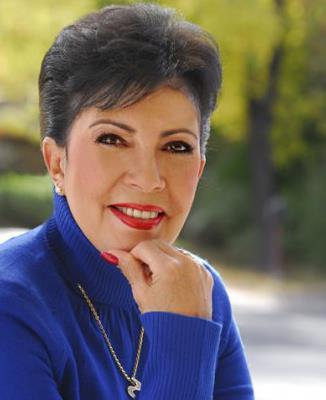
Featured Writing Addict: Mary Ross Smith

Mary Ross Smith

Mary was born in Shreveport, Louisiana, the youngest of five children. Her family moved to Los Angeles, California in 1947. Both parents were entrepreneurs. Her mother was the founder of a prominent African-American mortuary in Los Angeles, and her father owned a service station. She grew up in Los Angeles and spent most of her young years in the funeral home where she learned the details and secrets of that business. Her young life was very troubled and sometimes threatened thus causing her to seek refuge among the dead. Mary’s two books use humor and drama to reveal mortuary life.

What’s Mary’s Genre?

Nonfiction & Fiction/Romance

What’s  Mary’s Inspiration?

“I wrote Soul Survivor to heal me, but soon found out that everyone has a story. My goal is to inspire others to know that life is about choices; they can make a change in their life, no matter how bad things are today. Something good can happen tomorrow. Never give up!

What are Mary Ross Smith’s books about?

Soul Survivor

Soul Survivor explores the depths of human emotions, both real and imagined. A true story of fortitude, an iron will, and looking to the future in the hope that tomorrow will be better than today.
 

Amazon.com Book Description:

“…explores the depths of human emotions, both real and imagined. That any of us reach adulthood in one piece, emotionally or physically is a miracle of no small proportion. That any of us reach adulthood to contribute back to society and become highly respected in the community is truly a gift of time and place.
 
…a true story of fortitude, an iron will and looking to the future in the hope that tomorrow will be better than today. …nothing less than a story of triumph. “Little Mary” Reese spent her childhood living, working and playing in a funeral home. Her mother, Mrs. Mary (“Big Mary”) Reese, was well known and respected in the African-American community in Los Angeles through the operation of a prestigious black funeral home. Little Mary’s story tells what really happens behind the embalming room doors—the light and dark side of life.
 
[This book] is both humorous and mischievous, and talks of sex, murder, voodoo, preachers and deviate gravediggers. Famous entertainers that passed through Little Mary’s life include Redd Foxx, Lou Rawls, Sam Cooke, Billy Preston and Johnny Cochran. Little Mary was born in 1944 in the South, reared in the Southwest and was often disparagingly referred to as “high-yellow.” During racial tensions of the ‘50s and ‘60s, Little Mary found her hue to be a major issue but not her only problem.
 
Mary’s mother caused her to endure life-threatening situations due to her drinking and wild ways. Little Mary’s childhood experiences, the mental and physical abuse faced each day, led her to believe that her only true friends were the dead people in the funeral home. Indeed, Little Mary received a BS degree (Be Smart) at an early age. It was the only way she knew to survive. Little Mary’s story is an unlikely but revealing peek into the unexpected and in the end, truly a story of a Soul Survivor.”
 
 
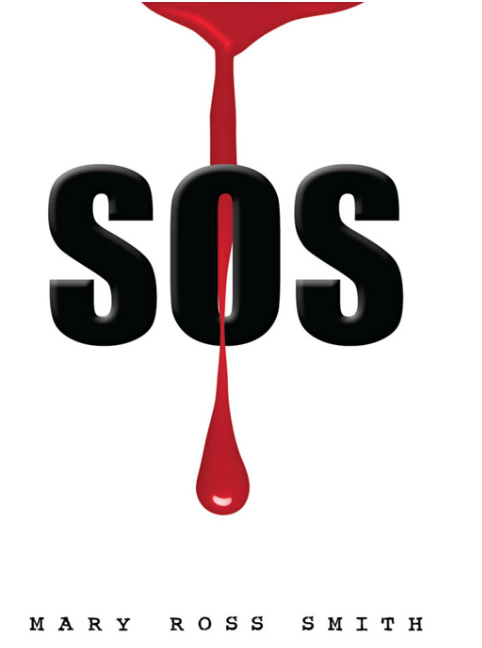
SOS
Challenge you to look at the person behind the pulpit!


To reach Mary Ross Smith, buy her books, or schedule a book-signing event:

Tell her you heard about her on editingaddict.com!

Your Plot Needs Planning

[found on fictionfactor.com; by Lee Masterson]

Effectively Outlining Your Plot

“Have you ever had an idea for a novel, and then just sat down and began writing without knowing exactly where the story was going?

It happens to everyone at some point, but most people begin to realize that the events in your plotline get confused, or forgotten in the the [sic] thrill of writing an exciting scene. There are those who continue to write on, regardless, fixing any discrepancies as they work, or (worse!) those who do not check that events are properly tied in place to bring their stories to a satisfying conclusion.

And then there are those writers who believe that creating a plot-outline is tantamount to “destroying the natural creative process”. The belief is simple; by writing it out in rough form, you’ve already told the story, so the creative side of you will not want to write it again.

Whichever type of writer you are, creating a simple, inelegant outline to follow s not the same thing as already writing the story, and it could save you an enormous amount of time and rewriting later.

The purpose of an outline in this case is to be certain that your storyline is not straying too far from the original idea. It is also a useful tool if you need to determine if your idea is big enough to be developed into a novel-length work, and not left as a short story or novella.

Your outline should be a simple reminder that, no matter how many events or characters or situations arise, your main theme will never get lost in the jumble of scenes.

Of course, this brings us to the problem to what was discussed above. There are writers who have a tendency to over-plot, thus really killing any spontaneity as far as the writing process goes. The biggest difficulty here is forcing your characters to go through motions that may not fit into their personality make-up simply to fit into your pre-existing, overly planned plotline.

So how do you strike a fair balance between aimless writing and over-plotting? There are several ways to accomplish this….”

To read the complete article from Lee Masterson, click here.

[found on http://www.fictionfactor.com/articles/outlining.html]

Poems, Lyric Thyself

[found on songlyricist.com; by Carla Starrett]

“Poets in the modern world do not enjoy the elevated social status they did a century or two ago.

Wordsworth, Byron, Keats and Shelley were the rock stars of their time. Their poetic skills earned them adulation, celebrity and even the occasional touch of wealth.

These days, poems and poetry are sadly relegated to sparsely attended coffeehouse readings or the obscure pages of small literary magazines.

On the other side of the proverbial coin, there are wonderful opportunities in today’s music industry for talented poets – at least those who successfully adapt their writing style to song lyric writing.

Songs are the popular lyrical medium of our time. That’s where status and the bigmoney is for today’s poets.

Adapting Poems Into Song Lyrics

There are many examples of poets who have turned their personal poetry into successful song lyrics.

Most everyone’s heard of lyricist Bernie Taupin, Elton John’s famous co-writer. One of these talented fellows without the other may have labored in the shadows of obscurity.

Yet, by combining their specialized talents, they were able to write hundreds of great songs, and extrmely [sic] popular songs. In the process, they become millionaires!

The lesson is clear: ambitious 21st Century poets who wish to connect with the popular culture and mass audiences will want to learn how to write lyrics.

Which leads to this question: Can poets successfully turn their talents to writing song lyrics?

Answer: For talented poets willing to adapt their writing styles to the craft of lyric writing, the answer is definitely yes!”

To learn more from Carla Starrett on how to adapt your poems into song lyrics, click here.

[found on http://www.songlyricist.com/lyricorpoem.htm]