Tag: book

When Do You Stop Researching?
[found on howtoplanwriteanddevelopabook.blogspot.com; by Mary Carroll Moore]
“A children’s book writer sent me the following question: “I am interested in writing a non fiction book for 11-18 year olds and wanted to know how to go about preparing myself to do the research for the book efficiently?” This writer had a timeline for her book and wanted to complete it by the beginning of December.
Research is both a blessing and a bane for the book writer. It’s very easy to research now that the world is at our fingertips via the Internet.
But this wealth of resources also poses a serious side tracking problem: How can you really tell when you’re researching and when you’re just avoiding writing?
I love to research. I worked as an editor for a small press for 18 years and was constantly being asked to research this or that fact from different authors’ books. I knew how to get online and sail through the mediocre listings into the really meaty facts. I became good friends (via phone) with several reference librarians at my local library–always a good call to make when stumped by the various options on the Internet. Librarians (mostly) love research and they are there to help.
But often I found myself cruising from one article to the next, opening more layers of links, and finding it hard to actually come back to the writing I was supposed to be working on.
Since someone was paying me to get the editing done, and I was under a deadline, I always forced myself away from the research eventually. But when you’re writing your book, you may not have this outer-imposed structure. You may be your only boss, creating your own timeline, as my reader above is. How do you stay efficient with research and still get your book done?
Researching Your Readership
I have dozens of stories from students in my classes who discovered they were writing to the wrong readership–after they did some bookstore research. One woman thought her novel was geared toward adults but after she spent an hour browsing the YA bookstore shelves, she realized her language, tone, and subject matter was really meant for younger reader, in their late teens, as she had been when she experienced the specific changes she was writing about. Another student was preparing to finish his memoir when he did some belated bookstore research and realized he didn’t want his story on the memoir shelf–it was way too raw and dangerous emotionally for him to imagine his family members picking up a copy of a “true story” that contained their histories. So he switched horses in midstream and became a novelist.This sounds basic, but many writers forget that bookstores (and online bookstores) hold a wealth of information to help us orient our book projects. So researching your readership is first on the list.
For the reader who wrote me the question for this post, as someone writing a book for a certain age group, you really need to know your audience well. What language do these readers prefer? They may be much more sophisticated readers than you were at that age, or they may not be. What do they learn in school–and is your topic too sophisticated or way to basic for them?
And if you’re delivering a certain topic and need scientific, cultural, political, or historical data, you need to translate what you research into wording that kids would understand, crafting your writing to lead them point by point through the material.
Research Information
After you’ve researched your reader and gone through the steps to explore your book’s topic, you may have the urge to spend time on the Internet, in the library, or in your own book collection, making sure your facts are in order. This is really important, and it used to be the provenance of fact checkers at a publishers. No more. It’s now up to the writer, and publishing contracts have long clauses to make sure the writer holds all responsibility for errors of fact in their manuscript.I love to research place, and I do that early on in the research process for my books. I physically visit the location of my book as many times as I can, read other books set in that location, and take lots of notes–especially sensory details like the way things sound, smell, and look in that setting. It’s important to convey accuracy of place to allow the emotion within the place to touch your reader. And, believe me, readers who are familiar with the place will let you know if you’ve made mistakes in reporting the details of their favorite locations.
Historical facts are also important to get right. Watch out for the Internet on this one. When I was a professional editor at the small press in the Midwest, we rarely accepted the first or even fifth Internet mention of a fact as truth. It took lots of browsing and comparing notes from different sites. If a fact was repeated frequently, then it was more likely true. But I collected a list of my favorite fact-checking sites that seemed reliable, and they were the ones I visited most often. University research sites, library databases, and reputable publications online were the ones I leaned on most–and I strictly avoided the chats, blogs, and personal opinion posts that could be just that.
Putting Research in Its Proper Place
Make sure, though, that research doesn’t take over your writing time. It’s a great time waster for us creative types, especially with the Internet making the world of research so very accessible. Hours (days!) can go by while you happily browse, and not one word of your book actually gets written.When I am deep in research, I set a kitchen timer. When the timer rings, I stop–no matter how exciting that next link looks. I go back to the writing, to the blank page, and do what I came here for. It takes discipline to leave the candy store of research and actually write. But it’s the only way to make a book.
This Week’s Writing Exercise
1. Make a list of topics you’d like to research for your book project. They could be more information on the setting you’re writing about, historical facts, readership research, or anything you are interested in that might enhance your story.2. Practice disciplined research: get a kitchen timer or set your cell phone alarm for 30 minutes. Begin your research. See if you can stop when the alarm goes off. Make sure you make notes or print interesting pages.
3. Make notes to remind you where you were, so you can return easily.
4. Look over the research notes you’ve made. Take a highlighter and underline sections that might be useful to inform a chapter, character, or focus of your book.”
[found on http://howtoplanwriteanddevelopabook.blogspot.com/2011/04/researching-your-book-how-to-do-it-when.html]
Share this:
Beginners’ Blunders
[found on writing-world.com; Marg Gilks]
“Writing is easy; all you do is sit staring at a blank sheet of paper until the drops of blood form on your forehead.” — Gene Fowler
“You’ve written a great story, sent it out again and again, but it keeps being rejected. Why? What are some of the writing blunders you may be committing that set red “amateur” flags waving for agents and publishers — and invariably earn your story a rejection slip?
They’re Only Empty Words
Blonde bombshell, guns blazing, go the extra mile, passed with flying colors, under cover of darkness. Cliches like these pepper our everyday speech, but in a story, they’re a red flag. When you think about it, what information does a cliche convey to a reader? What does it mean to pass with flying colors? Why would a sexy woman be called a bombshell? What’s attractive about a bombshell? When you use cliches in your writing instead of creating original descriptions that actually engage the reader’s senses and emotions, you’re writing words that the reader will find very easy to forget.
Like cliches, empty modifiers like adjectives and adverbs are the sign of weak writing, produced by a writer without the imagination or the skill needed to create evocative descriptions that add depth to the story. Used to excess, they clutter up a story with empty words that distract the reader as she tries to envision an image that the words just aren’t conjuring.
Used in place of more vivid language, adverbs and adjectives are just as commonplace as cliches. “Fluffy white clouds” — ho-hum. Why not clouds that hang in the sky like dollops of whipped cream, or that are as plump as popcorn? “They moved quickly down the street.” How fast is quickly? Are they running, or speeding along in a car? If you replace the weak verb “moved” with one that’s more specific, you wouldn’t have to use the adverb “quickly” at all: They dashed down the street, or flew down the street on their bicycles.
“Good writing is supposed to evoke sensation in the reader — not the fact that it is raining, but the feeling of being rained upon,” said E.L. Doctorow, author of Billy Bathgate. A memorable story is one that readers experience. Get specific. Paint word pictures for your readers instead of falling back on tired phrases and descriptors, and you’ll create a story that publishers will want to share with their readers.
Tell Me No More!
Many beginning writers, faced with the dilemma of conveying background information or character details to the reader, go the obvious route — they throw it all at the reader in a big, expository lump of facts often called an “info dump.” They tell the reader everything.
Readers pick up a story to be entertained, not to be lectured. Nobody likes to be told what to think; like you, readers want to form their own opinions. Whenever possible, show the reader what she needs to know about a character or a society or a setting — persuade her to form an opinion that matches your goals in writing the scene or creating the character. If you have to resort to telling, feed it to the reader in manageable bits, woven into the story here and there, so the reader doesn’t realize she’s learning anything.
“Okay,” you think, “the reader needs to know what my character looks like, so I’ll have him look in a mirror, and describe what he sees.” Or: “Well, if two of my characters tell each other what the reader needs to know, then that’s showing because it’s dialogue, not exposition.”
Don’t. Neither solution is effective showing, it’s telling with props — and such a common blunder among beginners that the techniques themselves are considered cliches: “Sarah looked in the mirror and saw a pretty red-haired girl with green eyes and a freckled nose staring back at her.” Do you look in the mirror and see that? Or do you notice you need a shave or a haircut, or grin to examine your teeth? If you’re not noticing your physical description, your character wouldn’t naturally notice this, either.
“As you know,” you have one of your characters say, “we have been walking through this desert for the past five days, and it is quite hot. We have no water — we’ll have to find some soon, or we’ll die.” To which your other character responds, “Indeed. You know I’m the world’s foremost expert on skin cancer, and these sunburns can’t be doing us any good at all.” Are you laughing yet? I hope so! Nobody talks like this. So don’t make your characters say things they wouldn’t say naturally, just for the sake of conveying information.
Inept showing like this is just as bad as an info dump, and will earn you a rejection just as quickly. As with avoiding empty words, put a little more effort into how you convey information to the reader, so it becomes an experience, not an effort to read.
Head-hopping
You’ll probably notice when reading a contemporary novel that the story seems to be told in the voice of only one character. If there seems to be more than one character telling the story — different viewpoints — if you pay close attention to each scene within that novel, you’ll probably find that only one character seems to be sharing his or her perceptions of events in the scene with the reader. The character whose eyes readers see story events through, whose thoughts the reader “hears” in a scene or throughout a story or novel is called the point of view character. This is called “limited” point of view, and it’s the most common form you’ll see, because today’s readers like getting right inside a character’s head to experience the story.
The point of view (POV) that most novice writers fall into, however, is “omniscient” point of view. In this point of view, the narrator is all-knowing and all-seeing, popping from one character’s head into another, making the reader privy to everyone’s thoughts and everything that’s going on, even if that activity is off-stage, in the past or in the present or in the future. There is a lot of explaining — the omniscient narrator tells the reader what everyone is thinking and what is going on.
Sounds pretty good, huh. Look at that description of omniscient point of view again — the narrator is telling. Telling instead of showing is one of those red flags for rejection, remember? With omniscient, you are leaving nothing to the reader’s imagination. You’re not allowing the reader to participate, to experience, but merely to observe. For this reason, while omniscient POV is a legitimate point of view, it has fallen out of favor with today’s readers.
If point of view hops from one character to another within a scene in your novel or story, it will be perceived by an agent or publisher as poor writing. Manipulating point of view to best effect or maintaining it consistently takes attention and practice, but it’s one skill that sets more experienced authors apart from novices, and well worth learning.
Mechanics
Yes, this is the icky stuff — the grammar and punctuation and spelling that you’d rather not think about. But agents and publishers think about it — in fact, it’s the quickest way for them to tell if a manuscript is worth anything beyond a cursory look. If, in that first glance, they see too many mechanical errors, they’re not likely to give the story itself a chance.
Agent Noah Lukeman, author of The First Five Pages: A Writer’s Guide to Staying Out of the Rejection Pile, cites misuse of the question mark — a common blunder — as reason enough for a rejection. “The same holds true for the exclamation point,” and, to a lesser degree, parentheses, he says. Think of it — a simple little question mark could doom your story.
Punctuation marks are the most obvious red flags. You also have to watch out for the sneakier grammatical pitfalls, like dangling or misplaced modifiers and passive voice. A misplaced modifier occurs when a word or phrase is placed next to a word that it can’t possibly describe: Growling furiously, jaws snapping, the hunter trussed the bear cub. It’s a good bet the writer intended the bear cub to growl and snap, but written this way, it’s the hunter! A dangling modifier happens when a word or phrase has been dropped: While eating lunch, the crocodile swam past the dock. If the croc wasn’t doing the eating, this sentence needs the lunchers to be complete — While we were eating lunch. Both of these grammatical blunders can create reader confusion at best or, at worst, unintentional humor at your expense.
What is passive voice? While active voice describes an action a character is doing, passive voice describes what is being done — it conveys no action: “she put the books on the shelf” as opposed to the passive “the books were put on the shelf.” The very structure of passive verbs suggests that an action took place in the past, not the present. Remember, today’s readers want to feel as if they’re right there in the story, experiencing events. Active voice is simpler, less wordy, and is more immediate.
Take the time to brush up on grammar and punctuation; take a moment to look up the correct spelling of a word you’re not sure of; go over your manuscript carefully when you’re done, correcting typos and any other small errors that may detract or distract. It’s worth the effort.
You’ve probably realized by now that writing a good story takes more effort than simply sitting down and dashing off the first words that come to mind. But more effort means a greater likelihood that the finished product will earn publication — not rejection slips.”
[found on http://www.writing-world.com/fiction/fiction10.shtml]
Share this:
Oceanic U.S.S. Writer
“Writing is a vessel…with readers the ocean and authors as its sails…”
― William Petersen
Share this:
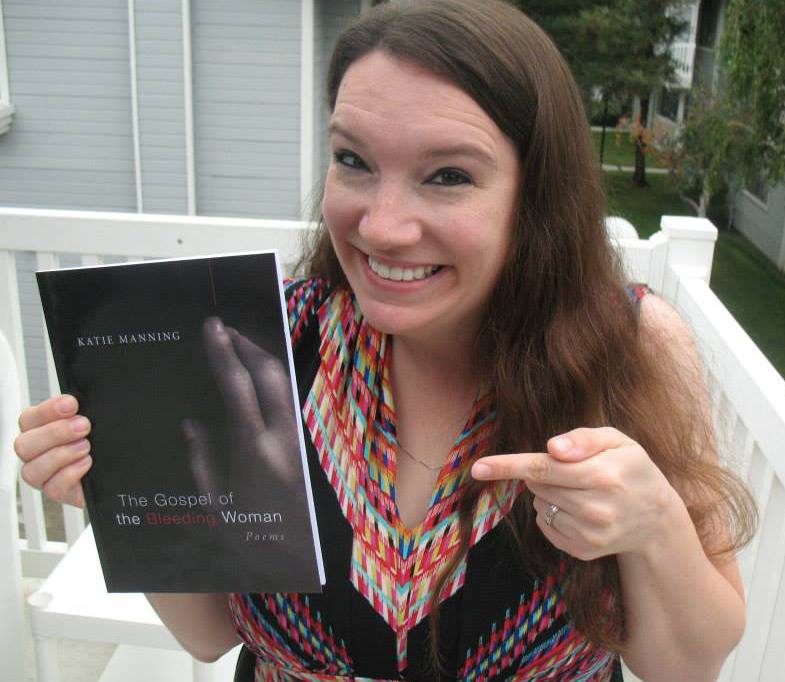
Featured Writing Addict: Katie Manning
Katie Manning
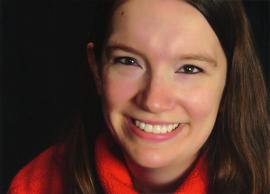
Katie Manning began creating poems at age four because she loved to play with the sounds of language. She is now the author of three poetry chapbooks, all published in 2013: The Gospel of the Bleeding Woman (Point Loma Press), I Awake in My Womb (Yellow Flag Press), and Tea with Ezra (Boneset Books). She lives in the Los Angeles area with her husband and son, and she is an Assistant Professor of English at Azusa Pacific University.
What’s Katie’s Genre?
Poetry
What’s Katie’s Inspiration?
“I am inspired by stories, and I especially love to write in the voices of people, real or fictional, whose perspectives have been left out. Motherhood and language itself have also been major inspirations for my poetry.”
What are Katie’s published works?
* * * * * * * * * * * * * * * * * * * * * * * * * * * * * * * * * * * * * * * * * * * * * * * * * * * * * * * * * * * * * * * * * *
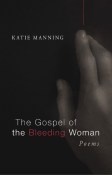
The Gospel of the Bleeding Woman imagines a life for an interesting, unnamed biblical character. In these poems, the bleeding woman has a name and gets to tell her own story.
* * * * * * * * * * * * * * * * * * * * * * * * * * * * * * * * * * * * * * * * * * * * * * * * * *
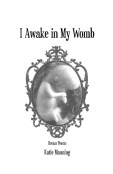
I Awake in My Womb is a collection of bizarre poems that are based directly on dreams that Katie Manning had immediately before, during, and after pregnancy. Through the shifting images of dream states, these poems explore the fears and joys of impending motherhood.
* * * * * * * * * * * * * * * * * * * * * * * * * * * * * * * * * * * * * * * * * *
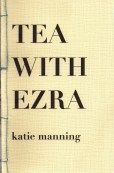
Tea with Ezra is a collection of poems that respond to familiar texts: fairy tales, biblical narratives, songs, poems, novels, and more. These are some of Katie Manning’s favorite poems to read aloud to an audience. [Sold out]
* * * * * * * * * * * * * * * * * * * * * * * * * * * * * * * * * * * * * * * * * * * * * * * * * *
To reach Katie, or buy her published works:
- Facebook: Facebook.com/katiemanningpoet
- Site: katiemanningpoet.com
- Purchase Books: The Gospel of the Bleeding Woman; I Awake in My Womb; Tea with Ezra [Sold out]
- Tell her you heard about her on editingaddict.com!
Share this:

Weave Your Words
“A writer’s goal is to weave the ordinary into fine silk and the truly extraordinary into diaphanous clarity …”
― C.J. Heck
Share this:
How to Choose a Story…
[found on writersdigest.com; by Courtney Carpenter]
“Which Story Should I Write?
The first editing question you need to ask is, Which story do I select to turn into a whole novel? To write from start to finish?
You’re going to be spending a long time with your novel. Months. A year. In some cases more. I don’t want you to wake up twelve weeks from now and chuck all that work.
So here are a few keys to self-editing in the story selection phase:
1. GET LOTS OF IDEAS. The key to creativity is to get lots and lots of ideas, ironically without any self-editing at all, then throw out the ones you don’t want.
It’s a little like how lawyers choose juries. In reality, they don’t select jurors; they deselect them. The potential jurors who are seated in the box are drawn randomly. Then, through a questioning process called voir dire, the lawyers probe and ponder, then exercise challenges. They try to get rid of those jurors they believe will not be favorably disposed to their case.
So, too, you as a writer face your box of ideas and, through probing and pondering, toss out the ones you won’t be writing about.
But first you gather, and as you do, let your imagination run free.
2. LOOK FOR THE BIG IDEA. A novel-length story has to have a certain size to it. Not length of words, but potential for a large canvas of emotions, incidents, and high stakes.
This is something you need to feel in your writer’s spirit. Think about the novels that moved you most. What was it about them that got to you? If it was an unforgettable character, what made her so? If it was a turning, twisting plot, what were the stakes?
If it was a quieter novel, it had some simmering intensity about it.
Think on these things as you look at ideas to nurture.
3. WRITE YOUR BACK COVER COPY. There are several questions to ask yourself about your idea, but at some point you need to see if it holds together, if you can get it in a form that both excites you and will excite publishers and readers.
One of the best ways to do this is to write your own back cover copy. That’s the marketing copy on the back of the book (or on the dust jacket) that’s intended to get readers to buy it.
When you do this, concentrate on the big picture. You’ll need to write and rewrite this several times, but doing so will serve you well for the entire writing project.”
[found on http://www.writersdigest.com/tip-of-the-day/how-to-choose-a-story-to-write]
Share this:
Write A Book You Can
“Anybody can write a book. But writing it well and making it sell — that’s the hard part.”
― Jay Taylor, The Rise Of Majick
Share this:
Carve Your Story
“Writing is like sculpturing words out of a block of imagination. Sentences chisel the story, then characters make it their own.”
― Federico Chini, The Sea Of Forgotten Memories
Share this:
Places or faces?
[found on davehood59.wordpress.com; by Find Your Creative Muse]
“Place is more than Just Location
Writing about place or location of the event or experience is an important technique in creative nonfiction. It often plays a vital role in your story. It allows you to recreate the scene and experience in the mind of the reader. It can act as a backdrop or provide context for a personal essay. It can add meaning to a memoir. For instance, if a writer creates a memoir about child abuse, the place or location is significant. Place can also be the subject of creative writing. If you are writing a travel essay, you will be writing about the place you are visiting. Often, without a place or location, you have no experience or event.
This article will define what creative nonfiction writers mean by place/location and explain how to write about place/location in your creative nonfiction.
Definition of Place
In creative nonfiction, the place or location where the event or experience took place is more than just about the name of the place. It is also the physical location of the place, the physical attributes, such as the urban setting of crowds, pollution, public transit, traffic jams or the rural setting of open spaces, fewer people, fields, farms, and small communities.
Place is also about its socioeconomic attributes of a setting. Some places are poor, while others are wealthy. Some places have high unemployment, while others have an abundance of employment opportunities. Some places have schools and hospitals, while other places have nothing.
In writing about travel, place is much more than the physical location. It is about the culture, language, values, morals, beliefs, customs, cuisine, traditions, and way of life.
In writing a memoir, place often has significant meaning. It can be a catalyst for memories of childhood, adulthood, unique experiences. In the memoir, My Life: The Presidential Years, the Whitehouse was a special place for Bill Clinton. Place can also have significant meaning for ordinary people. In writing Eat, Pray, and Love, place had a powerful meaning for Elizabeth Gilbert. After her divorce and a mid-life-crisis, Gilbert decided to travel for a year by herself in an effort to restore balance and meaning to her life. Her memoir chronicles the three places she visited: Rome, India, and Bali. Each of these places had significant meaning to herself and to her life. She wrote about this powerful meaning in her memoir.
Some creative nonfiction writers view place as character. In recreating the scene or experience, the writer views place as a character in the story. Similar to developing a character, the place needs to be developed. The writer can use personification to develop the place. It can become nurturing, menacing, foreboding.
Yet place is more than just character. It is also about meaning. A place or location often has significant meaning. We can associate a particular place with good memories or bad memories, as being a happy place or sad place, as being a relaxing place or stressful place.
Clearly, when a creative writer writes about place, the writer must consider more than just its physical attributes or location.
How to Write about Place
In writing about place, you ought to consider the following:
- Name of the place
- Location of the place
- Physical attributes
- Home as place
- Nature as place
- Travel as place
- Meaning the place has for you
- Significance of the place
When writing about place, you first need to consider its name. Where did the name of the place originate? What is its history? What does it symbolize? For example, the city of Toronto originated as the Mohawk phrase tkaronto, later modified by French explorers and map makers.
You also need to consider writing about the important features, amenities, and physical attributes of place. For instance, in writing about Toronto, you can consider writing about its multicultural population, sports teams, and public transit, shopping centers, unique neighborhoods, landmarks, popular attractions, and the fact that it is located on Lake Ontario.
A place can also be about “home.” You can begin by exploring the meaning of home. Home is suppose to be a place of escape, comfort, protection, love, stability, and permanence—even solitude. What does home mean to you? What was my home like as a child? What did a like or dislike about the place called home? What memories do you have about your childhood home? For some people, home is a transient place, especially for people who travel, who are new immigrants, who end marriages or relationships.
In writing about place, you can also consider it in relation to nature. In his memoir, “Waldon”, Henry David Thoreau viewed nature, wildlife, and the woods as having a being a special place. According to Brenda Miller, who wrote “Tell It Slant”, a popular creative nonfiction text, Thoreau viewed the “human consciousness moved through nature, observing it, reacting to it, and ultimately being transformed by it. Miller goes on to suggest that when you write about nature as place, you need to consider how nature embodies larger forces, such as the physical attributes of a person you admire or the human condition or human experience.
In writing about place as a traveler, don’t write what everyone else has written. Your purpose is to find “a purpose for your writing above and beyond the travel experience itself”. (Tell It Slant) To create a travel piece that is more than just about transcribing the experience, you need to consider the theme and the significant meaning of the place.
When writing about a particular place, you ought to consider what meaning the place has for you. You can start by ask yourself the following: What does this place mean to me? How do I feel about this particular place? Do I like it? What do I like about it? Do I dislike it? What do I dislike about it? What are my memories of this place? What favorite memories do I have about this place?
Tips for Writing about Place
When writing about place, you must be original. You must be able to write about place from a unique perspective.
- Describe the place as if it is a character in your story. What is its appearance? Its behaviour? What is the place saying to you?
- Use literary devices to describe the place, such as metaphors, personification, and simile.
- Describe the physical attributes of the place using sensory images. How does place smell, sound, taste, feel, and appear to you?
- Write about place as it means to you. Do you have fond memories of the place? What do you like or dislike about the place? What is important? What is insignificant about the place? How does the place feel to you?
- Write about the significance of place. What universal truth embodies the place?
- Write about what you have learned about the sense of place/location?
- Don’t use clichés or hackneyed expressions to describe a place.
- Use concrete and specific details. Remember as many significant details about place as you can.
The place or location of an event or experience can have many meanings. Place can be your home, a travel destination, or a walk in the woods. When writing about place, consider its name. Write about its physical attributes. Write about what the place means to you. Write about the significance of the place. Write about theme and universal truth as it applies to place. Write about place from your own unique perspective.”
 Editing Addict, LLC