Coming soon:
Tips from the editor, also known as
EDITOR’S TRICKS
Watch for it!
The question all aspiring writers are desperate to know: How can I get published?
When I first dreamed of becoming a published writer decades ago, that’s the first question I always asked at author lectures. No one had any magical answers for me, so I foraged my own path.
As a result, I’ve been working as a professional writer for more than 20 years. During that time, I’ve had a non-fiction book I co-wrote published by one of the big-time publishers, McGraw Hill, started my own publishing company with a partner, published two young adult novels, and lived out my dream of having book signings at Barnes and Noble bookstores.
In addition, I’ve had thousands of articles published in magazines, newspapers, and websites. This past year, I’ve added blogger to my list of achievements and am working on my fourth book.
So what’s the secret to getting published? I don’t have a college degree and I didn’t know anyone in the publishing business to help get me started. So, don’t give up, there’s hope for all of you out there like me.
To help you out, here are my top five tips. However, be forewarned, there’s no magic involved.
Before you begin sending manuscripts out, take the time to learn the craft of writing if you haven’t already done so. I’m always surprised how many people don’t take this essential step. No, you don’t need an English degree at a fancy college to become a writer. But you do have to learn the basics – whether that means taking writing classes at a local college, reading every book on writing you can get your hands on at the library, taking advantage of all the information on the Internet, or attending writer’s conferences. This is a simple tip, but a crucial one – be sure and learn basic grammar, spelling, and writing techniques before submitting your work for publication.
Many aspiring writers want to start out by tackling the great American novel their first time out to bat. Why not start small and work your way up instead? Believe me; you’ll learn invaluable lessons along the way and become a better writer. In addition, rejections for short stories and articles are much easier to take than rejections for a book that you’ve spent months or years pouring your heart and soul into writing.
How did I break into the publishing world? Six long years after I took my first writing class at a local college and after countless submissions, my first short story was finally accepted for publication in a small literary magazine. Later that year, I sold an article I had written for one my college classes to a regional parenting magazine. These days, earning writing credits is much easier than it was 20 years ago with all the freelance writing sites like oDesk, Elance, Freelancer, along with dozens of others. You’ll have to work dirt cheap at first, but you can earn some writing credits. Hey, my first check for my short story was $22 and I was ecstatic. Just don’t give up your day job too soon.
An agent is required for many of the larger publishing companies (but not all, as you can see in the section below, “Find a Publisher”) so it pays to try and find an agent to represent your work. If you take my advice in the previous section and earn some writing credits, you’ll be one step ahead in the game and have an easier time finding an agent.
How did I find an agent for my first novel? Like I said before, I didn’t know anyone in the business, so I bought a copy of Writer’s Market, made a list of agents that specialized in young adult fiction, and sent out query letters. I learned how to write a good book proposal and when a few agents expressed interest, I sent them exactly what they asked for, which varied slightly.
If you want to find an agent, edit and re-edit you manuscript, and make sure your query letter, book proposal, and/or sample chapters are free from any grammar or spelling errors. Don’t give up easily. Do your homework and make sure the agents you’re querying accept the kind of book you’re writing. And finally, don’t pay reading fees – generally it’s a rip off.
One more tip: This is a good time to develop a thick skin. Pay attention when an editor or an agent takes time to point out flaws instead of sending a standard rejection letter. Editors aren’t always right, but don’t automatically assume they’re wrong either, especially if more than one notes a particular weakness.
If you’re trying to get published, I don’t have to tell you, there’s SO much competition out there, so you MUST find your own unique voice and perspective. Just about every subject under the sun has already been covered, so it’s really important to find a different angle.
For example, when I approached publishers regarding a book on building steel-frame homes, there were already quite a few books on the subject. But I couldn’t find any that focused on building energy efficient steel-framed homes. When it came time to find a publisher, having a distinct angle is what made my proposal stand out from the rest.
Of course, this is easier said than done, but not impossible. By the way, I found a well-known publisher for my non-fiction book without an agent. My Writer’s Market was gold once again, and I simply sent out query letters and followed up with my book proposal if publishers were interested.
My tip: Be sure and have a detailed marketing plan in place before you begin this process. This book was co-written with my father, a civil engineer, and our plans included seminars, speaking events, as well as other promotional efforts. Remember that even the big time publishers expect you to get out there and promote your book like crazy. Of course, now publishers also want you to have a social media presence and build an author’s platform. The latest Writer’s Market suggests you need about 5,000 followers to get a decent advance. So, now that I have an idea for a fourth book, guess what I’ve been busy doing?
So there you go, my top five tips I have used to become a published, professional writer. While it’s true that the publishing world is constantly evolving, one thing hasn’t changed over the years – and it’s my most important tip of all if you want to be a successful writer – don’t give up! You’ll definitely need the three P’s of writing: patience, persistence, and perseverance.
As Richard Bach said, “A professional writer is an amateur who didn’t quit.”
In the meantime, try and enjoy the journey. Writing is certainly a roller-coaster ride with plenty of ups and downs, but it’s also an adventure.
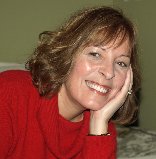
Julie Gorges is the author of three books, has had hundreds of articles and short stories published in national and regional magazines, and won three journalism awards while working as a newspaper reporter.
Follow her for amazing posts, and check out her blog, books, and social media!
“How to make the most of social media marketing, where do you start? You need detailed, accessible and practical advice on what to do and how to do it. Planning and research are often forgotten in the rush of getting a book published. Drawing up a marketing plan and carefully thought out campaign are the only ways to ensure the success of your book and to meet the readers’ requirements. Initiate these concepts and you will see the benefits immediately!”
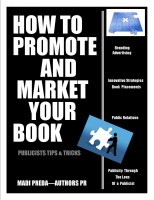
Any author who wants to create and launch a successful book, or people who chose publishing as a career.
This guide walks you through the development of author’s brand and improving sales.
…valuable resources lists, such as book bloggers, publishers, literary agents, newspapers and magazines, independent booksellers, Facebook groups, sites to promote a book, and radio shows for authors.”
“The Rule (According to CMS 6.3): Punctuation should appear in the same font or typeface as the general body text of a document. So if you have a roman sentence that contains an italicized word followed by a comma, the comma should appear in roman.”
To read Heather explain about the exceptions to this rule, click HERE.
“It is essential…to understand the differences between the foreword, preface, and introduction of a book. Each section plays a vital role in the critical and financial success of the book. Without these three sections, a non-fiction book is incomplete, and not giving the readers their money’s worth…
1. The Foreword (Why the reader should read the book)
The foreword is the place for a guest author to show the reader why they should be reading this book.
2. The Preface (How the book came about)
The preface is a place for the book’s author to tell the reader how this book came into being, and why.
3. The Introduction (About the content of the book)
The introduction introduces the material that is covered in the book.”
To read the expanded article from Joseph C. Kunz, Jr., click here.
“I’m going to talk about research. No, research is not very fun, and it’s never glamorous, but it matters. A lot.
If you want to be able to make compelling case for something — whether it’s in a book, on a blog, or in a multi-million dollar VC pitch — you need stories that frame your arguments, rich anecdotes to compliment tangible examples, and impressive data so you can empirically crush counter arguments.
But good research doesn’t just magically appear. Stories, anecdotes and data have to be found before you can use them.
You have to hunt them down like a shark, chasing the scent of blood across the vast ocean of information. The bad news is that this is an unenviable task … but the good news is that it’s not impossible.
It’s not even that hard … once you learn what you’re doing — and I’m going to teach you those skills.
By the time I was 21, my research had been used by #1 New York Times Bestselling authors like Robert Greene, Tim Ferriss, and Tucker Max. Was I a slave to study? Did I have to become a library hermit to accomplish this? No, I did it all in my spare time–on the side, with just a few hours of work a week.
Here’s how I did it …
…This is the mark you must aim for as a researcher, to not only have enough material — and to know where the rest of what you haven’t read will be located — on hand to do your work….
…How do you find a needle in haystack? Get rid of the extra hay….
…One of my rules as a reader is to read one book mentioned in or cited in every book that I read. It not only solves the problem of ‘what to read next’ but it sends you on a journey down the rabbit hole….
…The Classics are “classic” for a reason. They’ve survived the test of time….
…a book of quotes, sentences, metaphors and miscellany that he could use at a moment’s notice….”
To read the entire article from RYAN HOLIDAY, click here.
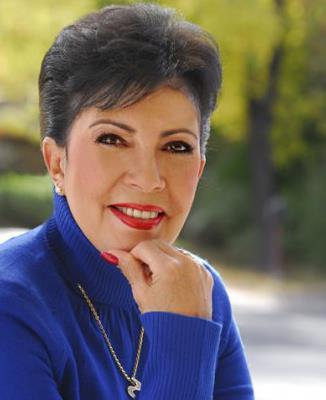
Mary was born in Shreveport, Louisiana, the youngest of five children. Her family moved to Los Angeles, California in 1947. Both parents were entrepreneurs. Her mother was the founder of a prominent African-American mortuary in Los Angeles, and her father owned a service station. She grew up in Los Angeles and spent most of her young years in the funeral home where she learned the details and secrets of that business. Her young life was very troubled and sometimes threatened thus causing her to seek refuge among the dead. Mary’s two books use humor and drama to reveal mortuary life.
Nonfiction & Fiction/Romance
“I wrote Soul Survivor to heal me, but soon found out that everyone has a story. My goal is to inspire others to know that life is about choices; they can make a change in their life, no matter how bad things are today. Something good can happen tomorrow. Never give up!“

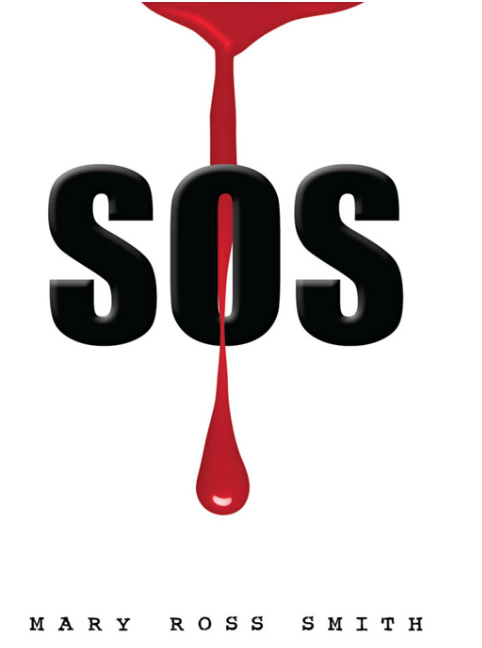 “Challenge you to look at the person behind the pulpit!“
Glimpse inside the mind of a contemporary philosopher...
reciprocity
The Life of a Teenage-Traveler
Plus ça change, plus c'est la même chose / The more things change, the more they stay the same
writer & mother, feeding my dream and my family
AWAKENING THE SLEEPING READERS
A blog full of humorous and poignant observations.
The only thing worse than being 'blind' is having a Sight but no Vision
A contrast between elegance and grunge.
The strings of my life’s soulfulness in the beauty of eternity.
Adult & YA Romantic Fantasy Author
A topnotch WordPress.com site
Think upon your thoughts and it will take you higher
Words of Wonder, Worry and Whimsy
Finding the Light in the Darkness and the Darkness in the Light
A vacant mind and lost thoughts


 Editing Addict, LLC