Audience-Shmaudience—Write What YOU Love

[by Billi Joy Carson, Senior Editor/ Editing Addict]

Editor Tip: Write What YOU Love


It’s true that writers need to write to an audience. But the process is not a game of Pin the Tail on the Donkey.  As a writer, you do NOT need to find the audience you think is best worthy, and then force yourself to write for them.


Write what you love, and find the audience that loves to read what you write.


When C. S. Lewis was asked about his books, The Chronicles of Narnia, and whether he wrote specifically so children would read them, he answered:


“I am almost inclined to set it up as a canon that a children’s story which is enjoyed only by children is a bad children’s story. The good ones last. A waltz which you can like only when you are waltzing is a bad waltz.” 


Lewis wrote what he loved; he didn’t morph his writing so it would be read and liked by his audience. He found the audience that would cherish his writing. Children love his books; adults do too. Why? Because C. S. Lewis poured passion through the pages of his books—a love that is obvious, and not forced, a contagion of enthusiasm that inspires generations, young and old, to pick up his books and read again.

Know your audience, don’t choose your audience; your audience has chosen you. Write what you know, write what you love, and write what the world will want to read again and again.

[by Billi Joy Carson, Senior Editor / Editing Addict


How to Organize and Develop Your Writing Ideas

 Guest Blog by J. D. Scott


You may have had ideas come to you in a flood, or you may labor over them until they’re fully delivered, but they all have one thing in common: they need to be developed into literature. So let’s go over some techniques to help you make the transition from a great idea into a great piece of writing!

ORGANIZING YOUR IDEAS:

  • Do you have a lot of creative ideas for writing?
  • Have you thought of more than you have time to develop?
  • So what do you do with them all?

~ Write them down: An outline or a paragraph for the more complicated ideas, or a sentence describing the simpler ones, will help you retain your thoughts later.

~ Keep them organized: Index cards, filing cabinet, files on your computer, a binder. If you have multiple categories, you may want to divide them by color-coding the subject files.

~ Choose a subject: Now you have to pick! Consider the big ideas first. You may be able to combine a few into one story, but too many will confuse your reader. More is not always better! Consider your target audience, and focus in on that one idea. I would not recommend starting several writing projects at once. You could bounce from story to story, never finishing anything—or worse, get discouraged and give up all together.

DEVELOPING YOUR IDEA:

Now that you have your idea, it’s time to get writing! But how can this small seed develop into a thriving story? Here are some ideas…

Find a Writers Group: In person, or online.

Talk it out: One of the best ways I’ve found to develop a story is to talk it over, then talk it over again, and then some more! Have lunch with a friend or spouse, and share your ideas with them. Call another writer; you could be a sounding board for each other’s work. Using a tape or digital recorder can also be helpful. The idea is that sometimes listening to your thoughts out loud can be enough to get you moving forward in your plot.

Try Visualization: Play your story out in your mind like a movie. This is a powerful and creative processing tool. Picture your characters—what they look like, the environment they’re in, and what your senses are hearing, seeing, touching, smelling, and tasting. If you can picture it, it will be much easier to write. Photographs that represent settings or characters that you’re working on can also inspire you.

Sketch or Doodle: Even if you don’t consider yourself an artist, this can be very helpful. You could draw anything from a character, a setting, such as a castle or house, or even an aerial view of the land your work is set in. They don’t have to be worthy of publication; they’re simply to help you “see” your story better.

Charts and Graphs: This could come in many forms, from: a family tree showing genealogy, a timeline with a sequence of events, a chart with the climactic moments of your story, or a graph of your characters’s personality traits. The point is, it has to make sense to you and help your writing to move forward.

Storyboarding: This is simply using still pictures (photographs or drawings) to tell a story. Screenwriters and cartoonists commonly storyboard, however, it can be a very effective tool to lay out the storyline of a book. This could also be done in small sections on a dry-erase board. You don’t have to be great at sketching; you are simply creating images that are significant to you, or using words or word groups to keep track of where you are in your story. Including character descriptions, geology, dialog, or location can also be helpful.

Puzzle-making: This method consists of writing down storylines on strips of paper so that you can shuffle events around until you’re happy with the sequence. It can also be used to arrange a family tree, show relationships between characters, or just to keep track of your ideas. This can be time-consuming, however, it’s a great way to show the flexibility in your plot.

In writing, the hardest obstacle to overcome by far—is SITTING DOWN AND DOING IT! Our lives are busy, and we have many demands on our time, but if you are able to carve out a time each day—or even a couple times through the week—you will be pleasantly surprised with the outcome. I hope these ideas have been helpful to you, and have sparked your creativity.


Meet our Guest Blogger, J. D. Scott:

 

1398565_625686540810471_203956950_oJ. D. Scott is the organizing member of Abba’s Writers in Phoenix, Arizona. She leads, instructs, and teaches critiquing and story development to its members.

In 2013, J. D. Scott became part of the team at A Book’s Mind as a Publishing Consultant. She enjoys working alongside writers, helping them fulfill their dreams of becoming published authors.

Before being bit by the writing bug, J. D. Scott spent 20 years working with children as a nanny, mentor, camp counselor, and youth-group leader. With a heart for today’s youth, she set out to write books that both entertain and inspire them to rise above the current culture and see their true value.

She continues to live out her life’s passions of writing, publishing, and counseling/mentoring women and children.

Amazon | Barnes & Noble  | JDScottNovels | Blog | 
 | Facebook | Twitter | Goodreads | Email |


[See what J. D. Scott had to say about our editor!]


Under the Skin

“Every human being has hundreds of separate people living under his skin. The talent of a writer is his ability to give them their separate names, identities, personalities and have them relate to other characters living with him.”

— Mel Brooks


Featured Writing Addict: Benjamin Phillips

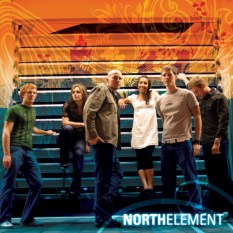
1931365_1084550834666_7953_nBen Phillips is a 35-year-old father of four remarkable and rambunctious children. He has been married to his loving and patient wife, Katie, for 16 years. Ben’s lifelong passion has been writing and creating music to lead people into a better understanding of God’s pursuing love for them. By God’s grace, for the past ten years, he has led people in worship as a full-time career at Calvary Community Church, a non-denominational, 13,000-member church located in Phoenix, Arizona. During Ben’s time leading at Calvary, he has written more than 40 songs, and published two albums. His band, North Element [formerly North Worship], is available through iTunes, cdbaby.com and other major music-based websites.

Ben began his love for reading at the young age of eleven—he enjoyed tackling novels by authors like Stephen Lawhead, Terry Brooks, J.R. R. Tolkien, and C.S. Lewis. Ben began creating fictional characters in early childhood, and progressed to writing short stories in high school. He found the same love and interest in writing fiction as in music. For years, as God led him to use music for His glory, Ben’s love for writing was focused on songwriting lyrics. In 2010, following a back injury, Ben was forced to lay low from his busy, musical lifestyle. During that time, a desire to communicate God’s beauty, plan of salvation, and love through fictional stories was rekindled.

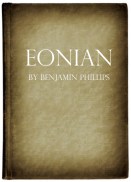
Ben was becoming aware of the growing divide among American subcultures—and the general lack of interest in hearing the gospel of grace. These two realities, combined with his children’s love of reading, sparked the idea of joining others who have portrayed Christian ideals and spiritual truths through fictional characters. He had a sincere desire for his children to understand the honor, strength, and lifelong wonder found within a relationship with Jesus, and knew it could be communicated through stories and characters in ways other than theological non-fiction—a genre widely unread by the majority of the world’s children and adults. During the past three years, Ben has worked on a fantasy trilogy: The Shadow Champion. His new sci-fi novel, Eonian, will be published and released in the fall of 2014.

Ben’s Genre:

Post-Apocalyptic Sci-fi; Heroic Fantasy

Ben’s Passion for Writing:

“My passion for writing began years before I could read or write. It was a love that stemmed from a vibrant, wide-eyed amazement of all things make-believe: bedtime stories, picture books, theater productions, movies, backyard pretending—it all embodied the possibility of an otherworldly escape to my impressionable, pre-school mind. As a boy, I would get lost in books, privately placing myself as a character within those fictional tales. Before I was ten years old, I had begun dreaming up my own worlds, complete with larger-than-life characters, and deadly archenemies. It wasn’t long before I attempted to write down the adventures from my mind, often in storyboard form. Somewhere along the way, while I grew farther into adulthood, the wonder was lost to me, as I think happens to many of us.

In my early twenties, I came into a saving faith in Jesus. Soon, when reading authors like Lewis and Tolkien, the idea of writing fiction with the intention of incorporating analogous truths that hold an eternal value became romanticized in my mind. As I matured in my faith, the make-believe of my youth—that had once been lost—began to reemerge.

Without necessarily intending to do so, I found myself dreaming up new, elaborate, imaginations that I would share with my sons. I have to confess, the actual act of writing has always been more of a burden—a means to an end. Dreaming of the story, in all its grandeur and beauty, comes easily…typing the words on a page, to convey the depths of those dreams, is daunting to say the least.”

What is Ben’s book about?

Eonian

“Death, blindness, and chaos—this is the reality that the 22-year-old military subcontracted courier, Gavin Marksdon, awakens to discover. It’s been nearly six months since a meteor storm pummeled one of the largest cities in America, causing a mysterious plague to spread throughout the world. The unknown bacterium is saturating every living organism with a contamination level that is bringing all civilization to a halt—technology and organic life are both struggling to survive.
Gavin regains consciousness in total darkness. Recovering from a grievous wound received by a meteor fragment, he learns there is a tangled web of his own government’s knowledge—deceit as well as a war—that has raged for countless eons from beyond Earth. While battling powerful changes to his physical form, Gavin and his handful of allies find themselves on an expedition that holds the balance of their world—a world wavering between a dark evil, and a new light. Journeying their way through a devastated, post-apocalyptic America, to find and save Gavin’s 13-year-old sister, Lenora, they stumble on a deeper conspiracy of a global alien presence…and their own government’s betrayal.”


A Book’s Mind |  iTunes: This Dust  | iTunes: North Element | PureVolume.com |
 | Facebook | Twitter | Email |


Ben’s Published Music:


mzi.qlikhbar.170x170-75


This Dust
by North Worship; 2008 | Spiritual / Alternative


“Slow and peaceful tones collide with driving rock to create a worship project that glorifies Jesus Christ with the honesty of humanity.”


A Book’s Mind |  iTunes: This Dust  | iTunes: North Element | PureVolume.com |
 | Facebook | Twitter | Email |


Artist-4800608-FrontCover

North Element
by North Element; 2009 | Spiritual / Christian Rock


“A seven song EP with music that ranges from songs of wonder and praise to heart-wrenching cries for God to intervene in seemingly hopeless situations.”


A Book’s Mind |  iTunes: This Dust  | iTunes: North Element | PureVolume.com |
 | Facebook | Twitter | Email |


Upcoming Events:

Book Launch:

Eonian is scheduled to be released in fall of 2014 through A Book’s Mind publishing. The official book launch is scheduled for October 2014. Watch for the date!


Tell Ben you heard about him on editingaddict.com!


Market the Author

[by Billi Joy Carson, Senior Editor/ Editing Addict]

Editor Tip: Market the Author

If you are an author, a blogger, or a copywriter…then correct spelling, punctuation, word use, and grammar is a necessity in all areas of your writing…books, blogs, marketing, advertisements, social media, queries, submissions, letters, and emails.

Why…?

I can hear the horrified gasps, feel the eyes rolling—doubt and fear from writers everywhere. Panic in the streets.

Before you throw your hands up, and stop reading, let’s look at the WHY behind this necessity.


You are always marketing YOU.


Your books come and go, but you, the author, remain constant. You are the first line of defense when it comes to marketing yourself—which you are doing every day, every time you write…anything.

You are marketing not only to readers, but to publishers, agents, editors, and your fellow authors who would network with you. You are marketing your writing ability—yes—but you are ALSO marketing your organization capabilities, your attention to details, your desire for accuracy….

What if you don’t care about details and accuracy? Publishers do.

Publishers, editors, and agents notice. In this world of instant access, through social media and blogs, your everyday comments and posts are seen.


If an author can’t be trusted to use the right word in 140 characters, why would they trust the author with a 300-page book?


Agents, editors, and publishers (oh my!) have deadlines. Organization is a big part of that. Make it appear you are organized—even if you have to fake it.

Here are some excellent tools to keep close to you, always. I suggest bookmarking them, as well as storing them on your smart phones and tablets—wherever you write, post, and email.

OneLook.com

  • Dictionary compilation of over 1000 dictionaries
  • Correct spelling not needed
    • It offers options for word spelling
    • Shows several dictionaries, with links.
  • Breaks search answers into four categories
    • General
    • Business (language)
    • Computing (language)
    • Slang*
      • *Words that haven’t made it into traditional dictionaries will show up here.
      • *Caution: When writing items for publishing (versus informal social media, emails…), only use a Chicago Manual of Style approved dictionary, like Merriam-Webster.

Other dictionaries:

Thesaurus:

Grammar:

  • Grammarly.com (not CMS approved, but still a great tool)
    • Copy/paste text in box—it shows grammar errors and weaknesses
  • Guide to Grammar & Writing
    • Quick lookup for parts of speech, word use, and grammar rules

Style Guides:


Questions for the editor to answer next time:

Go back

Your message has been sent

Warning
Warning
Warning

Warning.

[by Billi Joy Carson, Senior Editor / Editing Addict


Bound by Fear

 Guest Blog by H. Squires


I am a writer, an author, and storyteller. It took me a long time before I could utter those words either on paper or in conversation. I was bound by fear—afraid of being judged, ridiculed, laughed at, or simply disregarded. My voice climbed only as high as the paper stacked.

From the time I was a child, I enjoyed writing. Rarely, did I share my work with others—or even let people know my love of words. I only allowed family members to read my stories.

After I wrote my first novel, I fantasized about being published—which actor(s) could star in the movie, and the potential revenue it could generate—but I didn’t spend too much time in “La-la-land”. Instead, I got busy writing the second novel, and by the third, I felt my work should be published. I was ready to share it with the world. However, I wasn’t sure if it was good enough to move forward.

I knew my husband and daughters enjoyed the stories, but I felt their opinions were biased. After all, they were my family. I needed others to give me their honest opinions. I had many unanswered questions pertaining to grammar, continuity, and the lack of clarity when it came to editing. Even though I considered myself [somewhat] good at grammar, I wasn’t sure if I remembered everything from school. Does the story make sense, flow right, and keep the reader engaged? You can do only so much research from the privacy of your home. I needed help—actual, human, face-to-face support.

One of the first things I did was join a writing group. It was an all-women’s group, so the tension seemed less nerve-racking. The group meets three times a month—one of which is a teaching class on grammar and other helpful tips. The second meeting, we are instructed to read our latest work out loud to the others. This was the most difficult thing I’ve had to do in a long while. Reading to a bunch of strangers—a story that I concocted—sent me into a shaking-fit, so much so that I decided to hand my pages to another lady to read for me. I was astonished by all the positive feedback, something I hadn’t expected. They helped, reassured, and gave me honest advice. It propelled me farther.

Last year, I accomplished my goal. My third novel was published, and, for the first time, people were reading my work. It made me realize that others struggle with the very same issues as I did—not willing to share their stories. Some people are satisfied letting close friends and family read their work. For example, Emily Dickinson—a world-renowned poet—wasn’t discovered until after her death. Her younger sister found a lifetime of collective poems in Emily’s attic. Later, she sought the publication for her sister’s work. Imagine how different Emily’s life could have been if she had become published?

If you are a writer and have written poetry, short stories, or novels that serve as dust-bunny habitats, it’s time to consider sharing beyond family. Trust me, I know how hard it is, like bearing your soul to the world. Research local writing groups or go to online writer’s forums. You will get a lot of advice, constructiveness, and learn a lot. Who knows, you could be considered as the next Hemingway, Rowling, or Dickens?

Take care, my friends.

How to Find a Writer’s Group
Online Writer’s Community


Meet our Guest Blogger, H. Squires:


image

Heather Squires’ life calling to be an author began in 1989 in Phoenix, Arizona. As an editorial writer on staff at the Utopian Newspaper, she decided to seek further review and publishing. The first project to be completed outside of the journaling world was To Desecrate Man, an action novel; completed in 2005, it became over shadowed by the second project: Rogue, a young adult fiction-adventure novel.

Upon completion of Rogue in 2009, Squires’ place in the young adult fiction world became clear. The Sphere of Archimedes began to take shape, and was finished in 2011. Currently working on the sequel, The Omphalos of Delphi, she continues to create anticipation for the future of young adult fiction.

Amazon | Barnes & Noble  | HSquiresNovels | Blog | 
 | Facebook | Twitter | Goodreads | Email |
[See what H. Squires had to say about our editor!]


Work at the Language

“Of course, there are those critics – New York critics as a rule – who say, ‘Well, Maya Angelou has a new book out and of course it’s good but then she’s a natural writer.’ Those are the ones I want to grab by the throat and wrestle to the floor because it takes me forever to get it to sing. I work at the language.”

— Maya Angelou