Audiobooks, Your Friend

[found on thecreativepenn.com; by  JOANNA PENN]

“Your book is not just a physical book or an ebook. There are plenty of other subsidiary rights that you can exploit and audiobooks are high on the list because of the rise in popularity of listening during commutes or workouts, and the increased penetration of smartphones. In today’s interview, we explore how you can get into this market.”

To read the info from Joanna Penn on creating your own audiobook, and listen to the podcast, click HERE.

[found on http://www.thecreativepenn.com/2013/03/06/audiobook]

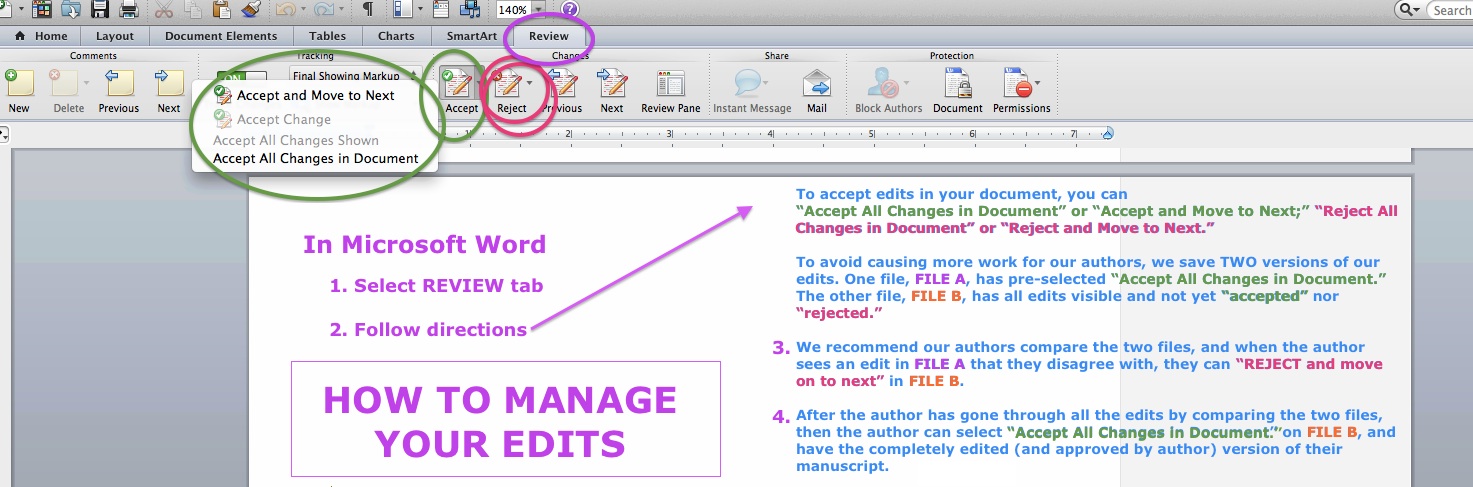
How To Manage Your Edits

“As an editor, I have heard horror stories about authors who didn’t know how to process the edits they received back from their editors. Instead of asking what to do with the Word document, [caution, you’re going to scream] some of the authors printed the full manuscript, compared item by item, then RETYPED the entire manuscript.

Don’t let this be you.

Firstly, your editor is on your TEAM. An editor wants you to succeed. And even though you may feel like we are all jackals, we don’t really bite. Ask us questions—especially when you feel overwhelmed or uncertain.”

— Billi Joy Carson / Senior Editor, Editing Addict

  EDITOR Sends Completed File Back to AUTHOR:

THE AUTHOR’S JOB:

1. READ through document

2. CHOOSE FROM (to accept and/or reject changes)

a. Accept All Changes in Document

b. Accept and Move to Next

c. Reject All Changes in Document

d. Reject and Move to Next

3. SHORTCUT for authors

a. Save TWO* versions of the file you received from your editor.

i. File A [edits accepted]

1. In Word Doc, under REVIEW tab [File A]

2. Select Accept All Changes in Document [File A]

ii. File B [edits visible]

1. Leave the file the way you received from the editor

b. Read through File A side-by-side with File B

i. If you find an edit you don’t want

1. In File B

a. Under REVIEW tab [File B]

b. Select Reject and Move to Next [File B]

ii. When you are finished reading File A, and correcting File B,

1. In File B

a. Under REVIEW tab [File B]

b. Select Accept All Changes in Document [File B]

c. File B is now fully edited, and author approved

*At Editing Addict, I do this beforehand for my authors, however, not all editors have the [File A & File B] policy, and expect the author to do it on their end. How To Manage Your Edits

How to Accept and/or Reject Tracked Changes in a Word Document: YouTube Video

Still have questions? Leave a comment below, or send  a message to the editor: billijoycarson@editingaddict.com. Teamwork brings success!

Featured Writing Addict: David Rich

David Rich

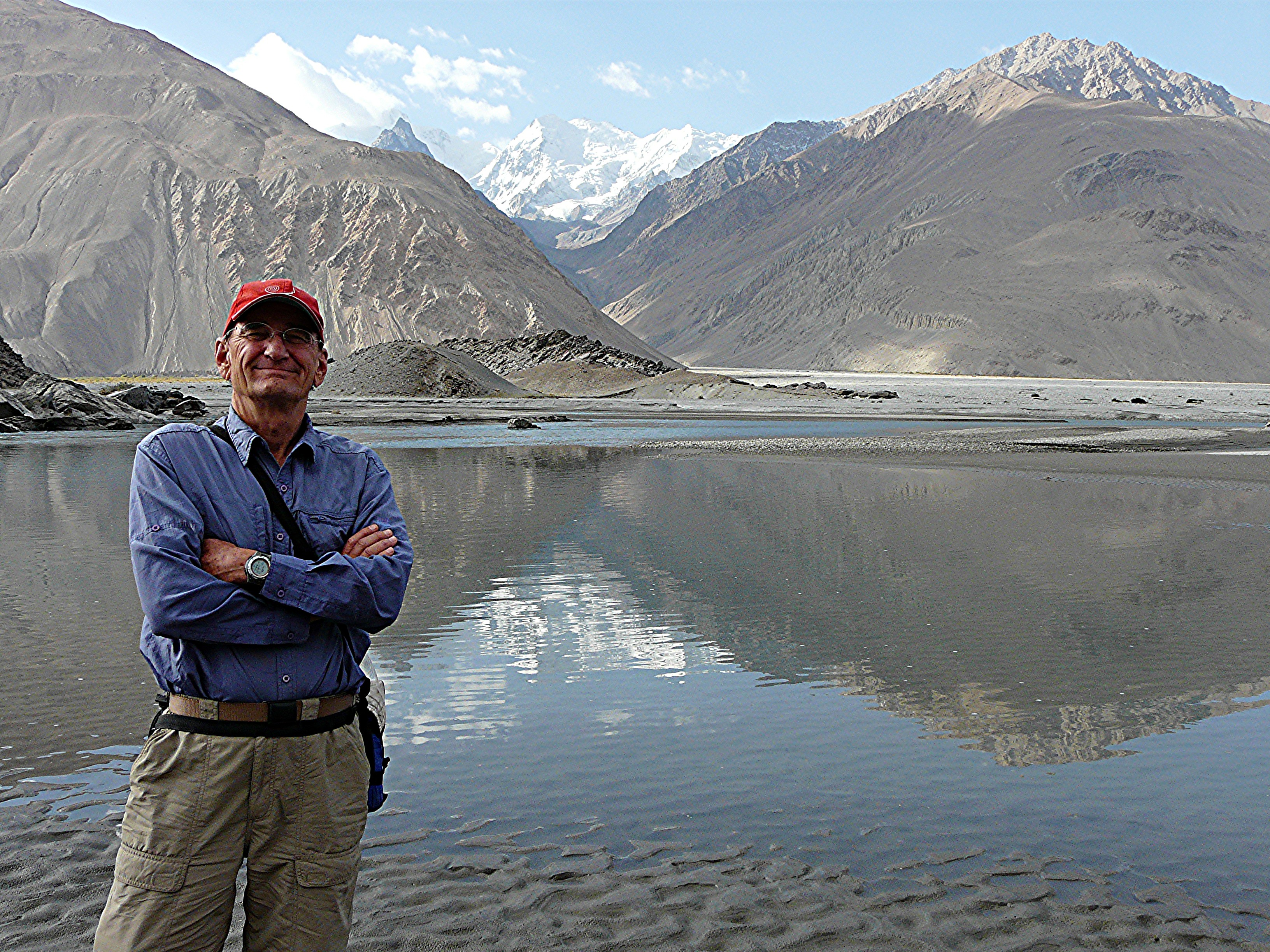
David Rich is a most intrepid writer—braving blizzards, monsoons, desert heat, and State Department travel advisories—to visit the world’s most out-of-the-way places, primarily by RV, from the Karakoram Mountains in Pakistan to the wilds of Borneo.

David retired in his forties to become a full-time international traveler, an occupation he found preferable to former professions of law professor and trial lawyer with the Arizona Attorney General’s Office (from which he says he’s now mostly recovered). He pursued freelance travel writing and exotic full-time international travel for eighteen years, living in almost every country on the planet. Until buying a home near Deer Valley Airport, AZ in 2009 (where he later obtained his private pilot’s license in 2011), he and his wife Mary had sold everything and were classically homeless.

Travel highlights include: climbing Kilimanjaro in Tanzania and Roraima Tepui—where Brazil, Guyana and Venezuela intersect; the Annapurna and Everest Base Camp treks in Nepal; the Karakorum’s in NW Pakistan, hosting six of the world’s 14 highest peaks; the exotic Stans (particularly Tajikistan and Uzbekistan); Mali and Ethiopia; the national parks of Patagonia, and Petra in Jordan. The highlights comprise hundreds of incredible sights and far-reaching adventures, including a minor hostage situation in Serbia.

David and Mary RVed Europe, Scandinavia, Northern Africa, and the Middle East for three years; they RVed Australia for over a year, New Zealand during two visits totaling a year, and South America for two years. Along with the extensive RV and other independent travel throughout Africa and Asia, they interspersed sailing trips all over the globe from Malaysia, Thailand, and the Philippines to Venezuela, Panama and Columbia.

What’s David’s Genre?

Travel, philosophy, economics, government, religion, and ethics

What’s  David’s Passion For Writing?

“An addiction to travel has taken me around the world many times. I inherited the passion from my parents, who traveled every available moment. My travels have ranged from sailboats and Cessnas to RVs and backpacks—all over the world. We understand that you can’t know a place, country, people, or culture until you go experience them firsthand. My curiosity and thirst for knowledge of other places, peoples, and cultures have—with a few exceptions—found me living in every country on the planet. I love to travel, a passion reflected in my books, stories, and photos. I also write books on philosophy, specifically economics, government, ethics, and religion and have two works in process for completion by the end of 2014.”

What are David’s books about?

RV the World
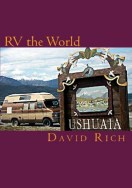
“Traveling the world by RV is the least expensive, most interesting and convenient means to see the world in its entirety, up close and cosy. Anyone can do it. RV the World explains how, and takes the reader on a three-year RV trip through Europe, North Africa, Scandinavia, and the Middle East.”

Amazon.com Book Description:

“The easiest, most comfortable, safest and least expensive way to see the entire world is by RV, which the author has done on every continent save Antarctica. When people learn the author and his wife have traveled the world continuously for 18 years, living in 147 countries, everyone is curious. The questions are always the same: Does it cost a lot to travel full time all over the world? How much? How are you able to navigate all those foreign countries? What’s the best way to do it? Then comes, I wish I could do that, to which the author always says, Anyone can do it if they really want to. It’s easy and inexpensive.

The book answers all these questions and takes the reader on a tour of Europe, Scandinavia, North Africa and the Middle East, further answering where to go, what to do and exactly how to do it. The sights include all the Seven Wonders and much more, from fantastic cities, national parks, sprawling antiquities and incredible mountains to exotic shopping, fine dining and pristine beaches. Here’s how to ship your own RV all over the world or go wherever you’d like and buy an RV there, obtain insurance, deal with foreign languages, the requirements of the proper RV and how to sell it locally before moving onto the next continent. Full-time international travel is easy when you know how to deal with the necessary details from mail, inoculations, documents, weather, costs, airfare, investments and healthcare.

 
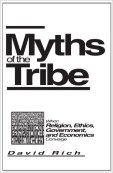
Myths of the Tribe

“The relationships among government, economics, ethics, and religion are explored in Myths of the Tribe: When Religion, Ethics, Government and Economics Converge. The relationships are many, recognition of which, would improve the efficacy of all four.”

Amazon.com Book Description:

“David Rich examines the pervasive influence of organized religion on three vital areas of human behavior — ethics, government, and economics — and argues that the belief systems of all major religions have become a detriment to clear thinking, rational conduct, and wise public policy.

Despite the fact that modern society is an outgrowth of the Enlightenment, most of our “tribe” continues to operate on the basis of assumptions and attitudes that have their origin in ancient myths. These myths, still propagated by organized religion, not only hamper efforts to apply reason to our problems, but they can foster violent conflicts that threaten global security, as witnessed today in the former Yugoslavia, the Middle East, Northern Ireland, and many regions of Africa and Asia.”
_____________________________________________
  

To reach David Rich, buy his books, or schedule a book-signing event:

Tell him you heard about him on editingaddict.com!

Children’s Book, Here You Come

[found on wvculture.org; by Mary Rodd Furbee]

“Consider why you want to write children’s books.
If you want to write books for children, it helps to be a little crazy. I developed a passion to write nonfiction biographies for middle-school children about four years ago. My daughter’s experiences made me realize that there were hardly any children’s books on America’s founding mothers. It hit me, hard: This was what I had to write. There was a need. The subject was fascinating. I knew I could do it, and found the prospect exciting. If you have a similar passion, perfect. If not, perhaps you are meant to do something else. It’s hard to write books, harder still to write books for children. It’s difficult to get published, and you’ll face a lot of rejection.

Don’t expect to make big money or make it quickly.
Writing books for children is like starting a business. You must invest both time and money. I hoped to make money writing my first books, but I didn’t. Four years and six published books later, I still haven’t made as much money as I could have in most professional writing or editing positions. It’s the rare children’s book that hits the bestseller list or wins a Newbery Award, and the rare full-time children’s writer who makes a living.

Read children’s books.
When I decided to write biographies of women in American history, I read biographies, histories, books about writing biographies, and lots of middle-grade fiction and nonfiction. It’s amazing what you can learn by reading the books you want to write – be they board books for infants and toddlers, picture books, early readers, middle-grade novels or young adult nonfiction. Read the best authors – over and over. If you can, take a class in children’s literature or writing for children.”

For more tips on writing children’s books from Mary Rodd Furbee, click here.

[found on http://www.wvculture.org/arts/Artworks/Fall01/childrens.html]

Writing Can Not Be Tone Deaf

[found on writersdigest.com]

“If you find yourself having a difficult time sustaining one tone over a long work, try these three tricks.

1. Find a paragraph that sounds exactly the way you want to sound for this work, and tape it to your computer so that it’s always in front of you.

2. Each time you’re about to return to the piece, spend 20 minutes reading the work of an author who writes in the tone you’re after.

We’re natural mimics. You might try taking this a step further by more closely examining the sentence rhythms and word choices and looking for ways to make them your own. John Lukacs once said, “Style begins the way fashion begins: Somebody admires how the other man dresses and adapts it for himself.”

3. Starts and finishes are especially important to tone.

When revising your work, try moving some of your best sentences, the ones with energy and just the right tone, up to the top of your document: “I’m so looking forward to Christmas this year. It will be the only day in December not entirely consumed by children’s theater performances.” Could the piece begin this way? Experiment with moving equally strong sentences to the conclusion of your piece, for a cohesive ending.”

For more tips on writing from Writer’s Digest, click here.

[found on http://www.writersdigest.com/whats-new/3-tips-for-consistent-tone-2]

Dialogue Your Characters

[found on theguardian.com]

“It’s never too soon to start thinking about what your characters will say and how they’ll say it. Giving each of your characters a distinct voice is key to writing great fiction.

The goal of Worksheet 9 is to encourage you to think about your characters’ individual speech patterns and specific word choices. Your characters will probably reveal these distinctions as your story progresses, but thinking about it early will make you more receptive to such revelations.

For each of your major characters, record information about individual speech patterns and any catchphrases they may use.

With this information in place on a dialogue sheet, you’ll know exactly what a given character will say and how he/she will say it. You can also use this worksheet during the final edit and polish of the manuscript to double-check speech patterns.”

[found on http://www.theguardian.com/books/2012/oct/19/researching-your-novel]

The Perfect Scene

[found on advancedfictionwriting.com; by Randy Ingermanson]

“Writing the perfect scene:

    1. Goal: A Goal is what your POV character wants at the beginning of the Scene. The Goal must be specific and it must be clearly definable. The reason your POV character must have a Goal is that it makes your character proactive. Your character is not passively waiting for the universe to deal him Great Good. Your character is going after what he wants, just as your reader wishes he could do. It’s a simple fact that any character who wants something desperately is an interesting character. Even if he’s not nice, he’s interesting. And your reader will identify with him. That’s what you want as a writer.
    2. Conflict: Conflict is the series of obstacles your POV character faces on the way to reaching his Goal. You must have Conflict in your Scene! If your POV character reaches his Goal with no Conflict, then the reader is bored. Your reader wants to struggle! No victory has any value if it comes too easy. So make your POV character struggle and your reader will live out that struggle too.
    3. Disaster: A Disaster is a failure to let your POV character reach his Goal. Don’t give him the Goal! Winning is boring! When a Scene ends in victory, your reader feels no reason to turn the page. If things are going well, your reader might as well go to bed. No! Make something awful happen. Hang your POV character off a cliff and your reader will turn the page to see what happens next.

For more tips on writing from AdvancedFictionWriting, click here.

[found on http://www.advancedfictionwriting.com/articles/writing-the-perfect-scene]

The Art of Conflict

[found on huffingtonpost.com; by Writer’s Relief Staff]

“Learn the art of conflict. Creating a powerful conflict and weaving it tightly throughout the story is a tricky thing to master, and can take years of practice. The catharsis that a reader will experience at the resolution, however, is worth the struggle. Conflict is what makes us interested in outcome. And your conflict must affect your characters in a way that forces them to act and grow as a result. A story with a weak conflict that leaves the characters exactly as they were at the start won’t be satisfying; your story won’t make a lasting impression.

Here’s a tip: The best way to learn how to write conflict is by reading it. The next time you’re reading a short story or novel, take note of how the author presents the main conflict and the specific ways in which the characters react to it.”

[found on http://www.huffingtonpost.com/2012/06/27/writing-tips-advice-fiction-authors_n_1628537.html]

Grammar Up, It’s Important

[found on writerstreasure.com; by  ]

“Read up on Grammar, Spelling and Punctuation

Before you get offended for me saying such a suggestion, let me elaborate. There are some common misspellings found on the internet; two such lists are found here and here. “It’s and its”, “there and their”, “loose and lose” and so on. So if you make such a common mistake, people will see you as an amateur.

Grammar mistakes are as common as spelling mistakes. Some new school people say go ahead and break the grammar rules. That may be good advice for a few of them (for example, you should break the no sentence ending with a preposition rule and you’re perfectly free to begin a sentence with ‘and’ and ‘but’ if it appeals to you).

But not all grammar rules were made by stodgy people, and most make sense. If it appeals to you to break them, go ahead, but you must know the reason why you broke it in the first place, and why it wasn’t appropriate. If you don’t know that you broke a rule or why, your credibility goes out of the window.

In the same way, people make punctuation mistakes often without realizing that they did it. The confusion between “me, myself and I”, the improper and incorrect use of the apostrophe (some people have campaigned for its being banned since it causes so much confusion among people) etc has become rapidly larger and larger.

So that is why, if you really want to become a credible writer who is not governed by the rules, go read up on grammar, spelling and punctuation. A single book or two will clear confusions, enable to break rules knowing why you broke them, consciously following sensible rules and more.

Tip: – Don’t rely on Microsoft Word’s Grammar Checker. Its spell check is all right, but the grammar tool is atrocious. Many has been the time that it shows up its infamous green line under my words and calls out for incorrect and so called grammatically correct changes. Have you ever seen a “Fragment (consider revising)” call to change? It’s perfectly all right to ignore that, because you’re not writing a textbook, you’re a creative writer.”

For more excellent tips on writing from Writers’ Treasure, click here.

[found on http://www.writerstreasure.com/how-to-improve-your-creative-writing]

Strong Words Where Stand Ye?

[found on writershelper.com]

“Writing Tip #5: Use strong verbs and nouns

The verbs are the action words. They put things in motion. Make yours as strong as possible.

The verb to be (am, is, are, was, were) puddles on the floor. Eliminate it wherever possible. I spent a year in Ukraine and experienced Russian, where the verb to be exists, but almost never appears. People simply leave it out and I found the effect powerful. In English we can’t leave verbs out of our sentences, but we can make those we use work hard for us.

Nouns name the people, places, and things in our world. English has multiple words for almost everything. A male parent can be father, dad, pop, daddy, the old man, pater, progenitor, sire, begetter, conceiver, governor, abba, papa, pa, pap, pappy, pops, daddums, patriarch, paterfamilias, stepfather, foster father, and other family nicknames. Choose the noun that does the best work for you.

Short words are usually best. They have more punch. They hit the gut hard.

The paragraph above has only one word with more than one syllable.”

For more exciting tips on writing from Writer’s Helper, click here.

[found on http://www.writershelper.com/writingtips.html]