Tag: writer

Write A Personal Bio
[found on blog.brandyourself.com; by PETE KISTLER]
“1. Make three versions: short, medium and long.
Most of the time, someone else will dictate the length of your bio. They will likely tell you how many words you can use to ensure that yours is the same length as other bios. Because of this, one bio will not do. You need three bios:
- One sentence bio
- 100 word bio
- 250 word bio
Each bio has its place. You will save you time and energy when the time comes time to post it, and establish consistency between every professional bio about you that is published.
2. Introduce yourself as if you’re meeting a stranger.
Lead in with your name. People need to know who you are before they hear what you’re all about.
3. Immediately state what you do.
If you are “Portrait Photographer,” don’t wait until the last moment to say it. Your most important details should go in the first sentence. Remember: people on the web rarely read more than the first and last sentence.
4. Touch upon your most important accomplishments.
Don’t list them, and make sure they fit. A bio is not a resume; it is simply a quick summary of who you are. If you have space, mention them. If not, ignore them.”
To see the rest of the ideas on writing a personal bio, click here.
[found on http://blog.brandyourself.com/how-tos/8-tips-on-how-to-write-a-personal-biography]
Share this:
Answer The Question…
“An author simply comes up with a hypothetical question, and then spends eight months and 80 thousand words to come up with a believable lie to answer it.”
― Carl Henegan
Share this:
Capture The Words
“Words raced thru his mind and his fingers ached to capture them all on paper.”
― Eveli Acosta
Share this:
How To Manage Your Edits
“As an editor, I have heard horror stories about authors who didn’t know how to process the edits they received back from their editors. Instead of asking what to do with the Word document, [caution, you’re going to scream] some of the authors printed the full manuscript, compared item by item, then RETYPED the entire manuscript.
Don’t let this be you.
Firstly, your editor is on your TEAM. An editor wants you to succeed. And even though you may feel like we are all jackals, we don’t really bite. Ask us questions—especially when you feel overwhelmed or uncertain.”
— Billi Joy Carson / Senior Editor, Editing AddictEDITOR Sends Completed File Back to AUTHOR:
THE AUTHOR’S JOB:
1. READ through document
2. CHOOSE FROM (to accept and/or reject changes)
a. Accept All Changes in Document
b. Accept and Move to Next
c. Reject All Changes in Document
d. Reject and Move to Next
3. SHORTCUT for authors
a. Save TWO* versions of the file you received from your editor.
i. File A [edits accepted]
1. In Word Doc, under REVIEW tab [File A]
2. Select Accept All Changes in Document [File A]
ii. File B [edits visible]
1. Leave the file the way you received from the editor
b. Read through File A side-by-side with File B
i. If you find an edit you don’t want
1. In File B
a. Under REVIEW tab [File B]
b. Select Reject and Move to Next [File B]
ii. When you are finished reading File A, and correcting File B,
1. In File B
a. Under REVIEW tab [File B]
b. Select Accept All Changes in Document [File B]
c. File B is now fully edited, and author approved
*At Editing Addict, I do this beforehand for my authors, however, not all editors have the [File A & File B] policy, and expect the author to do it on their end. 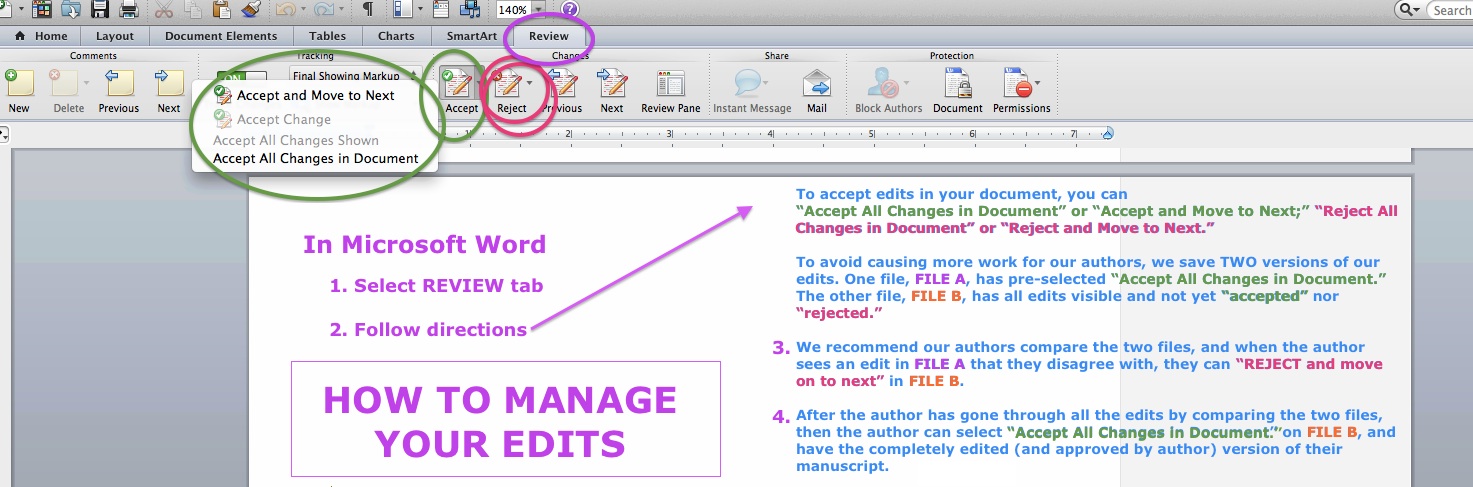
How to Accept and/or Reject Tracked Changes in a Word Document: YouTube Video
Still have questions? Leave a comment below, or send a message to the editor: billijoycarson@editingaddict.com. Teamwork brings success!
Share this:

Writing Sickness
Featured Writing Addict: David Rich
David Rich
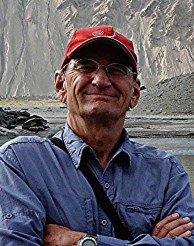
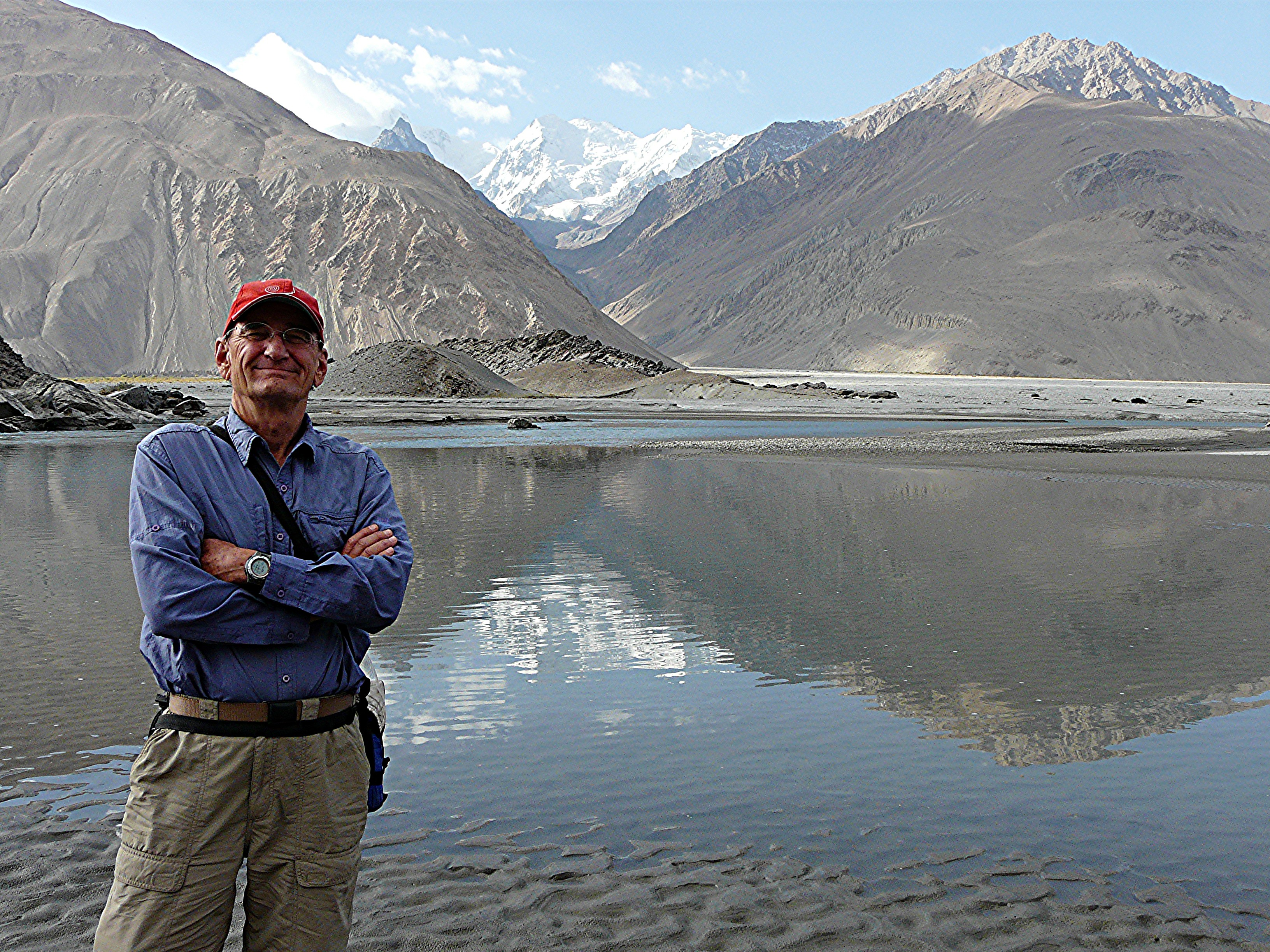
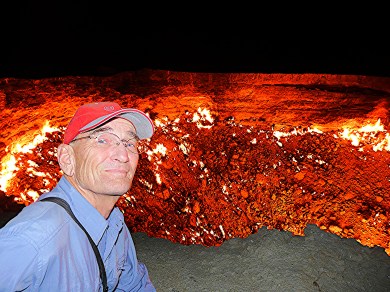
David Rich is a most intrepid writer—braving blizzards, monsoons, desert heat, and State Department travel advisories—to visit the world’s most out-of-the-way places, primarily by RV, from the Karakoram Mountains in Pakistan to the wilds of Borneo.
David retired in his forties to become a full-time international traveler, an occupation he found preferable to former professions of law professor and trial lawyer with the Arizona Attorney General’s Office (from which he says he’s now mostly recovered). He pursued freelance travel writing and exotic full-time international travel for eighteen years, living in almost every country on the planet. Until buying a home near Deer Valley Airport, AZ in 2009 (where he later obtained his private pilot’s license in 2011), he and his wife Mary had sold everything and were classically homeless.
Travel highlights include: climbing Kilimanjaro in Tanzania and Roraima Tepui—where Brazil, Guyana and Venezuela intersect; the Annapurna and Everest Base Camp treks in Nepal; the Karakorum’s in NW Pakistan, hosting six of the world’s 14 highest peaks; the exotic Stans (particularly Tajikistan and Uzbekistan); Mali and Ethiopia; the national parks of Patagonia, and Petra in Jordan. The highlights comprise hundreds of incredible sights and far-reaching adventures, including a minor hostage situation in Serbia.
David and Mary RVed Europe, Scandinavia, Northern Africa, and the Middle East for three years; they RVed Australia for over a year, New Zealand during two visits totaling a year, and South America for two years. Along with the extensive RV and other independent travel throughout Africa and Asia, they interspersed sailing trips all over the globe from Malaysia, Thailand, and the Philippines to Venezuela, Panama and Columbia.
What’s David’s Genre?
Travel, philosophy, economics, government, religion, and ethics
What’s David’s Passion For Writing?
“An addiction to travel has taken me around the world many times. I inherited the passion from my parents, who traveled every available moment. My travels have ranged from sailboats and Cessnas to RVs and backpacks—all over the world. We understand that you can’t know a place, country, people, or culture until you go experience them firsthand. My curiosity and thirst for knowledge of other places, peoples, and cultures have—with a few exceptions—found me living in every country on the planet. I love to travel, a passion reflected in my books, stories, and photos. I also write books on philosophy, specifically economics, government, ethics, and religion and have two works in process for completion by the end of 2014.”
What are David’s books about?
RV the World
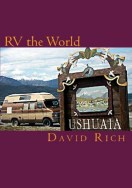 “Traveling the world by RV is the least expensive, most interesting and convenient means to see the world in its entirety, up close and cosy. Anyone can do it. RV the World explains how, and takes the reader on a three-year RV trip through Europe, North Africa, Scandinavia, and the Middle East.”
Amazon.com Book Description:
“The easiest, most comfortable, safest and least expensive way to see the entire world is by RV, which the author has done on every continent save Antarctica. When people learn the author and his wife have traveled the world continuously for 18 years, living in 147 countries, everyone is curious. The questions are always the same: Does it cost a lot to travel full time all over the world? How much? How are you able to navigate all those foreign countries? What’s the best way to do it? Then comes, I wish I could do that, to which the author always says, Anyone can do it if they really want to. It’s easy and inexpensive.
The book answers all these questions and takes the reader on a tour of Europe, Scandinavia, North Africa and the Middle East, further answering where to go, what to do and exactly how to do it. The sights include all the Seven Wonders and much more, from fantastic cities, national parks, sprawling antiquities and incredible mountains to exotic shopping, fine dining and pristine beaches. Here’s how to ship your own RV all over the world or go wherever you’d like and buy an RV there, obtain insurance, deal with foreign languages, the requirements of the proper RV and how to sell it locally before moving onto the next continent. Full-time international travel is easy when you know how to deal with the necessary details from mail, inoculations, documents, weather, costs, airfare, investments and healthcare.“
Myths of the Tribe
 “The relationships among government, economics, ethics, and religion are explored in Myths of the Tribe: When Religion, Ethics, Government and Economics Converge. The relationships are many, recognition of which, would improve the efficacy of all four.”
Amazon.com Book Description:
“David Rich examines the pervasive influence of organized religion on three vital areas of human behavior — ethics, government, and economics — and argues that the belief systems of all major religions have become a detriment to clear thinking, rational conduct, and wise public policy.
Despite the fact that modern society is an outgrowth of the Enlightenment, most of our “tribe” continues to operate on the basis of assumptions and attitudes that have their origin in ancient myths. These myths, still propagated by organized religion, not only hamper efforts to apply reason to our problems, but they can foster violent conflicts that threaten global security, as witnessed today in the former Yugoslavia, the Middle East, Northern Ireland, and many regions of Africa and Asia.”
_____________________________________________
To reach David Rich, buy his books, or schedule a book-signing event:
- LinkedIn: linkedin.com/in/jdavidrich
- Facebook: facebook.com/jdavidrich
- Email: jdavidrich@yahoo.com
- Worldwide photography: david-rich.artistwebsites.com
- GoNomad: gonomad.com/corp/davidrich.htm
- MyTripJournal: mytripjournal.com/RichWorld (also featured on LonelyPlanet.com)
- Buy Sites for eBook:
- RV the World: Amazon.com
- Myths of the Tribe: Amazon.com
Tell him you heard about him on editingaddict.com!
Share this:

Fantasy? Nah, My Neighborhood
[found on terribleminds.com; by Chuck Wendig]
“ROOTED IN THE REAL
Reality is fantasy’s best friend. We, the audience, and you, the writer, all live in reality. The problems we understand are real problems. Genuine conflicts. True drama. The drama of families, of lost loves, of financial woes. Cruel neighbors and callow bullies and loved ones dead.
This is the nature of write what you know, and the fantasy writer’s version of that is, write what’s real. Which sounds like very bad advice, because last time I checked, none of us were plagued by dragons or sentient fungal cities or old gods come back to haunt us. But that’s not the point — the point is, you use the fantasy to highlight the reality.
The dragon is the callow bully. The lease on your fungal apartment is up and your financial woes puts you in tithe to the old gods who in turn make for very bad neighbors. You grab the core essence of a true problem and swaddle it in the mad glittery ribbons of fantasy — and therein you find glorious new permutations of conflict. Reality expressed in mind-boggling ways. Reach for fantasy. Find the reality.”
For more tips on writing fantasy from Chuck Wendig, click here.
 Editing Addict, LLC