Thriller, Horror, Terror — Oh My!

[found on writersdigest.com]
The three types of terror:
  • The Gross-out: the sight of a severed head tumbling down a flight of stairs, it’s when the lights go out and something green and slimy splatters against your arm.
  • The Horror: the unnatural, spiders the size of bears, the dead waking up and walking around, it’s when the lights go out and something with claws grabs you by the arm. And the last and worse one:
  • Terror, when you come home and notice everything you own had been taken away and replaced by an exact substitute. It’s when the lights go out and you feel something behind you, you hear it, you feel its breath against your ear, but when you turn around, there’s nothing there …”
— Stephen King

“The horror genre is something that I’ve always been fascinated with. Luckily, I don’t think I’m the only one. People like to be frightened. If they didn’t, Stephen King wouldn’t have a thousand novels and you wouldn’t find every horror film ever made running on AMC at this time, every year. Seriously. Click over to AMC, I can almost guarantee Halloween, or one of its sequels, is on right now.

And horror has adapted. Yes, you can still find the slasher movies and those “gross-out” moments that King references. But it’s mental now. “Found footage” movies can be terrifying because it seems so normal, so everyday. The more real, the better. And the scarier. It’s the dark basement where the only thing you can hear is the beating of your own heart. That’s real horror. The kind of stuff that makes the hair on the back of your neck stand up, as if someone was standing inches behind you.

But writing horror isn’t so easy. With any type of fiction, it’s difficult to think of something that hasn’t already been done. With horror fiction, it’s especially true. Creepy basements, loud noises from the attic, hidden rooms, Indian burial grounds, old hotels, multiple personality disorder, etc.—it’s all been done before, and it’s all out there. These clichés shouldn’t restrain you, however. They’ve simply defined the space you’re working in. You know what’s there, now create your own story.”

For more tips from Writer’s Digest on writing thrillers, click here.

[found on http://www.writersdigest.com/editor-blogs/there-are-no-rules/the-horror-genre-on-writing-horror-and-avoiding-cliches]

Make Stuff Up

“I’m an author. We don’t want to lead. We don’t need to follow. We stay home and make stuff up and write it down and send it out into the world, and get inside people’s heads. Perhaps we change the world and perhaps we don’t. We never know. We just make stuff up.” 

― Neil Gaiman

Describe In Short

[found on io9.com; by CHARLIE JANE ANDERS]

“World-building should be quick and merciless.

In a novel, you can spend ten pages explaining how the 29th Galactic Congress established a Peacekeeping Force to regulate the use of interstitial jumpgates, and this Peacekeeping Force evolved over the course of a century to include A.I.s in its command structure, etc. etc.

In a short story, you really need to hang your scenery as fast as possible. My friend and mentor d.g.k. goldberg always cited the Heinlein line: “The door dilated,” which tells you a lot about the surroundings in three words. Little oblique references to stuff your characters take for granted can go a long way.

Make us believe there’s a world beyond your characters’ surroundings.

Even though you can’t spend tons of time on world-building, you have to include enough little touches to make us believe there’s stuff we’re not seeing. It’s like the difference between the fake house-fronts in a cowboy movie and actual houses. We should glimpse little bits of your universe, that don’t necessarily relate to your characters’ obsessions.”

For more writing tips from Charlie Jane Anders, click here.

[found on http://io9.com/366707/8-unstoppable-rules-for-writing-killer-short-stories]

Featured Writing Addict: Hayley Rose

Hayley Rose

hayley rose pic

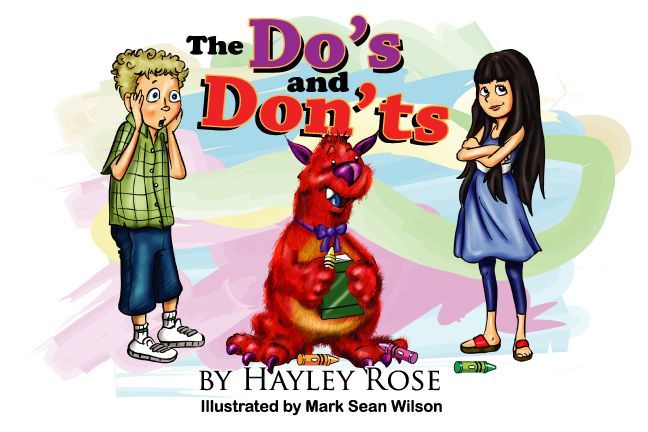
Multi-award-winning author, Hayley Rose, released her first children’s book in 2002, Fifo When I Grow Up, about a six-year-old bear starting school. That book was followed by the wildly popular geography book and #1 best-seller, Fifo 50 States, published in 2010.  In 2012 Hayley was selected as one of “The Top 50 Writers You Should Be Reading” by AuthorsShow.com. In 2013 she branched out with a new series, featuring a new set of characters, Zach, Chloe, and Louis the Manner Monster. Her new book, The Do’s and Don’ts, was released in September 2013, and has already been honored by the Mom’s Choice Awards, along with a Readers Favorite bronze medal.

What’s Hayley’s Genre?

Children’s Picture Books

What is  Hayley’s Inspiration?

“My life experiences are really my main inspiration for writing, along with my goddaughter and godson.  I had a great childhood, full of adventure and support.  Writing is my way of giving back, to be able to share great stories that inspire and educate.”

What are Hayley’s books about?

The Do’s and Don’ts

Dos_book_coverThe Do’s and Don’ts is a whimsical lesson book aimed at teaching young readers the difference between good and bad behavior, or etiquette.  In the book, Zack and Chloe go from being manner monsters, to well-behaved children, as they provide samples of typical scenarios that not only young children encounter, but can relate to.  For example, Zack becomes a Manner Monster when he loses a game, kicking and pouting like a poor sport.  In contrast, good behavior is then modeled depicting Zack congratulating the winning team.

Unlike other etiquette books for children—that tell a story or just communicate positive behavior—The Do’s and Don’ts compares and contrasts between good and bad behavior.  Simply, yet colorfully displayed, are examples of inappropriate behavior and decisions young children may display, followed by behavior and decisions that are more socially accepted.  Each compare-and-contrast anecdote is set in the same scene, so that young readers can instantly see the differences between good and poor behavior.

Fifo “When I Grow Up”

wiguFifo “When I Grow Up is about Fifo, a brown bear from Denali National Park. He is six years old, and in the first grade. Today is the first day of school, and Fifo is a bit scared.

Mama comforts him with his favorite breakfast, and they talk about what he wants to be when he grows up. By the end of breakfast, Fifo’s been a doctor, a fireman, a pilot, a policeman, a teacher, and even the president. Now he’s ready for anything—even the first day of school.

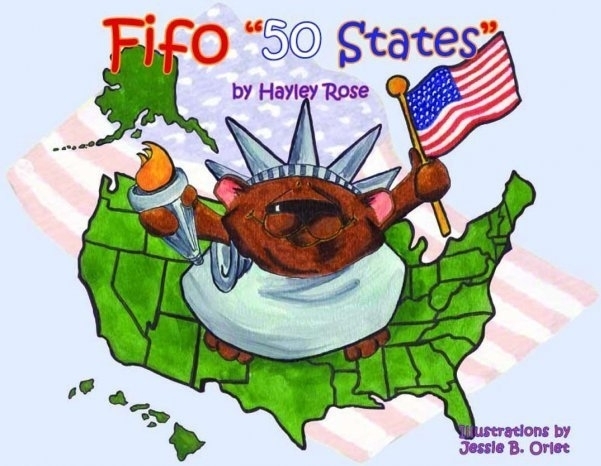
Fifo “50 States”

Fifo 50 States - Book CoverFifo “50 States” is a delightful rhyming story where Fifo, a warm and lovable brown bear, is bitten by the travel bug. Fifo dreams of digging up diamonds in Arkansas, looking for fossils in Kansas, enjoying a delicious bowl of gumbo in Louisiana, and even seeing a Broadway show in New York. Yes, America is an exciting place!

Fifo’s second book is full of adventure. A colorful reference-like geography book, Fifo discovers the wonders each state has to offer. Along the way, he learns each state’s capital, shape, flag, motto, and much, much more. The possibilities are endless!

So, come along with Fifo, and you’ll soon discover the beauty of America one state to another. A positive experience for both Fifo and the reader. Learning should always be this much fun.

To reach Hayley Rose, buy her books, or schedule a book-signing event:

Keep Your Story Fresh, Or Be Lost

[found on matthewdunnbooks.com; by Matthew Dunn]

“Make Sure Your Story is Fresh in 5 Years Time.

If you choose to set your story at a point in history, then your book won’t age for obvious reasons. But, most thriller readers like their stories to be contemporary which on the one hand is great for writers because it doesn’t mean we have to do painful extra research on e.g. what clothes a man would have worn in 1934.

On the other hand, there are pitfalls. Your book can take over a year to be written and edited, many years to get an agent and a publishing deal, and another year or two to become a finished published novel. Want to write a spy novel featuring the rogue state of Iran? If so, you need to be confident that Iran is still a rogue state in at least 5 years’ time.

The Western world applauded the collapse of communism but I guarantee you there were a large number of spy writers who tore up their draft manuscripts in disgust when the USSR fragmented, because their stories were supposed to be contemporary yet featured the Cold War and the Soviet Union.”

For more tips on writing from Matthew Dunn, click here.

[found on http://www.matthewdunnbooks.com/writing-a-thriller-novel-10-tips]

Comparison Jokes Are Gold

[found on darkcargo.com; by Alex Shvartsman]

“Comparison Joke is Your Best Friend

Comedy is hard, but some aspects of it are easier than others. Arguably there is nothing easier than a Comparison Joke. They are effective, and reasonably easy to come up with. Comparison joke can be a well-placed and unexpected metaphor, or simply comparing a thing to another thing for comedic effect. Here’s one of my favorite examples, source unknown:

Game of Thrones is a lot like Twitter: There are 140 characters and terrible things are constantly happening.

This joke is asking a lot of its audience. You must be familiar with both Game of Thrones and Twitter in order to appreciate it. But if you happen to be a part of that target audience, you might find this hilarious. You will nod sagely, recognizing that the Game of Thrones book and/or TV series has an unwieldy cast of characters and something terribly unpleasant is happening to most of them at any given time. You won’t even stop to ponder whether terrible things are actually happening on Twitter. You won’t dissect it, chuckling at the comparison instead, because the joke works.

You can always spice up your description of absolutely anything with a comparison joke. Take care not to over-rely this tactic. Like everything else in life (with possible exceptions of coffee and chocolate), it is best used in moderation.”

[found on http://darkcargo.com/2013/04/29/five-practical-tips-on-writing-humor-by-alex-shvartsman]