“In displaying the psychology of your characters, minute particulars are essential. God save us from vague generalizations!”
― Anton Chekhov (Letter to Alexander Chekhov, May 10, 1886)
We use spoken and written words every single day to communicate ideas, thoughts, and emotions to those around us. Sometimes we communicate successfully, and sometimes we’re not quite so successful. “That’s not what I meant!” becomes our mantra (an often repeated word or phrase). However, a good vocabulary can help us say what we mean.
For example, let’s say that you are outside in your yard and see a large black car stop in the road. You can see four tinted windows on one side of the car, and you assume there are four tinted windows on the other side, too. Just then, the driver’s door opens, and a man wearing white gloves steps out. He walks to the back of the car and looks underneath. He shrugs his shoulders, climbs back into the car, and drives away. After you remember to close your mouth, which has been hanging open, you run next door to tell your friend what you saw. What do you say? If you know a couple of key words, you can quickly explain to this person what you saw. Instead of describing the number of windows and the length of the car, you could simply say that you saw a black limousine (a long, luxurious car). Then, instead of describing the man with the white gloves, you could say you saw the chauffeur (someone paid to drive a car or limousine) walk to the back of the car. Knowing these key words can help you quickly and effectively communicate your meaning.
When you’re faced with a writing assignment, a good vocabulary is an indispensable (very important or necessary) tool. If you have several synonyms (words with similar meanings) in your repertoire (“toolbox”), you’ll be able to choose the best word for the job. Avoid vague words like “stuff” or “things” when you write. These words do not give the reader a good sense of your meaning. Also, use strong verbs that give the reader good information.
Work on building your vocabulary so that you can choose the stronger, more descriptive words in your writing.
You may also want to vary your vocabulary depending on your audience. Are you writing for children? Then stick with simpler words. Are you writing for college students? Then pull the more difficult words out of your “toolbox” to avoid talking down to them. It’s important to consider your audience when writing.
You may also find it difficult to choose the best word for a sentence when you’re writing. If you have a strong vocabulary, these choices will be easier!”
For more great tips on writing from Time4Writing, click HERE.
“Plot is a braid of three strands:
For more great tips and insights on writing structure from The Unnovelist, click HERE.
“Adjectives — descriptive words that modify nouns — often come under fire for their cluttering quality, but often it’s quality, not quantity, that is the issue. Plenty of tired adjectives are available to spoil a good sentence, but when you find just the right word for the job, enrichment ensues. Practice precision when you select words. Here’s a list of adjectives:
Adamant: unyielding; a very hard substance
Adroit: clever, resourceful
Amatory: sexual
Animistic: quality of recurrence or reversion to earlier form
Antic: clownish, frolicsome
Arcadian: serene
Baleful: deadly, foreboding
Bellicose: quarrelsome (its synonym belligerent can also be a noun)
Bilious: unpleasant, peevish
Boorish: crude, insensitive
Calamitous: disastrous
Caustic: corrosive, sarcastic; a corrosive substance
Cerulean: sky blue
Comely: attractive
Concomitant: accompanying
Contumacious: rebellious
Corpulent: obese
Crapulous: immoderate in appetite
Defamatory: maliciously misrepresenting
Didactic: conveying information or moral instruction
Dilatory: causing delay, tardy
Dowdy: shabby, old-fashioned; an unkempt woman
Efficacious: producing a desired effect
Effulgent: brilliantly radiant
Egregious: conspicuous, flagrant
Endemic: prevalent, native, peculiar to an area
Equanimous: even, balanced
Execrable: wretched, detestable
Fastidious: meticulous, overly delicate
Feckless: weak, irresponsible
Fecund: prolific, inventive
Friable: brittle
Fulsome: abundant, overdone, effusive
Garrulous: wordy, talkative
Guileless: naive
Gustatory: having to do with taste or eating
Heuristic: learning through trial-and-error or problem solving
Histrionic: affected, theatrical
Hubristic: proud, excessively self-confident
Incendiary: inflammatory, spontaneously combustible, hot
Insidious: subtle, seductive, treacherous
Insolent: impudent, contemptuous
Intransigent: uncompromising
Inveterate: habitual, persistent
Invidious: resentful, envious, obnoxious
Irksome: annoying
Jejune: dull, puerile
Jocular: jesting, playful
Judicious: discreet
Lachrymose: tearful
Limpid: simple, transparent, serene
Loquacious: talkative
Luminous: clear, shining
Mannered: artificial, stilted
Mendacious: deceptive
Meretricious: whorish, superficially appealing, pretentious
Minatory: menacing
Mordant: biting, incisive, pungent
Munificent: lavish, generous
Nefarious: wicked
Noxious: harmful, corrupting
Obtuse: blunt, stupid
Parsimonious: frugal, restrained
Pendulous: suspended, indecisive
Pernicious: injurious, deadly
Pervasive: widespread
Petulant: rude, ill humored
Platitudinous: resembling or full of dull or banal comments
Precipitate: steep, speedy
Propitious: auspicious, advantageous, benevolent
Puckish: impish
Querulous: cranky, whining
Quiescent: inactive, untroublesome
Rebarbative: irritating, repellent
Recalcitant: resistant, obstinate
Redolent: aromatic, evocative
Rhadamanthine: harshly strict
Risible: laughable
Ruminative: contemplative
Sagacious: wise, discerning
Salubrious: healthful
Sartorial: relating to attire, especially tailored fashions
Sclerotic: hardening
Serpentine: snake-like, winding, tempting or wily
Spasmodic: having to do with or resembling a spasm, excitable, intermittent
Strident: harsh, discordant; obtrusively loud
Taciturn: closemouthed, reticent
Tenacious: persistent, cohesive,
Tremulous: nervous, trembling, timid, sensitive
Trenchant: sharp, penetrating, distinct
Turbulent: restless, tempestuous
Turgid: swollen, pompous
Ubiquitous: pervasive, widespread
Uxorious: inordinately affectionate or compliant with a wife
Verdant: green, unripe
Voluble: glib, given to speaking
Voracious: ravenous, insatiable
Wheedling: flattering
Withering: devastating
Zealous: eager, devoted”
For more great tips on writing from Daily Writing Tips, click HERE.
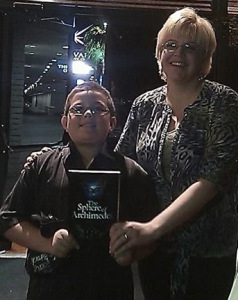
Heather Squires’ life calling to be an author began in 1989 in Phoenix, Arizona. As an editorial writer on staff at the Utopian Newspaper, she decided to seek further review and publishing. The first project to be completed outside of the journaling world was To Desecrate Man, an action novel; completed in 2005, it became over shadowed by the second project: Rogue, a young adult fiction-adventure novel.
Upon completion of Rogue in 2009, Squires’ place in the young adult fiction world became clear. The Sphere of Archimedes began to take shape, and was finished in 2011. Currently working on the sequel, The Omphalos of Delphi, she continues to create anticipation for the future of young adult fiction.
What is H. Squires’s Genre?
“As an observer, I watch ominous clouds collide in the blue firmament. A black-hooded, male sparrow puffs out his chest, and struts to impress a potential mate. While skating over a broad leaf, a snail’s eyes –perched on tall stalks, nods from the slightest breeze.
The daily creations displayed before our eyes, inspires me to write. I cannot go to my grave without trying to verbally describe God’s handiwork—and, if I can tell a story within the narrative, then [I hope] I do Him justice.”
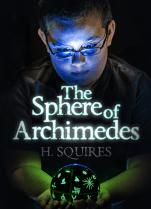
“Professor Donovan Spiegler, and nine-year-old Oliver Abernathy have no warning that their seemingly routine lives will free-fall into danger and adventure in this sci-fi thriller: THE SPHERE OF ARCHIMEDES.
Oliver, a chubby, freckle-faced boy, is surviving a mundane school-life as the helpless victim of a bully, Dylan Parker.
The Professor, and his assistant, Cedrick Wilhelm, are researching a mysterious metallic orb when Cedrick goes missing, and so does the orb.
On a trip to the Grand Canyon with his family, Oliver discovers a metallic sphere that has special powers. His boyish curiosity builds as he tests the abilities and hazards the orb possesses. He learns the alarming side of the orb when Dylan Parker, the bully, opens it, and is vaporized—or so Oliver believes.

A group of threatening men turn up at Professor Spiegler’s class; at knife point, they demand he relinquish the orb, and show them how to release its powers. In an attempt to flee, the Professor inadvertently leads the mobsters straight to Oliver Abernathy and his family.
In the thrilling adventure that follows, the characters discover the need to work together in order to stay alive. The Professor and the Abernathys encounter other worlds, and meet deadly enemies. Their survival is hinged on solving THE SPHERE OF ARCHIMEDES.”
Glimpse inside the mind of a contemporary philosopher...
reciprocity
The Life of a Teenage-Traveler
Plus ça change, plus c'est la même chose / The more things change, the more they stay the same
writer & mother, feeding my dream and my family
AWAKENING THE SLEEPING READERS
A blog full of humorous and poignant observations.
The only thing worse than being 'blind' is having a Sight but no Vision
A contrast between elegance and grunge.
The strings of my life’s soulfulness in the beauty of eternity.
Adult & YA Romantic Fantasy Author
A topnotch WordPress.com site
Think upon your thoughts and it will take you higher
Words of Wonder, Worry and Whimsy
Finding the Light in the Darkness and the Darkness in the Light
A vacant mind and lost thoughts



 Editing Addict, LLC