Coming soon:
Tips from the editor, also known as
EDITOR’S TRICKS
Watch for it!
…I usually run down a list of good villains in my head—extracting their “not-so-nice” qualities. One specific sinister trait I enjoy is an intelligent character that teeters on trustworthiness. Another attribute is the unsuspecting or unlikely evil.
Your villain, however, doesn’t always have to be a person. Objects can be most useful. Even items—normally not scary, can become frightful if given the right antidote [sic] of suspense and evil attributes.
In the beginning, I wouldn’t resolve the conflict between your main character(s) vs. the bad guy. For now, focus on developing the evil personality—demonstrate several situations that make them “bad”.”
“How to make the most of social media marketing, where do you start? You need detailed, accessible and practical advice on what to do and how to do it. Planning and research are often forgotten in the rush of getting a book published. Drawing up a marketing plan and carefully thought out campaign are the only ways to ensure the success of your book and to meet the readers’ requirements. Initiate these concepts and you will see the benefits immediately!”
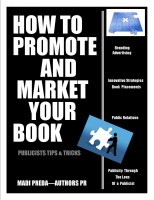
Any author who wants to create and launch a successful book, or people who chose publishing as a career.
This guide walks you through the development of author’s brand and improving sales.
…valuable resources lists, such as book bloggers, publishers, literary agents, newspapers and magazines, independent booksellers, Facebook groups, sites to promote a book, and radio shows for authors.”
“We believe the greater the vocabulary, the more concise the writing. Unfortunately, readers might not understand what you write. The definitions for some words listed are not the “common” meanings; we have chosen to focus on the words and meanings used to impress audiences.
Serious readers enjoy new words and writers love using the rare greats. Reading teaches vocabulary as we study context at all levels: elemental grammar, plot, setting, and more. Readers thrill at the discovery of new words; writers should thrill at using them wisely. There is more to words than winning at Scrabble™.”
“abrogate (v) – void, do away with, repeal
abscond (v) – to depart secretly
abstemious (adj) – moderate in consumption
brook (v) – to endure, tolerate
bucolic (adj) – rustic, pastoral, natural; simple
celerity (n) – speed, rapidity
censure (v) – to rebuke officially
chary (adj) – wary, cautious
diffuse (adj) – spread out, wide-ranging; using too many words
dilate (v) – expand
dilatory (adj) – delaying
enervate (v) – to weaken, to drain, to take vitality from
engender (v) – to create, to produce, to cause
feign (v) – to pretend, act, deceive
fervent (adj) – emotional; zealous
fester (v) – ulcerate; rankle. festering (v)
garner (v) – gather, store up
garrulity (n) – talkativeness
impervious (adj) – resistant, strong, incapable of being affected
impalpable (adj) – imperceptible, intangible
jejune (adj) – poor; unsatisfying
jetsam (n) – object tossed overboard to lighten a ship
kinematic (adj) – relating to motion
knavery (n) – untrustworthiness; lack of principles
libidinous (adj) – lustful
licentious (adj) – sexually immoral
mellifluous (adj) – sweet like/as honey
mendacious (adj) – dishonest. mendacity (n)
nebulous (adj) – vague, cloudy, murky; lacking form
neologism (n) – a new word or usage
neophyte (n) – convert; beginner, novice
obfuscate (v) – to make confusing; to mislead
objurgate (v) – to scold
paucity (n) – scarcity; lack
pedagogue (n) – narrow-minded teacher
quaff (v) – to drink; to quench thirst
qualm (n) – misgiving, reservation
refutation (n) – disproof of opponents arguments
reciprocal (adj) – mutual, shared, exchanged in kind
sanction (n/v) – permission, authorized; a penalty
sanguine (adj) – cheerful; hopeful
sapient (adj) – wise; shrewd
taciturn (adj) – silent; not fond of talking
tantamount (adj) – equivalent in effect or value
taut (adj) – tight, tense
ubiquitous (adj) – everywhere, widespread
ulterior (adj) – unstated; hidden
venerate (v) – to respect. veneration (n)
veracity (n) – truthfulness, honesty
wangle (v) – bring about by manipulation
welter (n/v) – turmoil; to roll, to tumble
xenophobe (n) – one afraid of strangers
xyloid (adj) – like wood
yammer (v) – to talk with a sad tone
zymotic (adj) – of fermentation; caused by disease”
“I’m going to talk about research. No, research is not very fun, and it’s never glamorous, but it matters. A lot.
If you want to be able to make compelling case for something — whether it’s in a book, on a blog, or in a multi-million dollar VC pitch — you need stories that frame your arguments, rich anecdotes to compliment tangible examples, and impressive data so you can empirically crush counter arguments.
But good research doesn’t just magically appear. Stories, anecdotes and data have to be found before you can use them.
You have to hunt them down like a shark, chasing the scent of blood across the vast ocean of information. The bad news is that this is an unenviable task … but the good news is that it’s not impossible.
It’s not even that hard … once you learn what you’re doing — and I’m going to teach you those skills.
By the time I was 21, my research had been used by #1 New York Times Bestselling authors like Robert Greene, Tim Ferriss, and Tucker Max. Was I a slave to study? Did I have to become a library hermit to accomplish this? No, I did it all in my spare time–on the side, with just a few hours of work a week.
Here’s how I did it …
…This is the mark you must aim for as a researcher, to not only have enough material — and to know where the rest of what you haven’t read will be located — on hand to do your work….
…How do you find a needle in haystack? Get rid of the extra hay….
…One of my rules as a reader is to read one book mentioned in or cited in every book that I read. It not only solves the problem of ‘what to read next’ but it sends you on a journey down the rabbit hole….
…The Classics are “classic” for a reason. They’ve survived the test of time….
…a book of quotes, sentences, metaphors and miscellany that he could use at a moment’s notice….”
To read the entire article from RYAN HOLIDAY, click here.
“If you ask a hundred different authors how they got published, you’ll get a hundred different stories,” says Pam Mu?oz Ryan, author of Mice and Beans, one of Child’s 50 Best Books of 2001. But aspiring writers — and fans — can learn and be inspired by the tales of those who’ve flourished in the field….
“The hardest thing to learn is how to communicate with your audience,” says Hoeye. “You can’t lose your voice. You must have a distinct sense of who you are and who you’re trying to talk to.” One way he honed his skills was by writing letters. “My first book, Time Stops for No Mouse, started as a series of letters to my wife who was traveling in Africa,” says Hoeye. “I didn’t know I was writing a book. It was just a way of entertaining her, but it kept growing and growing. To write a book straight through can be bewildering and intimidating.”
“Ideas come to me from everywhere-my own life, sometimes folktales,” says dePaola. “Strega Nonacame to me out of the blue, but I often get ideas from kids. The Quicksand Book is a good example of that. Children will come up to me and say, `Why don’t you write a story about….'”
“Rejection can be devastating,” says Janet Stevens, author of And the Dish Ran Away with the Spoon, a Child Best Book of 2001. “You can get your heart broken. The main thing to realize is that there are so many different editors with different tastes. You have to remove yourself from it emotionally and just keep trying. You don’t have to be the best author and win all the awards; you just have to appeal to kids — that’s what’s most important.”
To read more from the authors of children’s books on parents.com, click here.
Glimpse inside the mind of a contemporary philosopher...
reciprocity
The Life of a Teenage-Traveler
Plus ça change, plus c'est la même chose / The more things change, the more they stay the same
writer & mother, feeding my dream and my family
AWAKENING THE SLEEPING READERS
A blog full of humorous and poignant observations.
The only thing worse than being 'blind' is having a Sight but no Vision
A contrast between elegance and grunge.
The strings of my life’s soulfulness in the beauty of eternity.
Adult & YA Romantic Fantasy Author
A topnotch WordPress.com site
Think upon your thoughts and it will take you higher
Words of Wonder, Worry and Whimsy
Finding the Light in the Darkness and the Darkness in the Light
A vacant mind and lost thoughts


 Editing Addict, LLC