How to Write an Article in 20 Minutes

[found on copyblogger.com]

“I don’t really want to spend more than 20 minutes a day on writing articles. And I spent no more than 20 minutes to write this article.

I realize this is writing blasphemy. Internet marketing is powered by content, and content is king. But when I have a daily schedule to post on and a business to run, I don’t have time to spend hours polishing every single blog post or writing 2,000-word articles.

Writing quickly doesn’t mean compromising on writing well, though. I’ve got seven tips to get you in and out of that composition box in twenty minutes – without sacrificing quality.

1. Keep an idea list.

When inspiration for a post strikes, scribble it down in a notebook or a word file. For many bloggers and content creators, finding the topic to write about takes up half the time. Keeping an idea list lets you leap in to a new post quickly when you’re ready to write.

2. Let your ideas incubate.

If you try to force yourself to come up with supporting information for your brilliant idea right away, it’s going to take ages. Let that topic sit for a few days, though, and you can add new ideas as they occurs to you – and when you’re ready to write, you’ll already have all the supporting info you need.

3. Edit before you start

You’ve probably got twice as many ideas as you need at this point, so it’s time to be brutal. Cut out any supporting idea that doesn’t fit with the main topic of the article. Remember, we’re talking about how to write an article in 20 minutes, not an epic. You can always use the ideas you don’t need for later posts.

4. Use bullet points

Bullet points, or numbered points like “10 Ways to Get More Subscribers”, can make writing an article a lot simpler in terms of organization because you no longer have to figure out transitions from one idea to the next. The great side benefit is that readers like lists; they’re easier for the eye to follow.

5. Keep it short

If you want to finish that article in 20 minutes, try to keep it under 500 words. Don’t feel like you’re skimping on quality content, either: this article is only about 500 words but it’s chockfull of information. Make every word count and you’ll save time without letting quality slip.

6. Come back later

If you find that you’re stuck, don’t try to force the words to come. Save the article and work on something else for awhile. If inspiration strikes, open up that document again. You can even switch from one blog post to another, spending a few minutes on each as ideas comes to you. It’s a huge time-saver.

7. Never save a good idea

It’s tempting, when you look through your list of ideas, to save the best ones for later because you think they’ll be easier to write. You don’t want to save time later, you want to save time now. Do the articles you know will come easily and make the most of that time.

Follow these simple steps and you’ll be on your way to brilliant articles in a fraction of the time.”

[found on http://www.copyblogger.com/write-article-fast]

Featured Writing Addict: Susan Cottrell

Susan Cottrell

Icon cropped

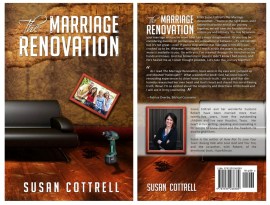
Susan Cottrell is a writer, speaker, and teacher. She is thrilled with her new book, The Marriage Renovation. Married 27 years, she and Rob had to go through their own renovation, and God did more than they ever thought possible. They have five (nearly) grown children. Susan homeschooled for some twenty years… until she ran out of energy! She loves to lead retreats and seminars, and teach women, couples and teens about the freedom for which Christ set them free (Galatians 5:1). Contact her directly, or read her post at marriagerenovation.com.

What’s Susan’s Genre?

Nonfiction: Marriage, Parenting—from the perspective of abiding in Christ.

What’s on Susan’s Heart?

“My heart beats for the discouraged, defeated Christian, to share the freedom that comes from the abiding life of Jesus Christ. I am passionate to teach. I am available on a limited basis to lead retreats for women or couples on MARRIAGE, the ABIDING LIFE OF CHRIST, and PARENTING. I also speak to teens, and young adults, teaching them that the great big God they learned about in church is not stuck in their Bibles, but offers them life on the edge! I am also available for other speaking engagements and teaching opportunities at your church, Bible study or small group.”

What are Susan’s books?

[Susan’s more recent releases]
The Marriage Renovation:
Marriage pic

From The Marriage Renovation… “You’re in the right place, and I believe that by the end of our journey together, we will have the foundations to restore joy and intimacy. You may be new in your marriage and you’ve never had a major disagreement. Or you may be considering divorce. Or perhaps you are somewhere in between — it’s not terrible but it’s not great — even if you’re disgruntled that marriage is not all it was cracked up to be. Wherever you stand, I reach across the pages to say, so much more is available to you. I’m with you, I’ve crawled through the trenches on my hands and knees. God has broken me in places I didn’t know I had places, and He’s healed me as I never thought possible. Let’s take this journey together.”

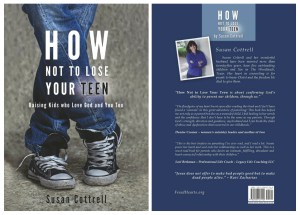
How Not to Lose Your Teen:
how not to lose your teen

From a sea of parenting advice, emerges How Not to Lose Your Teen—it is a break-through, and intelligent look at parents and teens. Intimate and relatable, Susan shows parents how to decrease their teens’ dependence on them and increase their dependence on Christ. You will be relieved and encouraged as you walk this entertaining and heart-rending journey with Susan.

To reach Susan, buy her books, or schedule her to teach:

Susan’s husband, Rob:

Robert Cottrell, is an indie recording worship artist, his music can be downloaded for free on reverbnation.com, or found on facebook.comRobert Cottrell Music is contemporary Christian worship, a style that is both uplifting and relaxing, with a focus on the grace and love of Jesus. Tender and intimate, his music is not only enjoyable, but also recognizable.164239_10201685175397890_1362926097_n

Social Media How To for Writers/Authors

[found on pbs.org/mediashift]

“Wrap your mind around this: One of the most important factors that traditional publishers use to decide whether to acquire a book is the marketing platform of its author. You’d think that the main reason for approaching a traditional publisher is to reap the benefits of the publisher’s marketing, and you wouldn’t have to bring your own.

Life is full of mysteries, and whether you’re working with a traditional publisher or you are an artisanal publisher (a.k.a., “self-publisher”), the potency of your marketing platform can determine your success.

There is no scenario under which thousands of social-media followers is not a good thing, so here are 10 social-media tips for authors of any kind.

1. START YESTERDAY

You must make progress along two fronts at the same time: writing your book and building your marketing platform. You cannot wait until you’re done writing, because a platform takes nine months to a year to build. Ideally, you started building your platform before you even began to write your book.

2. SEGMENT THE SERVICES

There are five social-media services to choose from. You need not use them all, but each serves a different purpose. I call this the five Ps of social media: Facebook is for people — people who you went to high school or college with and your family. Twitter is for perceptions — perceptions such as “I feel an earthquake and I’m in Chile.” Google+ is for passions — passions such as photography that you cannot share with your Facebook people. Pinterest is for pinning — pinning pictures with little interaction. LinkedIn is for pimping — as in making business connections or finding a job. You can use each of these to build a platform, but your relationships on them are apt to differ.

i-1583ce05bfe80ac17f7d7c7e14df0b3a-PegProfile-thumb-350x270-6207.jpg

3. MAKE A GREAT PROFILE

Your profile page is an ad. Its purpose is to convince people to circle, follow, subscribe, or like you. It should communicate that you are a likeable, trustworthy, and competent person. Two details: First, ensure that your profile has a high-quality picture of your face (and only your face, not your spouse, dog, kids, and car). Second, use the text areas to simply and humbly describe who you are and tell your personal story. For example, Peggy Fitzpatrick has a great Google+ profile. (See image above.)

4. CURATE, DON’T CREATE

It’s hard enough to write a book, much less create content for social-media sites at the same time. So give yourself a break and focus on curating the content of others while you are writing. Link to articles, pictures, and videos that are relevant to your genre in order to establish your expertise. Power tip: Go to Alltop.com, a site I co-founded, to find content on more than 1,000 topics. For example, the followers of a science-fiction writer would find “How to Deflect Killer Asteroids With Spray Paint“ interesting (found via Science.Alltop.com).

5. ACT LIKE NPR

NPR provides great content 365 days a year. A few days a year it runs pledge drives. No one I know likes the pledge drives, but we tolerate them — and some of us even give money. Why? Because NPR has earned the right to promote its pledge drives by providing such great content. This is a good model for authors too: Provide such great content that you can promote your book when it’s done. If you do this very well, people may want to reciprocate for the value you’ve added to their lives by buying your book. So just imagine you are the producer of “Fresh Air” or “All Things Considered” and look for interesting content.

6. RESTRAIN YOURSELF

NPR provides another excellent example for book marketing: It doesn’t run pledge drives very often. Less than 10 percent of your social-media posts should promote your book or other commercial endeavors. It’s OK to pour it on when your book launches, but back off on the promotion after the first four weeks and do educational things like free webinars and Hangouts on Air. You need to make a transition from salesman to teacher.

i-02360ef8915924a62ff344f12c73a685-EyeCandy-thumb-300x351-6209.jpg

7. CANDY-FY

Social-media sites are busy places, so people don’t notice all-text posts or posts with small pictures. Every post should include a picture that’s at least 400 to 500 pixels wide or an embedded video from YouTube or Vimeo. Eye candy counts in the constant contest for attention — if you’re old enough to remember, it’s like the difference between a Yellow Pages ad and a Yellow Pages listing. Check my posts on Google+ to see what I mean. (See image at right.)

8. RESPOND

Social media is a conversation, not a one-way broadcast. Every time you share a post, respond to the comments that it generates. (If it generates no comments, you’re doing something wrong.) A big mistake that most authors make is that they think they are delivering a sermon when a conversation is what’s appropriate.

9. STAY POSITIVE OR STAY SILENT

Even if the topic is an issue that perturbs the core of your soul such as gun control, women’s rights, or ObamaCare, don’t show anger. On a practical level, if you only want to sell books to people who agree with your sensibilities, you should prepare for a life of poverty. If people attack you, ignore them. If they attack you twice, block them from seeing your posts. And don’t look back.

10. REPEAT

Social-media “experts” disagree with me on this, but I’m telling you it works: Repeat your posts. I repeat my tweets four times every eight hours — you don’t get 1,240,000 Twitter followers by not taking risks. This is pushing the edge, but the assumption that everyone who is interested in your posts will see it the first time is naïve. CNN doesn’t run a story once and hope that everyone has seen it or recorded it to see later. At least try sharing a post when your audience is awake, then 12 hours later, and see what happens.

One last tip: Do, don’t plan. Social-media experts will tell you that the first step is to develop a plan that includes highfalutin elements such as goals, strategies, and tactics. Let me simplify the process of building a platform. The goal is to get 5,000 followers by the time your book comes out. End. Of. Discussion. There is little “right” and “wrong” in social media — even what I say here! There is only what works for you and what doesn’t, so jump in and get going. You’ll figure it out along the way.

Guy Kawasaki has 3,821,000 million Google+ followers, 286,000 Facebook subscribers, and 1,240,000 Twitter followers. He is the co-author of APE: Author, Publisher, Entrepreneur-How to Publish a Book, which explains self-publishing, and has written eleven other books, including the New York Times and Wall Street Journal bestseller Enchantment. Previously, he was the chief evangelist of Apple. Kawasaki has a BA from Stanford University, an MBA from UCLA, and an honorary doctorate from Babson College.”

[found on http://www.pbs.org/mediashift/2013/02/guy-kawasakis-10-social-media-tips-for-authors045]

Hero Character? Or Hapless Victim?

[found on 5writers5novels5months.com]

“Why Do We Torture Our Heroes?

There are three big problems with a hapless victim as protagonist.

Problem #1: Repetitive Agonizing
Over-tortured, victimized characters tend to express their constant frustration. After all, the author has to give these poor sods something to say, and when a character with a life-threatening disease, whose true love recently dumped him just after his dog was run over by a car, falls off a cliff and into a gigantic waterfall after being chased by evil aliens … well, let’s just assume the first words out of his mouth after he hits the water will not be, “Wow! What a beautiful waterfall.” How many readers want to spend a whole book with a constantly anguished or angry protagonist? We all want someone to root for, not just feel sorry for.

Problem #2: Boredom
Being in a pickle is not inherently exciting. Giving a protagonist a ton of problems to worry about and suffer from does not automatically create conflict and tension. A guy sitting in solitary confinement in a prison cell has big trouble, but watching him pace the floor and mark the days off on the wall is not interesting. Or even tense (for the reader, at least). Why? He can’t solve his problem. All he can do is be miserable. And misery without conflict, action or interaction is kinda boring. (In case Papillon comes to mind as an exception, that was Henri Charriere’s memoir and, arguably, the exciting parts were the escapes, not the scenes where he spit out his rotting teeth in a filthy cell.)

Problem #3: Miraculous Victory
“The Perils of Pauline” told classic damsel-in-distress stories. Sending in some outside force to rescue the protagonist is one way to get him, or her, down from the tree. But if you’re not (intentionally) writing melodrama, you have to figure out a way to have your hero find his own way down from the tree. If you’ve beset your protagonist with continuously mounting (and unsolved) troubles through the whole book – your character is going to have to morph from hapless victim to unstoppable Superman in the last act to get out of the mess by himself. (Okay, Papillon is certainly a breathtaking example of this … but if it hadn’t been an autobiography, who would have believed it?)

So, what does the “up a tree” dictum really tell us to do? This is something we discussed at length in Whistler, and my own personal epiphany was about the purpose of giving your protagonist troubles. It’s not to make him a miserable, complaining victim. It’s to give him something heroic to do. To put him in action. Only by the protagonist’s reaction to his troubles can we get to know what he’s made of.

Ding … the lightbulb went on for me. Give your hero problems he actually can do something about. Then let him show his stuff. Do we really care about a hero who sits up in that tree kvetching and waiting for miracle? No, we want him to be visibly overcoming his fear of heights, planning his escape, throwing apples at the baying dogs below, weaving a rope out of twigs or something … anything! The tougher the problem, the bigger the hero. But if the protagonist is not well matched with the problems to be solved, the writer may have to cheat and resort to miracles or magic, and that could actually diminish the hero.”

[found on http://5writers5novels5months.com/2013/07/01/why-do-we-torture-our-heroes]

Query Query Quite Contrary…

[found on queryshark.blogspot.com]
Query Shark: “How To Write Query Letters … or, really, how to revise query letters so they actually work…” A site that works for YOU. Query questions? Read on…

Example of this tool:

“Dear Query Shark,
 
Winston Smith has been a foolish man, and on Christmas Day of 2012, it’s going to cost him his life.
 
This is a great opening line. Do I want to find out what happened? You bet.
 
On top of a faltering marriage – and there’s been no sex for eight months – not only has he neglected to tell wife, Julia, their heavily indebted dairy farm is up for an income tax audit, but he’s corresponded with the auditor that “the thought of having to hand over my life in letters and source documents for examination by you, a total stranger, on pain of punishment, makes me physically ill,” and he will not be cooperating with the Inland Revenue Department.
 
And then you take veer so completely off the path of taut, lean prose that it’s almost like you’ve morphed into Prolix Man.
 
For starters, don’t quote the novel in the query. Also, we don’t need to know why the marriage is faltering, just that it is. And the only thing we really need to know is the audit is going to be a big surprise to Julia.
 
Tom Parsons life previously could have been summed up in a word: inertia. Married to mousy Sally, the one girl he dated at high school, their marriage has become routine since the birth of their son, Syme.
  
What? Wait. Who? What happened to Winston and Julia?  This abrupt segue is confusing. Remember, I’m not sitting on my sofa with a cup of tea, savoring your query. I’m not reading this like I read a novel. I’m sitting at my desk, I’ve got ten minutes before a scheduled phone call and I’m trying to find the queries that entice me to read on. In other words, I’m reading fast and mostly skimming. Whether you think this is a good idea, or fair is immaterial. It’s reality and  a smart query writer will write to his/her audience.
 
What that means: You make sure I know who a new character is by telling me “Inland Revenue agent Tom Parsons”
 
And you don’t have FIVE NAMED CHARACTERS in the first two paragraphs. At the most you have two….

[found on http://queryshark.blogspot.com]