Calling All Fiction Authors — Platform Up!

[found on thewritepractice.com by Joe Bunting]

“What Fiction Authors Really Need to Know About Their Platform

“…Several times a month, writers  ask me, “How can I balance blogging, Tweeting, Facebooking, Goodreading, and all the other stuff I’m supposed to do to build myplatform, while also focusing on my writing? I have a full time job, a family, and a cat. I just don’t have time for all that other stuff.”

Writers today are overwhelmed, frustrated, and let’s be honest, a little pissed off.Why do we have to build a platform anyway? Can’t we just focus on writing? 

It all came to a head for me when I read Michael Hyatt’s bestselling book Platform: How to Get Noticed in a Noisy WorldThe book was interesting enough, but when I looked for information that related to fiction writers, I found the only advice specifically focused on helping fiction writers was tossed into an appendix in the back of the book.

An appendix! 

That’s when I realized most of the so-called “experts” who said every author needs a platform were really just speaking to non-fiction authors. They didn’t have a clue what a fiction platform would even look like.

Meanwhile, thousands of fiction writers followed their advice, creating blogs they resented, Twitter accounts that overwhelmed them, and Facebook pages with thirty-seven likes. For most creative writers, this whole platform experiment has been a waste of time.

That’s when I decided I needed to learn everything I could about how to build a platform specifically designed for fiction writers.”

There is too much excellent information on this, to put it here. To learn more about Fiction Writer’s Platforms from TheWritePractice, click HERE.

[found on http://thewritepractice.com/fiction-platform]

Where’s the Plot?

[found on theunnovelist.com]

“Plot is a braid of three strands:

1. Character Emotional Development

      • The plot exists so the character can discover for himself (and in the process reveal to the reader) what he, the character, is really like: plot forces the character to choose and act.  By making choices and reaping their consequences, the character transforms from a static construct to an animate being.

2. Dramatic Action

      • Action is driven by what the characters want and the conflict that stands in their way.

Thematic Significance

      • Tie the character’s private passion to a bigger, more universal public subject, and the thematic plot line is launched.”

For more great tips and insights on writing structure from The Unnovelist, click HERE.

[found on http://theunnovelist.com/plot/plot.html]

100 Delectable Adjectives

[found on dailywritingtips.com]

“Adjectives — descriptive words that modify nouns — often come under fire for their cluttering quality, but often it’s quality, not quantity, that is the issue. Plenty of tired adjectives are available to spoil a good sentence, but when you find just the right word for the job, enrichment ensues. Practice precision when you select words. Here’s a list of adjectives:

Adamant: unyielding; a very hard substance
Adroit: clever, resourceful
Amatory: sexual
Animistic: quality of recurrence or reversion to earlier form
Antic: clownish, frolicsome
Arcadian: serene
Baleful: deadly, foreboding
Bellicose: quarrelsome (its synonym belligerent can also be a noun)
Bilious: unpleasant, peevish
Boorish: crude, insensitive
Calamitous: disastrous
Caustic: corrosive, sarcastic; a corrosive substance
Cerulean: sky blue
Comely: attractive
Concomitant: accompanying
Contumacious: rebellious
Corpulent: obese
Crapulous: immoderate in appetite
Defamatory: maliciously misrepresenting
Didactic: conveying information or moral instruction
Dilatory: causing delay, tardy
Dowdy: shabby, old-fashioned; an unkempt woman
Efficacious: producing a desired effect
Effulgent: brilliantly radiant
Egregious: conspicuous, flagrant
Endemic: prevalent, native, peculiar to an area
Equanimous: even, balanced
Execrable: wretched, detestable
Fastidious: meticulous, overly delicate
Feckless: weak, irresponsible
Fecund: prolific, inventive
Friable: brittle
Fulsome: abundant, overdone, effusive
Garrulous: wordy, talkative
Guileless: naive
Gustatory: having to do with taste or eating
Heuristic: learning through trial-and-error or problem solving
Histrionic: affected, theatrical
Hubristic: proud, excessively self-confident
Incendiary: inflammatory, spontaneously combustible, hot
Insidious: subtle, seductive, treacherous
Insolent: impudent, contemptuous
Intransigent: uncompromising
Inveterate: habitual, persistent
Invidious: resentful, envious, obnoxious
Irksome: annoying
Jejune: dull, puerile
Jocular: jesting, playful
Judicious: discreet
Lachrymose: tearful
Limpid: simple, transparent, serene
Loquacious: talkative
Luminous: clear, shining
Mannered: artificial, stilted
Mendacious: deceptive
Meretricious: whorish, superficially appealing, pretentious
Minatory: menacing
Mordant: biting, incisive, pungent
Munificent: lavish, generous
Nefarious: wicked
Noxious: harmful, corrupting
Obtuse: blunt, stupid
Parsimonious: frugal, restrained
Pendulous: suspended, indecisive
Pernicious: injurious, deadly
Pervasive: widespread
Petulant: rude, ill humored
Platitudinous: resembling or full of dull or banal comments
Precipitate: steep, speedy
Propitious: auspicious, advantageous, benevolent
Puckish: impish
Querulous: cranky, whining
Quiescent: inactive, untroublesome
Rebarbative: irritating, repellent
Recalcitant: resistant, obstinate
Redolent: aromatic, evocative
Rhadamanthine: harshly strict
Risible: laughable
Ruminative: contemplative
Sagacious: wise, discerning
Salubrious: healthful
Sartorial: relating to attire, especially tailored fashions
Sclerotic: hardening
Serpentine: snake-like, winding, tempting or wily
Spasmodic: having to do with or resembling a spasm, excitable, intermittent
Strident: harsh, discordant; obtrusively loud
Taciturn: closemouthed, reticent
Tenacious: persistent, cohesive,
Tremulous: nervous, trembling, timid, sensitive
Trenchant: sharp, penetrating, distinct
Turbulent: restless, tempestuous
Turgid: swollen, pompous
Ubiquitous: pervasive, widespread
Uxorious: inordinately affectionate or compliant with a wife
Verdant: green, unripe
Voluble: glib, given to speaking
Voracious: ravenous, insatiable
Wheedling: flattering
Withering: devastating
Zealous: eager, devoted”

For more great tips on writing from Daily Writing Tips, click HERE.

[found on http://www.dailywritingtips.com/100-exquisite-adjectives]

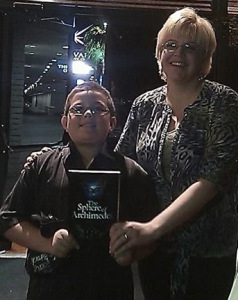
Featured Writing Addict: H. Squires

H. Squires

photo-1

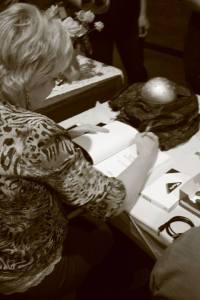
Heather Squires’ life calling to be an author began in 1989 in Phoenix, Arizona. As an editorial writer on staff at the Utopian Newspaper, she decided to seek further review and publishing. The first project to be completed outside of the journaling world was To Desecrate Man, an action novel; completed in 2005, it became over shadowed by the second project: Rogue, a young adult fiction-adventure novel.

Upon completion of Rogue in 2009, Squires’ place in the young adult fiction world became clear. The Sphere of Archimedes began to take shape, and was finished in 2011. Currently working on the sequel, The Omphalos of Delphi, she continues to create anticipation for the future of young adult fiction.

What is H. Squires’s Genre?

Fiction: Young Adult, Science Fiction

What is  H. Squires’s Inspiration?

“As an observer, I watch ominous clouds collide in the blue firmament. A black-hooded, male sparrow puffs out his chest, and struts to impress a potential mate. While skating over a broad leaf, a snail’s eyes –perched on tall stalks, nods from the slightest breeze.

The daily creations displayed before our eyes, inspires me to write. I cannot go to my grave without trying to verbally describe God’s handiwork—and, if I can tell a story within the narrative, then [I hope] I do Him justice.”

What is H. Squires’s book about?

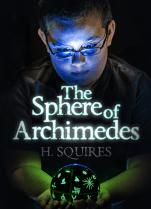
The Sphere of Archimedes

book cover

“Professor Donovan Spiegler, and nine-year-old Oliver Abernathy have no warning that their seemingly routine lives will free-fall into danger and adventure in this sci-fi thriller: THE SPHERE OF ARCHIMEDES.

Oliver, a chubby, freckle-faced boy, is surviving a mundane school-life as the helpless victim of a bully, Dylan Parker.

The Professor, and his assistant, Cedrick Wilhelm, are researching a mysterious metallic orb when Cedrick goes missing, and so does the orb.

On a trip to the Grand Canyon with his family, Oliver discovers a metallic sphere that has special powers. His boyish curiosity builds as he tests the abilities and hazards the orb possesses. He learns the alarming side of the orb when Dylan Parker, the bully, opens it, and is vaporized—or so Oliver believes.

 Nsphere

A group of threatening men turn up at Professor Spiegler’s class; at knife point, they demand he relinquish the orb, and show them how to release its powers. In an attempt to flee, the Professor inadvertently leads the mobsters straight to Oliver Abernathy and his family.

In the thrilling adventure that follows, the characters discover the need to work together in order to stay alive. The Professor and the Abernathys encounter other worlds, and meet deadly enemies. Their survival is hinged on solving THE SPHERE OF ARCHIMEDES.”


Too Weak To Write? Take Two Adverbs, and Don’t Call Me In The Morning

[found on darcknyt.deviantart.com]

“The real question to ask isn’t whether Mrs. Swingingjowls was right or wrong in teaching you to modify your sentences with adverbs.  The question is, why are you modifying your verbs with adverbs?

This is an easy one to answer, when you think about it:

Because your verbs are weak.

Mark Twain once said, “Adverbs are the tool of the lazy writer.”  Amen, Mark.

See, what’s going on is, you’re using a word that doesn’t really convey the sense, the feeling, the mood or whatever, you’re hoping to get across to your reader.  “Walk” isn’t a very exciting word, and it doesn’t get across the antsy feeling you’re trying to portray in your description, so you make it “walk quickly” or “quickly walked”.  You want your reader to see the force, the power in your characters’ argument, so instead of saying “they shouted across the table” you say “they shouted angrily and vehemently across the table.”

The problem is, the verbs you’ve chosen aren’t doing the job you wanted them to do in the first place.  You don’t want your character to walk, you want your character to hasten, hurry, quick-step.  You don’t want your characters shouting, you want them spitting words through clenched teeth, veins throbbing on reddened necks, molars locked and spittle misting between them.

The reason you’re reaching for adverbs to tell the story is because the verbs you’ve chosen are too weak to do it for you.  The adverb isn’t the solution, however.  Strengthening your writing is.

Think about this: If the verbs you’re using to describe the action in your story are weak and flimsy, the action description may be weak and flimsy too.

You wouldn’t be writing something with the intent of being flimsy or weak, would you?  The reason you’re grabbing adverbs in the first place is because of discontent with what’s being said without them, right?

Why bother with modifiers for words that aren’t cutting it in the first place?  The real crux of the problem is finding the right actions and descriptions for those actions, so that modifiers — adverbs AND adjectives — will be needed with rare and prudent infrequency.

When you’re writing adult fiction, the need to limit — if not eliminate — adverbs altogether becomes pretty obvious.  What adult wants to read a grade school type of book?

No, adults want to be pulled into the story, and be engaged by it.  The use of adverbs won’t get the job done, and loses the reader early on.

Show, Don’t Tell — Adverbs are NOT Good Description

With the evil adverb dragging your writing down, it’s now safe to say that using adverbs isn’t a way to make a lousy description good.  It’s a lazy way to make a weak description obvious.

What adverbs do, in a nutshell, is tell the reader what’s going on in the story.  That’s NOT what you want to do.

“But — I thought I was TELLING a story here?”

No.  You’re not.  If you’re a serious writer, you’re not “telling” a story, you’re SHOWING a story.

Don’t be lazy.  Be specific.  Use specific nouns and verbs to do the bulk of the work in your writing.  By letting good, descriptive words do the heavy lifting, the occasional adjective and adverb aren’t the problematic, amateur-flagging beacons common in weak writing.”

For more great tips from DarcKnyt, click HERE.

[found on http://darcknyt.deviantart.com/journal/The-Use-of-Adverbs-in-Fiction-Writing-214175181]

How To Write Historical Fiction

[found on caroclarke.com]

“…The realities of the everyday things in your chosen time period will shape what your characters can and can’t do. This will constrain your own plot choices. It’s part of the challenge and joy of writing historical fiction to share with your characters the real problems, the real world, they live in. It stretches your imagination. If you aren’t fussy about your details, if you think it’s all right to have Willem know latitude and longitude or for Maria Dolores to carry a purse, then you aren’t up to the demands of historical fiction. Your characters will not be real, your story will have no life, and you will have failed your readers. If you’re that kind of writer, you’ll have stopped reading this essay as soon as you hit the word ‘research’. But you’re that other kind of writer, the historical novelist, the one who cares. You’ll have done your mountain of research both for the love of it and for the love of your story. What to do with all those cherished, hard-won facts?

…Once you’ve created your plot, you begin to write. Knowing the realities of the small, everyday things of your time period now allows you to conjure an authenticity into Willem’s and Maria Dolores’ lives. Long skirts swept the floor. Willem knows she’s hiding in the courtyard because he sees the lines her skirts have made in the sand his sister sprinkles on the paving tiles. Maria Dolores seizes a tankard to brain him – it’s leather, not metal, and her escape attempt collapses in laughter. When a Calvinist mob, incited by Willem’s sister, bays for the blood of the Catholic woman hidden in their midst, Willem and Maria Dolores are able to escape across the ice in the harbour, for this is the time of the Little Ice Age, when broad rivers froze.

Notice that the sand on the paving tiles, the material of the tankard, the unusually cold winter, are only included because they help propel the plot. As much as you’d love to discuss the construction of the typical Dutch house or the rise of Calvinism in the Netherlands, these aren’t pertinent to the actual events in the story. It’s pertinent that the leader of the mob has skates, it’s pertinent that the gunpowder in Willem’s pistol cakes when soaked with ice-water, it’s pertinent that the woolen skirts of the time were thick and heavy enough to stop a bullet. But if a beloved fact (the wheat for their bread came from Poland) doesn’t propel the action of the story, it doesn’t belong. You’ll use less than 20% of the facts you’ve researched in the events of your story, but the other 80% filling your head will give you a heightened understanding of the period, illuminating your characters and their world for you so that what the reader sees is the distillation of your sympathetic imagination, a richness condensed….”

For more great insights about historical fiction from Caro Clarke, click HERE.

[found on http://www.caroclarke.com/historicalfiction.html]