A Fiction-Lover’s Devotional

Deadline for this is VERY soon. Check it out.

Casual Elegance story callout

Modern-Day Parables: 
A Fiction-Lover’s Devotional

Deadline: September 1, 2013
Submissions should be sent to: Kathy Ide


“Kathy Ide is putting together a compilation of short fictional stories accompanied by Life Applications to help readers glean scriptural truths from the stories—similar to the format Jesus used when He told parables and then explained to His listeners how the stories applied to their everyday lives.

A major mainstream publisher has expressed serious interest in this book (and potential series). After seeing the proposal with some sample chapters, they have requested a complete manuscript as soon as possible. So the deadline for submissions to Kathy is September 1, 2013.

Contributing authors will receive an honorarium ($25) and a complimentary copy of the published book. Contributors should be able to purchase additional copies at author discount for sale or give-away. Bios of contributing authors will be featured at the end of each chapter. Titles of recently published works and website addresses can be included in the bio. So this devotional compilation will be an excellent opportunity for new readers to discover you and your books.

Guidelines

FORMAT

    • Title: something catchy that relates to the topic
    • Byline as you want it to appear
    • Fiction Story: 1,500-2,000 words
    • Life Application: 250-500 words giving truth, teaching, and inspiration related to the story
    • Scripture verse that applies to the story (Include reference and version used)
    • Author’s Bio: 50-100 words
    • Plus or minus a few words is perfectly acceptable. Subject to change at publisher’s discretion.
    • Double space, 12-point Times New Roman.
    • In the upper-left corner of the first page, please include your name, address, phone number, and e-mail.
    • In the upper-right corner of the first page, please indicate the theme/topic of your story.
    • Feel free to submit multiple stories.

TIPS

    • Short stories must be FICTION. No true stories (not even fictionalized true stories).
    • Third person is preferable. (First person tends to have the feel of a true story.)
    • Contemporary settings are preferred. Near-past or near-future will be considered.
    • The publisher is very conservative, so the submission content should be too. (Think “Upper Room.”)
    • Since I am a professional editor, I will most likely edit your submission. You need to be OK with that.
    • If you have a fictional story with Life Application based on a Bible character, please let me know as I’m doing a project similar to this one, using biblical fiction, for a different publisher.

If you’d like to see some sample stories to get an idea of what Kathy looking for, let her know (at the email address below). She’ll be happy to e-mail a couple to you.

E-MAIL SUBMISSIONS TO Kathy Ide (Kathy@KathyIde.com)

Please write “Modern-Day Parables” in the subject line.”

Featured Writing Addict: J.D. Scott

J.D. Scott

558806_10201362388446802_216514710_n

J.D. Scott has been the organizing member of Abba’s Writers in Phoenix, Arizona, for the past three years. She leads, organizes, and teaches both critiquing and story development to its 50+ members. She is also a participating member of West Valley Writers Group in Avondale, Arizona.

In February of 2013, J.D. Scott accepted the invitation to become part of the team at A Book’s Mind as a publishing consultant. She thoroughly enjoys working alongside writers, helping them fulfill their dreams of becoming published authors.

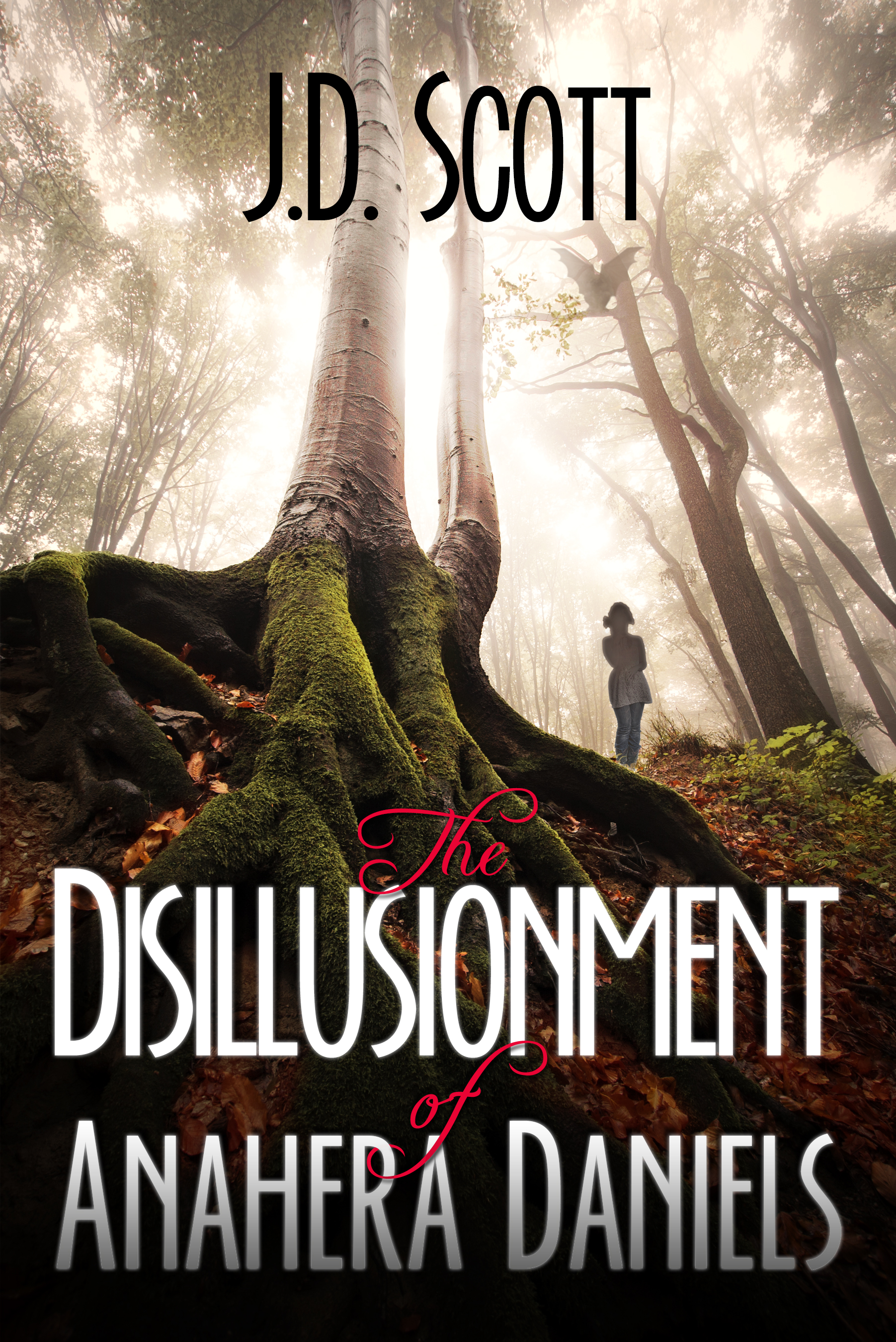
The Disillusionment of Anahera Daniels was released in 2013, and the second book in the Anahera Daniels series will be released in the fall of 2014.

What’s J.D. Scott’s Genre?

Fiction: Young Adult, Science Fiction

What’s  J.D. Scott’s Inspiration?

“I spent nearly twenty years working with children and young adults as a nanny, mentor, camp counselor, daycare worker, and youth group leader. With a heart for today’s youth, I set out to write books that not only entertain, but also inspire today’s youth to rise above the current culture, and see their value.”

What’s J.D. Scott’s book about?

The Disillusionment of Anahera Daniels

“Nothing of significance ever happened on Pleasant Avenue in the sleepy town of Prescott, Arizona. That is, nothing you’ve ever heard about

On Anahera Daniels’ 18th birthday, she wakes from a disturbing nightmare, only to walk into another. After overhearing life-shattering news that her parents aren’t who she thought they were—she questions her place among family, friends, and in the heart of Nathan, her high school crush. Ana’s life splinters into two realities when strange dreams develop into a newfound ability to travel between Earth and the world of Posternis.

A world away, Ana finds herself wounded, and fleeing from a dark-winged creature when she collides into Adrian, an attractive Posternis native. Accepting the help of his outstretched hand, she unknowingly binds their fates together. Ana’s fierce determination drives her search to unravel the mystery of her biological parents, and their connection with the Cozen, the gargoyle-like creatures seemingly bent on her destruction.

Armed with only her sarcastic wit and a pocket knife, Ana must decipher where her loyalties lie, and choose between two worlds and two loves—before the deadly side-effects of traveling ends her life altogether.”


20 Writing Tips from 12 Fiction Authors

[found on iuniverse.com]

“Writing success boils down to hard work, imagination and passion—and then some more hard work…. Use these tips as an inspirational guide—or better yet, print a copy to put on your desk, home office, refrigerator door, or somewhere else noticeable so you can be constantly reminded not to let your story ideas wither away by putting off your writing.

  • “My first rule was given to me by TH White, author of The Sword in the Stone and other Arthurian fantasies and was: Read. Read everything you can lay hands on. I always advise people who want to write a fantasy or science fiction or romance to stop reading everything in those genres and start reading everything else from Bunyan to Byatt.” — Michael Moorcock
  • “Protect the time and space in which you write. Keep everybody away from it, even the people who are most important to you.” — Zadie Smith
  • “Introduce your main characters and themes in the first third of your novel. If you are writing a plot-driven genre novel make sure all your major themes/plot elements are introduced in the first third, which you can call the introduction. Develop your themes and characters in your second third, the development. Resolve your themes, mysteries and so on in the final third, the resolution.” — Michael Moorcock
  • “In the planning stage of a book, don’t plan the ending. It has to be earned by all that will go before it.” — Rose Tremain
  • “Always carry a notebook. And I mean always. The short-term memory only retains information for three minutes; unless it is committed to paper you can lose an idea for ever.” — Will Self
  • “It’s doubtful that anyone with an internet connection at his workplace is writing good fiction.” — Jonathan Franzen”Work on a computer that is disconnected from the internet.” — Zadie Smith
  • “Interesting verbs are seldom very interesting.” — Jonathan Franzen
  • “Read it aloud to yourself because that’s the only way to be sure the rhythms of the sentences are OK (prose rhythms are too complex and subtle to be thought out—they can be got right only by ear).” — Diana Athill
  • “Don’t tell me the moon is shining; show me the glint of light on broken glass.” – Anton Chekhov
  • “Listen to the criticisms and preferences of your trusted ‘first readers.'” — Rose Tremain
  • “Fiction that isn’t an author’s personal adventure into the frightening or the unknown isn’t worth writing for anything but money.” — Jonathan Franzen
  • “Don’t panic. Midway through writing a novel, I have regularly experienced moments of bowel-curdling terror, as I contemplate the drivel on the screen before me and see beyond it, in quick succession, the derisive reviews, the friends’ embarrassment, the failing career, the dwindling income, the repossessed house, the divorce . . . Working doggedly on through crises like these, however, has always got me there in the end. Leaving the desk for a while can help. Talking the problem through can help me recall what I was trying to achieve before I got stuck. Going for a long walk almost always gets me thinking about my manuscript in a slightly new way. And if all else fails, there’s prayer. St Francis de Sales, the patron saint of writers, has often helped me out in a crisis. If you want to spread your net more widely, you could try appealing to Calliope, the muse of epic poetry, too.” — Sarah Waters
  • “The writing life is essentially one of solitary confinement – if you can’t deal with this you needn’t apply.” — Will Self
  • “Be your own editor/critic. Sympathetic but merciless!” — Joyce Carol Oates
  • “The reader is a friend, not an adversary, not a spectator.” — Jonathan Franzen
  • “Keep your exclamation points under control. You are allowed no more than two or three per 100,000 words of prose. If you have the knack of playing with exclaimers the way Tom Wolfe does, you can throw them in by the handful.” — Elmore Leonard
  • “Remember: when people tell you something’s wrong or doesn’t work for them, they are almost always right. When they tell you exactly what they think is wrong and how to fix it, they are almost always wrong.” — Neil Gaiman
  • “You know that sickening feeling of inadequacy and over-exposure you feel when you look upon your own empurpled prose? Relax into the awareness that this ghastly sensation will never, ever leave you, no matter how successful and publicly lauded you become. It is intrinsic to the real business of writing and should be cherished.” — Will Self
  • “The main rule of writing is that if you do it with enough assurance and confidence, you’re allowed to do whatever you like. (That may be a rule for life as well as for writing. But it’s definitely true for writing.) So write your story as it needs to be written. Write it honestly, and tell it as best you can. I’m not sure that there are any other rules. Not ones that matter.” — Neil Gaiman
  • “The nearest I have to a rule is a Post-it on the wall in front of my desk saying ‘Faire et se taire’ (Flaubert), which I translate for myself as ‘Shut up and get on with it.’” — Helen Simpson

Even famous authors sometimes have a tough time with writing; they also go through periods of self-doubt. Despite this, they always manage to come up with the goods. So take a lesson from them and stop putting off your writing plans and get started on your publishing journey today.”

[found on http://www.iuniverse.com/ExpertAdvice/20WritingTipsfrom12FictionAuthors.aspx]

How Do I Publish My Book?

Congratulations! You have your book finished—and now you want to publish it. What do you do? How many options are there?

Firstly, what is your goal? Are you planning on sharing your book with your mom and  your great aunt Molly? Then you want to use Print On Demand. If you have a larger audience in mind, but don’t have the time—nor the patience—to wait for Traditional Publishing, you can always try Self Publishing; it is a road where you are judge, advocate and jury…so be prepared. If none of these fit your style, you can embrace the transformers of the publishing world: Hybrid Publishing. 

What is Print On Demand?

  • POD is an option to upload your manuscript AS IS to a site, and they will convert it to an eBook, as well as print a limited number of books for you.
  • This does not allow for formatting, editing, or reprinting without uploading to the site again.
  • It is an excellent mode for self-publishing comic books, instruction manuals, or family albums
  • Example of a POD site
    • CreateSpace
    • Tell CreateSpace you heard about them from editingaddict.com!

What is Traditional Publishing?

  • Just like an actor trying to land a role, traditional publishing requires authors to work through agents.
  • You have to find the agent that is looking for:
    • Your genre
    • Your concept
    • Your audience
    • Your style
    • Your chapter length
    • Your book
  • Agents reject authors daily, no matter how wonderful the book is—because it is not what THEY were looking for…
    • Rejected authors you may recognize (from literaryrejections.com):
      • Dr. Suess—“Too different from other juveniles on the market to warrant its selling.”
      • Zane Grey—”You have no business being a writer and should give up.”
      • Jack Canfield & Mark Victor Hansen authors of Chicken Soup for the Soul—140 rejections stating “Anthologies don’t sell.”
      • The Diary of Anne Frank—“The girl doesn’t, it seems to me, have a special perception or feeling which would lift that book above the ‘curiosity’ level.”
  • To find an agent, you must write a query letter
    • Each agent requires DIFFERENT information per query letter
      • Some want the first five chapters, some want no chapters…
      • Some want every chapter summarized, while others only want the entire book summarized
    • Research which agent requires what, and do not mix up your submissions
    • Never give up on your book, but it’s okay to give up on a certain agent
  • You FIND an agent
    • They talk to the big publishing companies, and know what they are looking for
    • They find you a publisher
      • You sign a contract
      • Your book is published
      • You retain NO rights to your work, or future books in the series
      • Movie rights are transferred to the publisher
      • Your name becomes well-known…or NOT.
      • The publisher has the right not to sell, or even promote your book—however, you have already signed all rights away to it.
      • The publisher does do the dirty work for you, they advertise, they publicize, they edit, they format, they print, they sell…they also keep.
  • A well-known author has more rights with a publisher than a new author. This is an important point to remember when entering the world of publishing. If you already have a following of readers when you reach a traditional publisher, your ability to maintain rights to your work vastly improve—because you have already proven your work is a success, and people want it.
  • Excellent article on traditional publishing: nathanbransford.com
    • “Now, chances are at this point you are going to be in a psychological state where you are ready to sign over a body part just to get an agent, and you will be predisposed to say “Yes, for crap’s sake, yes!!”. But take a step back, take your time, make sure you’re very comfortable with the agent before you enter into one of the most important business relationships you will have in your life. You and your agent are going to have to seriously trust one another, so ask questions, don’t be shy, and make sure you’re ready.” – Nathan Bransford

What is Self-Publishing?

  • The Tale of Peter Rabbit by Beatrix Potter was rejected so many times she decided to self-publish 250 copies. It has now sold 45 million.
  • With Self-Publishing, no agent is required, but you are responsible for EVERYTHING; you either must be skilled enough to accomplish all the parts necessary, or you are your own contractor, and need to find all the subcontractors to do your work.
    • Your TO DO list expands daily:
      • Editing
      • Formatting
        • Find a graphic design crew to format book to print, as well as create a workable cover design;
        • Pay graphic design group, as well as pay for the cover picture chosen
      • Printing
        • Find a POD service like Xulon Press, (and tell them you found them on editing addict.com)
        • Pay for each copy of your book to print
      • Advertising
        • Build a website
        • Build Social Media
        • Promote book
        • Sell book
        • Reach bookstores to ask to sell in-store
        • Order & reprint books
    • YOU retain all rights to your book, future books, and movie rights

What is Hybrid Publishing?

  • Finally, a merging between Traditional Publishing and Self Publishing has taken place—bringing the best of both worlds into a a format called the Hybrid Publishing option
    • No agent needed
    • Hire a Hybrid Publishing team
      • Team is pre-made—you don’t have to find an editor, a format team, or a PR group…the team is ready, willing, and very able. They will stay by your side through the entire process!
  • What Hybrid Publishing provides:
    • Editing
    • Formatting
    • Book Cover design
    • Team to walk alongside you through the journey
    • Advertising
    • Web Site
    • Social Media platform
    • Book promotion
    • Author promotion
  • You, as the author, maintain your rights:
    • You keep all rights to your book, and future books
    • You keep movie rights
    • You are not limited by an agent’s likes/dislikes
    • If you are picked up by a Traditional Publisher, you already have a base of readership, and you have a voice in your options/choices for future
  • Example of Hybrid Publisher:

If you have any questions, let Editing Addict know!

Query Query Quite Contrary…

[found on queryshark.blogspot.com]
Query Shark: “How To Write Query Letters … or, really, how to revise query letters so they actually work…” A site that works for YOU. Query questions? Read on…

Example of this tool:

“Dear Query Shark,
 
Winston Smith has been a foolish man, and on Christmas Day of 2012, it’s going to cost him his life.
 
This is a great opening line. Do I want to find out what happened? You bet.
 
On top of a faltering marriage – and there’s been no sex for eight months – not only has he neglected to tell wife, Julia, their heavily indebted dairy farm is up for an income tax audit, but he’s corresponded with the auditor that “the thought of having to hand over my life in letters and source documents for examination by you, a total stranger, on pain of punishment, makes me physically ill,” and he will not be cooperating with the Inland Revenue Department.
 
And then you take veer so completely off the path of taut, lean prose that it’s almost like you’ve morphed into Prolix Man.
 
For starters, don’t quote the novel in the query. Also, we don’t need to know why the marriage is faltering, just that it is. And the only thing we really need to know is the audit is going to be a big surprise to Julia.
 
Tom Parsons life previously could have been summed up in a word: inertia. Married to mousy Sally, the one girl he dated at high school, their marriage has become routine since the birth of their son, Syme.
  
What? Wait. Who? What happened to Winston and Julia?  This abrupt segue is confusing. Remember, I’m not sitting on my sofa with a cup of tea, savoring your query. I’m not reading this like I read a novel. I’m sitting at my desk, I’ve got ten minutes before a scheduled phone call and I’m trying to find the queries that entice me to read on. In other words, I’m reading fast and mostly skimming. Whether you think this is a good idea, or fair is immaterial. It’s reality and  a smart query writer will write to his/her audience.
 
What that means: You make sure I know who a new character is by telling me “Inland Revenue agent Tom Parsons”
 
And you don’t have FIVE NAMED CHARACTERS in the first two paragraphs. At the most you have two….

[found on http://queryshark.blogspot.com]

Punctuation Hilarity

[found on dailywritingtips.com]

“I’ve finally got round to reading Eats, Shoots and Leaves by Lynne Truss.

Here’s a book that is not only useful and fun to read, its phenomenal popularity carries a moral for every writer:

Don’t worry about following the market. Don’t try to produce another DaVinci Code or Harry Potter. Write what you’re enthusiastic about and kindred spirits will find your book.

Who could have guessed that a book about punctuation would hit the top of the charts?

First published in April of 2004, Eats, Shoots and Leaves spent 25 weeks on the NY Times bestseller list and by October of that year had gone back to press 22 times to bring the total of copies in print to a million. I can’t guess how many copies are out there by now.

At a bit more than 200 pages including the bibliography, this little book describes the rules that govern the use of:

    • apostrophe
    • comma
    • colon
    • semi-colon
    • dash
    • hyphen
    • period

Plenty of other writing guides exist that describe the use of punctuation symbols, but the Truss book livens the discussion by throwing in history, examples of offensive punctuation, and the cheeky attitude that any English speaker smart enough to achieve an elementary school education ought to be smart enough to use apostrophes correctly.”

[found on http://www.dailywritingtips.com/review-of-eats-shoots-and-leaves]
 

Time Wibbly-Wobbly Management

[found on entrepreneur.com]

Practice the following techniques to become the master of your own time:

    1. Carry a schedule and record all your thoughts, conversations and activities for a week. This will help you understand how much you can get done during the course of a day and where your precious moments are going. You’ll see how much time is actually spent producing results and how much time is wasted on unproductive thoughts, conversations and actions.
    2. Any activity or conversation that’s important to your success should have a time assigned to it. To-do lists get longer and longer to the point where they’re unworkable. Appointment books work. Schedule appointments with yourself and create time blocks for high-priority thoughts, conversations, and actions. Schedule when they will begin and end. Have the discipline to keep these appointments.
    3. Plan to spend at least 50 percent of your time engaged in the thoughts, activities and conversations that produce most of your results.
    4. Schedule time for interruptions. Plan time to be pulled away from what you’re doing. Take, for instance, the concept of having “office hours.” Isn’t “office hours” another way of saying “planned interruptions?”
    5. Take the first 30 minutes of every day to plan your day. Don’t start your day until you complete your time plan. The most important time of your day is the time you schedule to schedule time.
    6. Take five minutes before every call and task to decide what result you want to attain. This will help you know what success looks like before you start. And it will also slow time down. Take five minutes after each call and activity to determine whether your desired result was achieved. If not, what was missing? How do you put what’s missing in your next call or activity?
    7. Put up a “Do not disturb” sign when you absolutely have to get work done.
    8. Practice not answering the phone just because it’s ringing and e-mails just because they show up. Disconnect instant messaging. Don’t instantly give people your attention unless it’s absolutely crucial in your business to offer an immediate human response. Instead, schedule a time to answer email and return phone calls.
    9. Block out other distractions like Facebook and other forms of social media unless you use these tools to generate business.
    10. Remember that it’s impossible to get everything done. Also remember that odds are good that 20 percent of your thoughts, conversations and activities produce 80 percent of your results.”

[found on http://www.entrepreneur.com/article/219553]

George Orwell Asks Before Writing…Do You?

[found on writingclasses.com]

 “A scrupulous writer, in every sentence that he writes, will ask himself at least four questions, thus:

    1. What am I trying to say?
    2. What words will express it?
    3. What image or idiom will make it clearer?
    4. Is this image fresh enough to have an effect?

And he will probably ask himself two more:

    1. Could I put it more shortly?
    2. Have I said anything that is avoidably ugly?

One can often be in doubt about the effect of a word or a phrase, and one needs rules that one can rely on when instinct fails. I think the following rules will cover most cases:

    1. Never use a metaphor, simile, or other figure of speech which you are used to seeing in print.
    2. Never use a long word where a short one will do.
    3. If it is possible to cut a word out, always cut it out.
    4. Never use the passive where you can use the active.
    5. Never use a foreign phrase, a scientific word, or a jargon word if you can think of an everyday English equivalent.
    6. Break any of these rules sooner than say anything outright barbarous.”   

[found on http://www.writingclasses.com/InformationPages/index.php/PageID/300]**

Publishing Contest!

A Book’s Mind is having a Back Cover Battle! Your book summary could win you their Basic Publishing Package containing all you need to publish and distributed your book!

Sign up here…

http://abooksmind.com/writingcontests.php

Contest ends June 15th!