Tag: writer

Be Passive The Writing Must Not
[found on bookcoaching.com; by Judy Cullins]
“Stop passive sentence construction.
When you write in passive voice, your writing slides along into long sentences that slow your readers down, even bore them.
Before you put your final stamp of approval on your writing, circle all the “is,” “was” and other passive verbs like: begin, start to, seems, appears, have, and could. Use your grammar check to count your passives. Aim for 2-4% only.
Instead of, ”Make sure that your name is included on all your household accounts and investments.” Passive culprits include “Make” and “is included.” Create more clarity with this revision,” Include your name on all household accounts and investments to keep your own credit alive after your divorce.”
For more tips on writing from Judy Cullins, click here.
[found on http://bookcoaching.com/wp/non-fiction-book-writing-solutions]
Share this:
The Best of Times…The Worst of Times
“Book publishing would be so much easier without the authors.”
― Dan Brown, The Lost Symbol
Share this:
Feel Not Alone, Dear Writer
[found on quentinschultze.com; by Quentin J. Schultze]
“Discuss Your Writing with Writers (and Authors)
Authors need one another. Writing is personal, but learning about writing is communal. Every author depends on the work of earlier writers. This is true for style and content. We all need feedback from other writers as well as from readers. Discussing our ideas and manuscripts with other writers helps us to discover what works and what doesn’t—and why. Join a local writers group (e.g., through a bookstore), read one another’s drafts, and offer kind but honest feedback. If possible, invite some published (but humble) authors into the group. Eventually, sitting at your keyboard or staring at a notebook will not seem so lonely, intimidating, and baffling.”
[found on http://quentinschultze.com/tips-1-5-for-book-writers]
Share this:
Featured Writing Addict: Jon Barnes
Jon Barnes

Jonathan (Jon) Barnes was born and raised in Charlotte, North Carolina. From 2002 to 2012 he served Global Ministries (the Christian Church (Disciples of Christ) and the United Church of Christ) in South Africa and Mozambique, working with community development and theological education. While in South Africa he completed a Ph.D. in Mission Studies, focusing on issues of colonialism, neocolonialism, and power in ecumenical church relationships. He now works as Executive for Mission Education at Global Ministries, based in Indianapolis, Indiana.
What’s Jon Barnes’ Genre?
Nonfiction
What is Jon Barnes’ book about?
Power and Partnership: A History of the Protestant Mission Movement
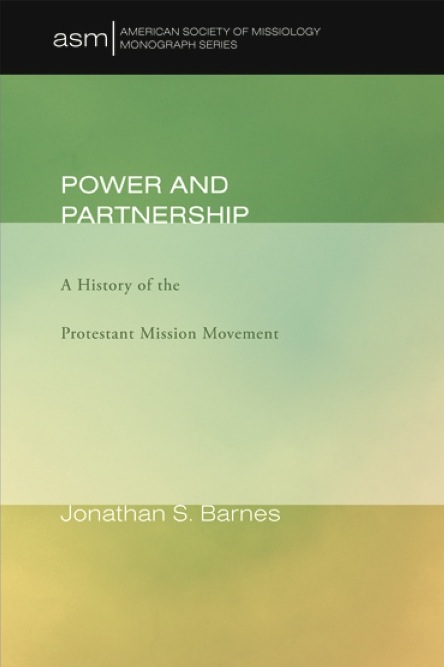
“While the concept of partnership between churches in the Global North and South has been an ecumenical goal for well over eight decades, realizing relationships of mutuality, solidarity, and koinonia has been, to say the least, problematic. Seeking to understand the dynamics of power and control in these relationships, this work traces the history of how partnership has been lived out, both as a concept and in practice. It is argued that many of the issues that are problematic for partnerships today can find their antecedents during colonial times at the very beginnings of the modern missionary movement. For those interested in pursuing cross-cultural partnerships today, understanding this history and recognizing the use, as well as the misuse, of power is crucial as we seek genuine relationships of care and friendship in our fractured and divided world.”
What are others saying?
“In reviewing the history of Protestant mission work, Barnes exposes major themes or issues that cause those of us from the West to continually fall short in realizing mature ecumenical relationships, and through this analysis helps us see new possibilities for these relationships in the future.”
—[Graham Duncan, Professor of Church History and Church Polity, University of Pretoria]
“Power and Partnership is a salutary text on partnership within the international ecumenical scene, for at least three reasons. First, as a book tracing the contours of partnership, it provides insights into a concept that has been closely associated with the modern ecumenical movement. Second, it highlights the need for a new impetus in both theory and practice of partnership. Third, while the focus is on historical analysis, it also lifts out key issues still dogging the global ecumenical journey—notably the contestation of power within partnerships.”—[Des van der Water, past General Secretary of the Council for World Mission]
“With historical clarity, political insight, and missiological acuteness, Barnes traces the complex dynamics of cross-cultural partnerships. He provides . . . a deep, sophisticated, and accessible analysis of the achievements, struggles, and unfinished agenda for what will continue to be, at all levels of the Christian church, the most common experience of North-to-South relationships. Barnes’s work contributes to the reshaping of global denominational policy and congregational short-term mission practices.”—[Carlos F. Cardoza-Orlandi, Professor of Global Christianities and Mission Studies, Perkins School of Theology, Southern Methodist University]
To reach Jon Barnes, buy his books, or schedule a book-signing event:
- Amazon: Order Online
- Email: jbarnes@dom.disciples.org
- Tell him you heard about him on editingaddict.com!

Share this:

Cease Being Lost
The Perfect Scene
[found on advancedfictionwriting.com; by Randy Ingermanson]
“Writing the perfect scene:
- Goal: A Goal is what your POV character wants at the beginning of the Scene. The Goal must be specific and it must be clearly definable. The reason your POV character must have a Goal is that it makes your character proactive. Your character is not passively waiting for the universe to deal him Great Good. Your character is going after what he wants, just as your reader wishes he could do. It’s a simple fact that any character who wants something desperately is an interesting character. Even if he’s not nice, he’s interesting. And your reader will identify with him. That’s what you want as a writer.
- Conflict: Conflict is the series of obstacles your POV character faces on the way to reaching his Goal. You must have Conflict in your Scene! If your POV character reaches his Goal with no Conflict, then the reader is bored. Your reader wants to struggle! No victory has any value if it comes too easy. So make your POV character struggle and your reader will live out that struggle too.
- Disaster: A Disaster is a failure to let your POV character reach his Goal. Don’t give him the Goal! Winning is boring! When a Scene ends in victory, your reader feels no reason to turn the page. If things are going well, your reader might as well go to bed. No! Make something awful happen. Hang your POV character off a cliff and your reader will turn the page to see what happens next.
For more tips on writing from AdvancedFictionWriting, click here.
[found on http://www.advancedfictionwriting.com/articles/writing-the-perfect-scene]
Share this:
Pulse of a Book
“Write from the heart. A book without a pulse is like a person without a spirit.”
— Linda Radke, President of Five Star Publications
Share this:
How to Make a Who-Dun-It
[found on blog.karenwoodward.org; by Karen Woodward]
“1. Know who your murderer is and why they did it.
– What was their goal?
– What are the stakes?
– What motivates the killer?
By the end of the story make sure you’ve answered these questions in your manuscript.
2. Leave clues
The clues “do not have to be obvious or even fully explained. You’ll want to leave some “mystery in your mystery.”
3. After you finish the first draft add in clues where needed
Price’s tip: Red herrings are much easier to add in after the book is written as long as you don’t write yourself into a corner with your characters, such as explaining everything they do and why.
4. Don’t fully explain everything
Price writes: “Let your characters retain some mystery.”
People aren’t fully explained any more than they are wholly good or bad, your characters should reflect this.
5. Your protagonist doesn’t have to know everything, at least not right away
Like you and me, it’s okay if your sleuth doesn’t have all the answers and is unsure about what happened … as long as she gets there in the end.”
 Editing Addict, LLC