Tag: writer

How Do I Publish My Book?
Congratulations! You have your book finished—and now you want to publish it. What do you do? How many options are there?
Firstly, what is your goal? Are you planning on sharing your book with your mom and your great aunt Molly? Then you want to use Print On Demand. If you have a larger audience in mind, but don’t have the time—nor the patience—to wait for Traditional Publishing, you can always try Self Publishing; it is a road where you are judge, advocate and jury…so be prepared. If none of these fit your style, you can embrace the transformers of the publishing world: Hybrid Publishing.
What is Print On Demand?
- POD is an option to upload your manuscript AS IS to a site, and they will convert it to an eBook, as well as print a limited number of books for you.
- This does not allow for formatting, editing, or reprinting without uploading to the site again.
- It is an excellent mode for self-publishing comic books, instruction manuals, or family albums
- Example of a POD site
- CreateSpace
- Tell CreateSpace you heard about them from editingaddict.com!
What is Traditional Publishing?
- Just like an actor trying to land a role, traditional publishing requires authors to work through agents.
- You have to find the agent that is looking for:
- Your genre
- Your concept
- Your audience
- Your style
- Your chapter length
- Your book
- Agents reject authors daily, no matter how wonderful the book is—because it is not what THEY were looking for…
- Rejected authors you may recognize (from literaryrejections.com):
- Dr. Suess—“Too different from other juveniles on the market to warrant its selling.”
- Zane Grey—”You have no business being a writer and should give up.”
- Jack Canfield & Mark Victor Hansen authors of Chicken Soup for the Soul—140 rejections stating “Anthologies don’t sell.”
- The Diary of Anne Frank—“The girl doesn’t, it seems to me, have a special perception or feeling which would lift that book above the ‘curiosity’ level.”
- Rejected authors you may recognize (from literaryrejections.com):
- To find an agent, you must write a query letter
- Each agent requires DIFFERENT information per query letter
- Some want the first five chapters, some want no chapters…
- Some want every chapter summarized, while others only want the entire book summarized
- Research which agent requires what, and do not mix up your submissions
- Never give up on your book, but it’s okay to give up on a certain agent
- Each agent requires DIFFERENT information per query letter
- You FIND an agent
- They talk to the big publishing companies, and know what they are looking for
- They find you a publisher
- You sign a contract
- Your book is published
- You retain NO rights to your work, or future books in the series
- Movie rights are transferred to the publisher
- Your name becomes well-known…or NOT.
- The publisher has the right not to sell, or even promote your book—however, you have already signed all rights away to it.
- The publisher does do the dirty work for you, they advertise, they publicize, they edit, they format, they print, they sell…they also keep.
- A well-known author has more rights with a publisher than a new author. This is an important point to remember when entering the world of publishing. If you already have a following of readers when you reach a traditional publisher, your ability to maintain rights to your work vastly improve—because you have already proven your work is a success, and people want it.
- Excellent article on traditional publishing: nathanbransford.com
- “Now, chances are at this point you are going to be in a psychological state where you are ready to sign over a body part just to get an agent, and you will be predisposed to say “Yes, for crap’s sake, yes!!”. But take a step back, take your time, make sure you’re very comfortable with the agent before you enter into one of the most important business relationships you will have in your life. You and your agent are going to have to seriously trust one another, so ask questions, don’t be shy, and make sure you’re ready.” – Nathan Bransford
What is Self-Publishing?
- The Tale of Peter Rabbit by Beatrix Potter was rejected so many times she decided to self-publish 250 copies. It has now sold 45 million.
- With Self-Publishing, no agent is required, but you are responsible for EVERYTHING; you either must be skilled enough to accomplish all the parts necessary, or you are your own contractor, and need to find all the subcontractors to do your work.
- Your TO DO list expands daily:
- Editing
- Research, and find an editor (http://www.editingaddict.com is a good start)
- Pay editor
- Formatting
- Find a graphic design crew to format book to print, as well as create a workable cover design;
- Pay graphic design group, as well as pay for the cover picture chosen
- Printing
- Find a POD service like Xulon Press, (and tell them you found them on editing addict.com)
- Pay for each copy of your book to print
- Advertising
- Build a website
- Build Social Media
- Promote book
- Sell book
- Reach bookstores to ask to sell in-store
- Order & reprint books
- Editing
- YOU retain all rights to your book, future books, and movie rights
- Your TO DO list expands daily:
What is Hybrid Publishing?
- Finally, a merging between Traditional Publishing and Self Publishing has taken place—bringing the best of both worlds into a a format called the Hybrid Publishing option
- No agent needed
- Hire a Hybrid Publishing team
- Team is pre-made—you don’t have to find an editor, a format team, or a PR group…the team is ready, willing, and very able. They will stay by your side through the entire process!
- What Hybrid Publishing provides:
- Editing
- Formatting
- Book Cover design
- Team to walk alongside you through the journey
- Advertising
- Web Site
- Social Media platform
- Book promotion
- Author promotion
- You, as the author, maintain your rights:
- You keep all rights to your book, and future books
- You keep movie rights
- You are not limited by an agent’s likes/dislikes
- If you are picked up by a Traditional Publisher, you already have a base of readership, and you have a voice in your options/choices for future
- Example of Hybrid Publisher:
- A Book’s Mind / jenene@abooksmind.com
- Tell A Book’s Mind you heard about them from editingaddict.com!
If you have any questions, let Editing Addict know!
Share this:
Tips for Children’s Books
[found on dummies.com]
“At some point after you have a solid draft of the children’s book you’re writing, you must begin the editing process. Here’s a quick overview of the salient points to keep in mind.
- If a sentence doesn’t contribute to plot or character development, delete it.
- Make sure your characters don’t all sound the same when they speak.
- If you have a page or more of continuous dialogue, chances are it needs tightening.
- When changing place or time, or starting a new scene or chapter, provide brief transitions to keep your story moving smoothly.
- Make sure to keep the pace moving from action to action, scene to scene, chapter to chapter.
- If you find yourself using a lot of punctuation (!!!), CAPITAL LETTERS, italics, or bold, chances are your words aren’t working hard enough for you.
- When you can find one word to replace two or more words, do it.
- Be careful with changing tenses midstream. If your story is told in the past tense, stick with it throughout. If present tense, then stick with that. Be consistent.
- Watch excessive use of adjectives, adverbs, and long descriptive passages.
- After you choose a point of view for a character, stick to it.
- If your character hasn’t changed at the end of your story, chances are he isn’t yet fully fleshed out.
- If your character talks to himself or does a lot of wondering aloud, he needs a friend to talk to.
- If you’re bored with a character, your reader will be, too.
- If you can’t tell your story in three well-crafted sentences: the first one covering the beginning, the second one alluding to the climax (the middle), and the last one hinting at the ending — you may not have a complete story yet.
- If you find yourself overwriting because you’re having trouble expressing exactly what you mean, sit back and say it aloud to yourself, and then try again.”
[found on http://www.dummies.com/how-to/content/writing-childrens-books-for-dummies-cheat-sheet.html]
Share this:
Featured Writing Addict: Susan Cottrell
Susan Cottrell
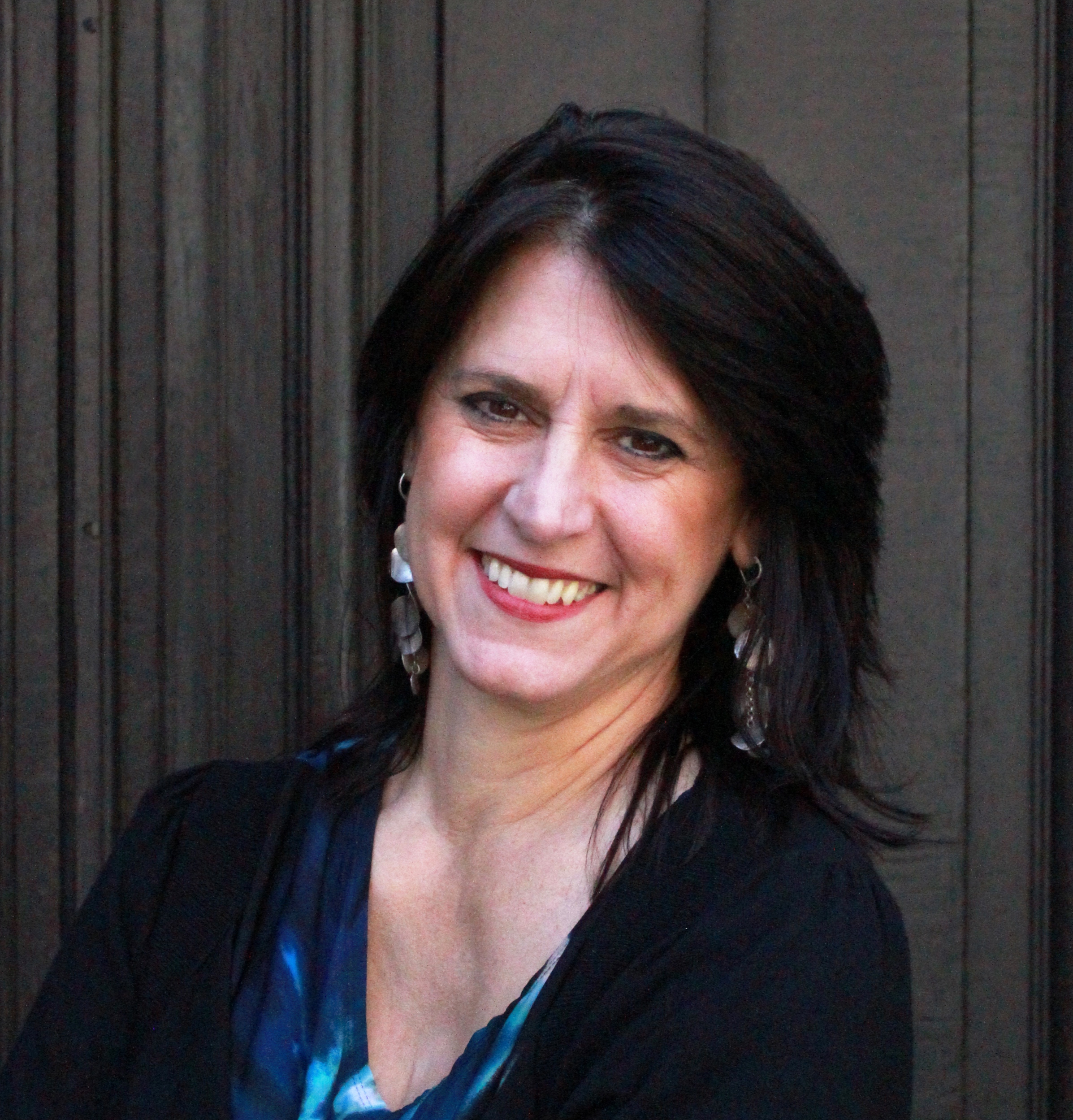
Susan Cottrell is a writer, speaker, and teacher. She is thrilled with her new book, The Marriage Renovation. Married 27 years, she and Rob had to go through their own renovation, and God did more than they ever thought possible. They have five (nearly) grown children. Susan homeschooled for some twenty years… until she ran out of energy! She loves to lead retreats and seminars, and teach women, couples and teens about the freedom for which Christ set them free (Galatians 5:1). Contact her directly, or read her post at marriagerenovation.com.
What’s Susan’s Genre?
Nonfiction: Marriage, Parenting—from the perspective of abiding in Christ.
What’s on Susan’s Heart?
“My heart beats for the discouraged, defeated Christian, to share the freedom that comes from the abiding life of Jesus Christ. I am passionate to teach. I am available on a limited basis to lead retreats for women or couples on MARRIAGE, the ABIDING LIFE OF CHRIST, and PARENTING. I also speak to teens, and young adults, teaching them that the great big God they learned about in church is not stuck in their Bibles, but offers them life on the edge! I am also available for other speaking engagements and teaching opportunities at your church, Bible study or small group.”
What are Susan’s books?
[Susan’s more recent releases]
The Marriage Renovation:
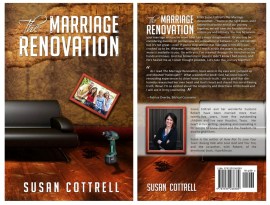
From The Marriage Renovation… “You’re in the right place, and I believe that by the end of our journey together, we will have the foundations to restore joy and intimacy. You may be new in your marriage and you’ve never had a major disagreement. Or you may be considering divorce. Or perhaps you are somewhere in between — it’s not terrible but it’s not great — even if you’re disgruntled that marriage is not all it was cracked up to be. Wherever you stand, I reach across the pages to say, so much more is available to you. I’m with you, I’ve crawled through the trenches on my hands and knees. God has broken me in places I didn’t know I had places, and He’s healed me as I never thought possible. Let’s take this journey together.”
How Not to Lose Your Teen:
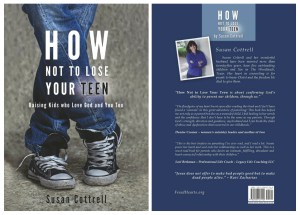
From a sea of parenting advice, emerges How Not to Lose Your Teen—it is a break-through, and intelligent look at parents and teens. Intimate and relatable, Susan shows parents how to decrease their teens’ dependence on them and increase their dependence on Christ. You will be relieved and encouraged as you walk this entertaining and heart-rending journey with Susan.
To reach Susan, buy her books, or schedule her to teach:
- Facebook: Freed Hearts Ministry
- Email: freedhearts@gmail.com
- Site: marriagerenovation.com
- Twitter: @freedhearts
- Tell her you heard about her on editingaddict.com!
Susan’s husband, Rob:
Robert Cottrell, is an indie recording worship artist, his music can be downloaded for free on reverbnation.com, or found on facebook.com. Robert Cottrell Music is contemporary Christian worship, a style that is both uplifting and relaxing, with a focus on the grace and love of Jesus. Tender and intimate, his music is not only enjoyable, but also recognizable.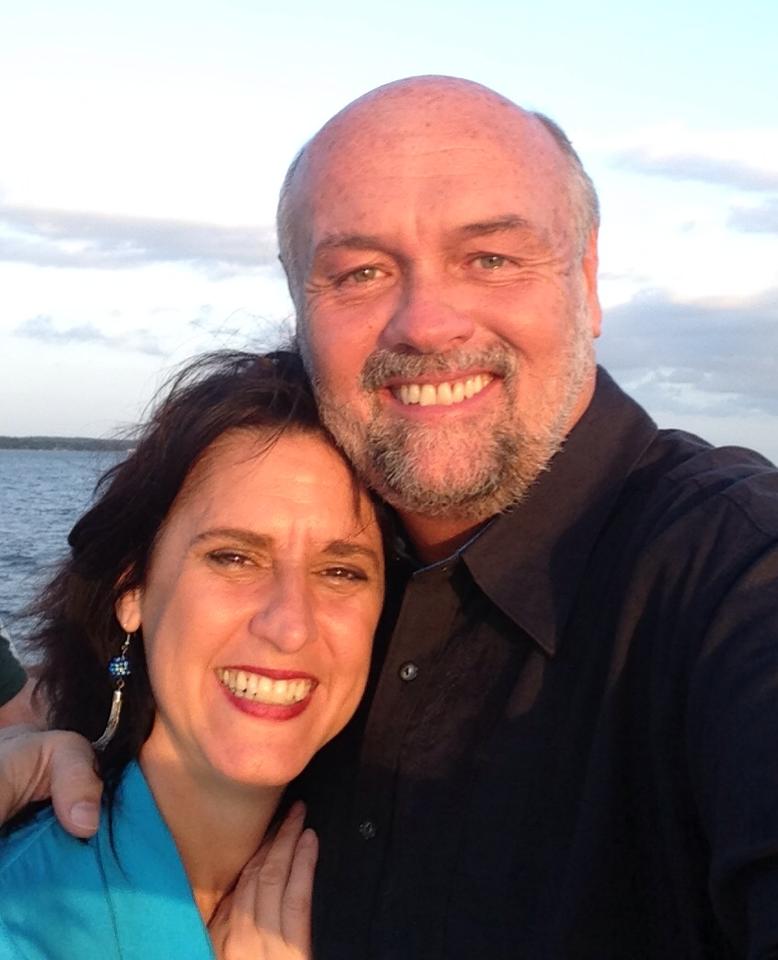
Share this:

Social Media How To for Writers/Authors
[found on pbs.org/mediashift]
“Wrap your mind around this: One of the most important factors that traditional publishers use to decide whether to acquire a book is the marketing platform of its author. You’d think that the main reason for approaching a traditional publisher is to reap the benefits of the publisher’s marketing, and you wouldn’t have to bring your own.
Life is full of mysteries, and whether you’re working with a traditional publisher or you are an artisanal publisher (a.k.a., “self-publisher”), the potency of your marketing platform can determine your success.
There is no scenario under which thousands of social-media followers is not a good thing, so here are 10 social-media tips for authors of any kind.
1. START YESTERDAY
You must make progress along two fronts at the same time: writing your book and building your marketing platform. You cannot wait until you’re done writing, because a platform takes nine months to a year to build. Ideally, you started building your platform before you even began to write your book.
2. SEGMENT THE SERVICES
There are five social-media services to choose from. You need not use them all, but each serves a different purpose. I call this the five Ps of social media: Facebook is for people — people who you went to high school or college with and your family. Twitter is for perceptions — perceptions such as “I feel an earthquake and I’m in Chile.” Google+ is for passions — passions such as photography that you cannot share with your Facebook people. Pinterest is for pinning — pinning pictures with little interaction. LinkedIn is for pimping — as in making business connections or finding a job. You can use each of these to build a platform, but your relationships on them are apt to differ.

3. MAKE A GREAT PROFILE
Your profile page is an ad. Its purpose is to convince people to circle, follow, subscribe, or like you. It should communicate that you are a likeable, trustworthy, and competent person. Two details: First, ensure that your profile has a high-quality picture of your face (and only your face, not your spouse, dog, kids, and car). Second, use the text areas to simply and humbly describe who you are and tell your personal story. For example, Peggy Fitzpatrick has a great Google+ profile. (See image above.)
4. CURATE, DON’T CREATE
It’s hard enough to write a book, much less create content for social-media sites at the same time. So give yourself a break and focus on curating the content of others while you are writing. Link to articles, pictures, and videos that are relevant to your genre in order to establish your expertise. Power tip: Go to Alltop.com, a site I co-founded, to find content on more than 1,000 topics. For example, the followers of a science-fiction writer would find “How to Deflect Killer Asteroids With Spray Paint“ interesting (found via Science.Alltop.com).
5. ACT LIKE NPR
NPR provides great content 365 days a year. A few days a year it runs pledge drives. No one I know likes the pledge drives, but we tolerate them — and some of us even give money. Why? Because NPR has earned the right to promote its pledge drives by providing such great content. This is a good model for authors too: Provide such great content that you can promote your book when it’s done. If you do this very well, people may want to reciprocate for the value you’ve added to their lives by buying your book. So just imagine you are the producer of “Fresh Air” or “All Things Considered” and look for interesting content.
6. RESTRAIN YOURSELF
NPR provides another excellent example for book marketing: It doesn’t run pledge drives very often. Less than 10 percent of your social-media posts should promote your book or other commercial endeavors. It’s OK to pour it on when your book launches, but back off on the promotion after the first four weeks and do educational things like free webinars and Hangouts on Air. You need to make a transition from salesman to teacher.

7. CANDY-FY
Social-media sites are busy places, so people don’t notice all-text posts or posts with small pictures. Every post should include a picture that’s at least 400 to 500 pixels wide or an embedded video from YouTube or Vimeo. Eye candy counts in the constant contest for attention — if you’re old enough to remember, it’s like the difference between a Yellow Pages ad and a Yellow Pages listing. Check my posts on Google+ to see what I mean. (See image at right.)
8. RESPOND
Social media is a conversation, not a one-way broadcast. Every time you share a post, respond to the comments that it generates. (If it generates no comments, you’re doing something wrong.) A big mistake that most authors make is that they think they are delivering a sermon when a conversation is what’s appropriate.
9. STAY POSITIVE OR STAY SILENT
Even if the topic is an issue that perturbs the core of your soul such as gun control, women’s rights, or ObamaCare, don’t show anger. On a practical level, if you only want to sell books to people who agree with your sensibilities, you should prepare for a life of poverty. If people attack you, ignore them. If they attack you twice, block them from seeing your posts. And don’t look back.
10. REPEAT
Social-media “experts” disagree with me on this, but I’m telling you it works: Repeat your posts. I repeat my tweets four times every eight hours — you don’t get 1,240,000 Twitter followers by not taking risks. This is pushing the edge, but the assumption that everyone who is interested in your posts will see it the first time is naïve. CNN doesn’t run a story once and hope that everyone has seen it or recorded it to see later. At least try sharing a post when your audience is awake, then 12 hours later, and see what happens.
One last tip: Do, don’t plan. Social-media experts will tell you that the first step is to develop a plan that includes highfalutin elements such as goals, strategies, and tactics. Let me simplify the process of building a platform. The goal is to get 5,000 followers by the time your book comes out. End. Of. Discussion. There is little “right” and “wrong” in social media — even what I say here! There is only what works for you and what doesn’t, so jump in and get going. You’ll figure it out along the way.
Guy Kawasaki has 3,821,000 million Google+ followers, 286,000 Facebook subscribers, and 1,240,000 Twitter followers. He is the co-author of APE: Author, Publisher, Entrepreneur-How to Publish a Book, which explains self-publishing, and has written eleven other books, including the New York Times and Wall Street Journal bestseller Enchantment. Previously, he was the chief evangelist of Apple. Kawasaki has a BA from Stanford University, an MBA from UCLA, and an honorary doctorate from Babson College.”
[found on http://www.pbs.org/mediashift/2013/02/guy-kawasakis-10-social-media-tips-for-authors045]
Share this:

Hero Character? Or Hapless Victim?
[found on 5writers5novels5months.com]
“Why Do We Torture Our Heroes?
There are three big problems with a hapless victim as protagonist.
Problem #1: Repetitive Agonizing
Over-tortured, victimized characters tend to express their constant frustration. After all, the author has to give these poor sods something to say, and when a character with a life-threatening disease, whose true love recently dumped him just after his dog was run over by a car, falls off a cliff and into a gigantic waterfall after being chased by evil aliens … well, let’s just assume the first words out of his mouth after he hits the water will not be, “Wow! What a beautiful waterfall.” How many readers want to spend a whole book with a constantly anguished or angry protagonist? We all want someone to root for, not just feel sorry for.
Problem #2: Boredom
Being in a pickle is not inherently exciting. Giving a protagonist a ton of problems to worry about and suffer from does not automatically create conflict and tension. A guy sitting in solitary confinement in a prison cell has big trouble, but watching him pace the floor and mark the days off on the wall is not interesting. Or even tense (for the reader, at least). Why? He can’t solve his problem. All he can do is be miserable. And misery without conflict, action or interaction is kinda boring. (In case Papillon comes to mind as an exception, that was Henri Charriere’s memoir and, arguably, the exciting parts were the escapes, not the scenes where he spit out his rotting teeth in a filthy cell.)
Problem #3: Miraculous Victory
“The Perils of Pauline” told classic damsel-in-distress stories. Sending in some outside force to rescue the protagonist is one way to get him, or her, down from the tree. But if you’re not (intentionally) writing melodrama, you have to figure out a way to have your hero find his own way down from the tree. If you’ve beset your protagonist with continuously mounting (and unsolved) troubles through the whole book – your character is going to have to morph from hapless victim to unstoppable Superman in the last act to get out of the mess by himself. (Okay, Papillon is certainly a breathtaking example of this … but if it hadn’t been an autobiography, who would have believed it?)
So, what does the “up a tree” dictum really tell us to do? This is something we discussed at length in Whistler, and my own personal epiphany was about the purpose of giving your protagonist troubles. It’s not to make him a miserable, complaining victim. It’s to give him something heroic to do. To put him in action. Only by the protagonist’s reaction to his troubles can we get to know what he’s made of.
Ding … the lightbulb went on for me. Give your hero problems he actually can do something about. Then let him show his stuff. Do we really care about a hero who sits up in that tree kvetching and waiting for miracle? No, we want him to be visibly overcoming his fear of heights, planning his escape, throwing apples at the baying dogs below, weaving a rope out of twigs or something … anything! The tougher the problem, the bigger the hero. But if the protagonist is not well matched with the problems to be solved, the writer may have to cheat and resort to miracles or magic, and that could actually diminish the hero.”
[found on http://5writers5novels5months.com/2013/07/01/why-do-we-torture-our-heroes]
Share this:
Query Query Quite Contrary…
[found on queryshark.blogspot.com]
Query Shark: “How To Write Query Letters … or, really, how to revise query letters so they actually work…” A site that works for YOU. Query questions? Read on…
Example of this tool:
“Dear Query Shark, Winston Smith has been a foolish man, and on Christmas Day of 2012, it’s going to cost him his life. This is a great opening line. Do I want to find out what happened? You bet. On top of a faltering marriage – and there’s been no sex for eight months – not only has he neglected to tell wife, Julia, their heavily indebted dairy farm is up for an income tax audit, but he’s corresponded with the auditor that “the thought of having to hand over my life in letters and source documents for examination by you, a total stranger, on pain of punishment, makes me physically ill,” and he will not be cooperating with the Inland Revenue Department. And then you take veer so completely off the path of taut, lean prose that it’s almost like you’ve morphed into Prolix Man. For starters, don’t quote the novel in the query. Also, we don’t need to know why the marriage is faltering, just that it is. And the only thing we really need to know is the audit is going to be a big surprise to Julia. Tom Parsons life previously could have been summed up in a word: inertia. Married to mousy Sally, the one girl he dated at high school, their marriage has become routine since the birth of their son, Syme. What? Wait. Who? What happened to Winston and Julia? This abrupt segue is confusing. Remember, I’m not sitting on my sofa with a cup of tea, savoring your query. I’m not reading this like I read a novel. I’m sitting at my desk, I’ve got ten minutes before a scheduled phone call and I’m trying to find the queries that entice me to read on. In other words, I’m reading fast and mostly skimming. Whether you think this is a good idea, or fair is immaterial. It’s reality and a smart query writer will write to his/her audience. What that means: You make sure I know who a new character is by telling me “Inland Revenue agent Tom Parsons” And you don’t have FIVE NAMED CHARACTERS in the first two paragraphs. At the most you have two….“[found on http://queryshark.blogspot.com]
Share this:
Hear MY WRITING roar!!!!
[found on us4.campaign-archive1.com; by Rachelle Gardner]
“Those Annoying Exclamation Points!!!
By Rachelle Gardner on Jul 01, 2013 09:34 pm

Over many years of editing books, it seems I have become a heartless eliminator of exclamation points!!! Seriously, I developed a hatred for them! People tend to WAY overuse them! Not to mention italics and bold, and that oh-so-effective use of ALL CAPS!!!!!!!
Here’s a hint to avoid coming across as amateur: Use the above devices sparingly in any writing intended for publication. (I’m being specific here, because in blog writing and emails, you’re free to go crazy. I do.)
If you tend to use a plethora of exclamation points, do a search-and-replace in your manuscript and put a period in place of every single one of them. Yep, every one. Then you can go back and add an exclamation point here and there if you really must. But I’m not kidding: VERY . . . SPARINGLY.
Same with other means of artificial emphasis: italics and ALL CAPS. Your writing should be so effective by itself that the emphasis isn’t necessary.
As for bold, don’t ever use it in running text! (It’s OKAY for headers!)
Isn’t THIS irritating??!!”
[found on http://us4.campaign-archive1.com/?u=cde4992358f2badd71896ea0b&id=016b5771a7&e=325ff0e8d3]
Share this:

How to Write an Author’s Bio
[found on annerallen.blogspot.com]
“How to Write an Author Bio When You Don’t Feel Like an Author…Yet
(by Anne R. Allen)
- Maybe you’ve got a novel finished and you’ve been sending out queries. Lots. And you’re getting rejections. Lots. Or worse, that slow disappointment of no response at all.
- Or maybe you write short fiction and poetry and you’ve got a bunch of pieces you’ve been sending out to contests and literary journals. You’ve won a few local contests, but so far you haven’t had much luck getting into print.
- You may still be afraid to tell more than a handful of people you’re a writer. You’d feel pretentious calling yourself an “author.”
- But it might be time to start—at least privately.
- Because one day, in the not too distant future, you’ll open your email and there it will be:
- The response from an editor: “You’re the winner of our October ‘Bad Witch’ short story contest. We’d like to publish your story, Glinda: Heartbreaker of Oz in our next issue. Please send us your Author Bio.”
- Or just when you were giving up hope, you get that reply from your dream agent:
- “I’m intrigued by your novel Down and Out on the Yellow Brick Road.Please send the first fifty pages, and an Author Bio.”You’re so excited you’re jumping out of your skin, so you dash something off in five minutes and hit “send.” Wow. You’re going to be in print! Or maybe get an agent. Let’s get this career on the road!
- Whoa. You do NOT want to dash off an author bio in five minutes. Every word you send out there is a writing sample, not just those well-honed pages or stories.
- So, write it now. Yes. Right now. Before you send off another query or enter another contest. Even though you’ve never published anything but the Halloween haiku that won second prize in your high school newspaper.
- Actually, you want to write two bios: A paragraph suitable for a magazine byline, and a longer one-page version for sending to agents and later posting on your website, blog, etc.
♦♦♦
How to Write an Author Bio
- Title it only with your name. Write in third person. Keep to about 250 words: one page, double-spaced–or 1/2 page single-spaced, if you include a photo above it. (I advise against this unless it’s specifically requested or you have a great, up-to-date, professional photo that makes you look like a contestant on one of those Top Model shows.)You’re aiming for a style similar to book jacket copy. The purpose is to make yourself sound professional and INTERESTING.
- This may be perfectly accurate: “Mrs. H. O. Humm is a stay-at-home mom who lives in Middle America with her dentist husband, 2.4 children and a dog named Rex.”
- But a bio is all about making yourself stand out. “Hermione Oz Humm was born in the Emerald City and is an expert balloonist, ventriloquist and voice-over performer.”
♦♦♦
Things to consider including:
1) Whatever might make you newsworthy: OK, so you aren’t the baby who got rescued from that well forty years ago, and you never cheated on Robert Pattinson, but whatever is quirky or unusual about you, trot it out. Keep homing pigeons? Run marathons? Cook prize-winning chili? Put it in.
2) Work history: Here’s where you say you’re a welder or a fourth grade teacher or whatever, even if it isn’t related to the subject matter of your book.
NB: Don’t call yourself a “novelist” if you haven’t published one.
If you’re seriously underemployed and want to keep it to yourself, you can call yourself a “freelance writer,” but consider saying what else you do, even if it’s less than impressive. I remember when Christopher Moore’s first book, Practical Demonkeeping, came out and all the Central Coast papers ran stories about how a “local waiter” had just sold a book to Disney. If he’d called himself a “writer” there would have been no story.
3) Where you live: Your hometown might make a good focus for marketing. Plus people like to be able to picture you in your native habitat.
4) Education: This includes workshops or conferences as well as formal education—especially if you worked with a high-profile teacher. If you took a playwriting workshop with Edward Albee, even if it was 30 years ago, go ahead and say so.
5) Life experience and hobbies that relate to the book, or fascinate on their own: If you collect vintage Frisbees, and the book is about angsty teen werewolves at a Frisbee contest, include it. If you invented the Frisbee, it doesn’t matter what your book is about: toot that horn!
6) Travel/exotic residences: “Rudy Kipling once took a two-week tour of Asia,” meh. But “Mr. Kipling was born in Bombay and spent a year as the assistant editor of a newspaper in Lahore,” is something you want them to know.
7) Writing credentials/prizes: Here’s where you can list some of those credits in small presses and prizes that didn’t fit in your query. Include any books you’ve published, even if they were in a different field.
If you’re writing this for an agent or publisher, remember books that didn’t sell well are going to work against you with a marketing department, so you might want to leave out self-published books if your sales weren’t in the thousands. You should also skip older books self-published with a vanity press, unless your sales were spectacular.
8) Family: Use discretion here. If you write for children and have some of your own, it would be useful to mention them. If your family has an interesting claim to fame (like your sister just won an Olympic medal) or if family history has made you uniquely qualified to write this book (Your grandfather was Dwight Eisenhower’s valet and you’re writing about the Eisenhower/Kay Summersby affair.)
9) Performing history: It’s helpful to show you’re not paralyzed by the thought of public speaking. You can mention you’re the president of your local Toastmasters, or host a jug band program on a public access station, or you played the Teapot in last year’s production of Beauty and the Beast at the local community theater.
10) Your online presence: This is where you can mention your blog. Also put in your twitter handle and list what other social media you participate in.
♦♦♦
How to Write a Short Author Bio
- Again, write in third person. For the first sentence, this format works pretty well:
- “Name is a ______ who lives in ______ and does ______. “
- Then you can add one or two of the following:
1. S/he is a member of _____ (if you’re a member of any writing organizations like RWA or SCBWI)
2. S/he has won_____ (writing awards—yes, you can mention the Halloween haiku.)
3. S/he has been published in _____ .
4. S/he has a degree in _____ from_______.
- Then add something interesting and unique about yourself, preferably something related to the piece, like:
- “S/he played Glinda the Good Witch in a Middle School production of The Wizard of Oz.”
- When writing these bios, think like a reporter. What would make good copy in a news release? Think unique, quirky or funny.
- All set? Good. Now go look in the mirror and say, “hello, author!”
- Then sit down at the computer and write those bios. Right now!“*
[found on http://annerallen.blogspot.com/2012/09/how-to-write-author-bio-when-you-dont.html]
Share this:
What’s that word?
Dictionaries—every writer needs them! This is the absolute best resource that Editing Addict has found on the dictionary front:
 Editing Addict, LLC