Tag: Writing

Artist Perfection
“The work never matches the dream of perfection the artist has to start with.”
– William Faulkner
Share this:
Trust Your Readers
“No one can write decently who is distrustful of the reader’s intelligence or whose attitude is patronizing.”
– E. B. White
Share this:
Finishing A Book…
“Finishing a book is just like you took a child out in the back yard and shot it.”
– Truman Capote
Share this:
Writing Non-Fiction…HOW?
[found on niemanstoryboard.org]
“FINDING THE STORY
- Every story has its surface-level meaning. Let’s say the surface story for “Titanic” is that a huge ocean liner goes down. But what is the theme of the movie? What is the real meaning of the story? Theme, at least in my view, is the underlying meaning of the story.
- Stories can have several thematic strings, and especially powerful ones are layered in that way. As a writer, I think you want to figure out what is the most important one, the one that you want to spend the most time on.
- When doing narrative, you have to sharpen your focus and figure out what your story is really about. Think about one set piece, performance, play or wedding – something that takes place within a set amount of time. There are also natural journeys like a road trip, or internal journeys, like addiction or abuse.
- If you’re the narrator, we need to see you and to understand who you are.
- When you’re trying to get readers to care, to get readers in on that, they have to see some of what you have seen. Try to figure out what it is that the reader really needs to know.
- If you decide to write about deeply personal things, you have to go all the way. If there’s painful stuff you’re holding back, it won’t work. If you’re not ready to go there, that’s fine; maybe let the story sit for a while.
NUTS AND BOLTS
- You want to engage the reader immediately – start in the middle of things.
- As you add to the number of characters in your story, the more complicated it becomes, because the reader has to keep track of more people.
- Once your language is powerful, your next step is to take it and pare it down, read it aloud and see when the sentences go on. When you find that, you either break up the sentence or get rid of adjectives and adverbs.
- Be simple and clear; don’t let the beauty take over – which is not to say you shouldn’t have any beautiful writing. You want some beautiful sentences, but you don’t want to overdo it.
- The more you focus your narrative on scenes, the stronger your narrative will become.
- Really good narrative writers talk about limiting the number of flashbacks. Tom French diagrams flashbacks with loops and tries not to have more than one or two.
- Metaphors are really hard to carry out. My advice would be to use them very sparingly. You can use so many layers of metaphors that you get confused. A story can be compelling without any overt metaphors.
- One really useful thing to do after you write your first draft is to see what happens after you remove the first paragraph or two. Often times it’s the second paragraph that’s the real beginning.
- Watch out for trying to explain too much.
- You don’t have to put a bow at the end or always have a totally clean resolution. Is there a way for you to evoke an idea without necessarily saying it or explaining it? Is there an image or scene that can convey a feeling or idea to close the piece?”
[found on http://www.niemanstoryboard.org/2010/07/28/tom-huang-narrative-tips-from-mayborn-conference]
Share this:
How trained are your writing muscles?
“Exercise the writing muscle every day, even if it is only a letter, notes, a title list, a character sketch, a journal entry. Writers are like dancers, like athletes. Without that exercise, the muscles seize up.”
– Jane Yolen
Share this:
How to Write an Article in 20 Minutes
[found on copyblogger.com]
“I don’t really want to spend more than 20 minutes a day on writing articles. And I spent no more than 20 minutes to write this article.
I realize this is writing blasphemy. Internet marketing is powered by content, and content is king. But when I have a daily schedule to post on and a business to run, I don’t have time to spend hours polishing every single blog post or writing 2,000-word articles.
Writing quickly doesn’t mean compromising on writing well, though. I’ve got seven tips to get you in and out of that composition box in twenty minutes – without sacrificing quality.
1. Keep an idea list.
When inspiration for a post strikes, scribble it down in a notebook or a word file. For many bloggers and content creators, finding the topic to write about takes up half the time. Keeping an idea list lets you leap in to a new post quickly when you’re ready to write.
2. Let your ideas incubate.
If you try to force yourself to come up with supporting information for your brilliant idea right away, it’s going to take ages. Let that topic sit for a few days, though, and you can add new ideas as they occurs to you – and when you’re ready to write, you’ll already have all the supporting info you need.
3. Edit before you start
You’ve probably got twice as many ideas as you need at this point, so it’s time to be brutal. Cut out any supporting idea that doesn’t fit with the main topic of the article. Remember, we’re talking about how to write an article in 20 minutes, not an epic. You can always use the ideas you don’t need for later posts.
4. Use bullet points
Bullet points, or numbered points like “10 Ways to Get More Subscribers”, can make writing an article a lot simpler in terms of organization because you no longer have to figure out transitions from one idea to the next. The great side benefit is that readers like lists; they’re easier for the eye to follow.
5. Keep it short
If you want to finish that article in 20 minutes, try to keep it under 500 words. Don’t feel like you’re skimping on quality content, either: this article is only about 500 words but it’s chockfull of information. Make every word count and you’ll save time without letting quality slip.
6. Come back later
If you find that you’re stuck, don’t try to force the words to come. Save the article and work on something else for awhile. If inspiration strikes, open up that document again. You can even switch from one blog post to another, spending a few minutes on each as ideas comes to you. It’s a huge time-saver.
7. Never save a good idea
It’s tempting, when you look through your list of ideas, to save the best ones for later because you think they’ll be easier to write. You don’t want to save time later, you want to save time now. Do the articles you know will come easily and make the most of that time.
Follow these simple steps and you’ll be on your way to brilliant articles in a fraction of the time.”
[found on http://www.copyblogger.com/write-article-fast]
Share this:
Featured Writing Addict: Susan Cottrell
Susan Cottrell

Susan Cottrell is a writer, speaker, and teacher. She is thrilled with her new book, The Marriage Renovation. Married 27 years, she and Rob had to go through their own renovation, and God did more than they ever thought possible. They have five (nearly) grown children. Susan homeschooled for some twenty years… until she ran out of energy! She loves to lead retreats and seminars, and teach women, couples and teens about the freedom for which Christ set them free (Galatians 5:1). Contact her directly, or read her post at marriagerenovation.com.
What’s Susan’s Genre?
Nonfiction: Marriage, Parenting—from the perspective of abiding in Christ.
What’s on Susan’s Heart?
“My heart beats for the discouraged, defeated Christian, to share the freedom that comes from the abiding life of Jesus Christ. I am passionate to teach. I am available on a limited basis to lead retreats for women or couples on MARRIAGE, the ABIDING LIFE OF CHRIST, and PARENTING. I also speak to teens, and young adults, teaching them that the great big God they learned about in church is not stuck in their Bibles, but offers them life on the edge! I am also available for other speaking engagements and teaching opportunities at your church, Bible study or small group.”
What are Susan’s books?
[Susan’s more recent releases]
The Marriage Renovation:
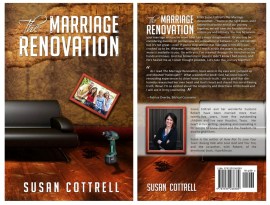
From The Marriage Renovation… “You’re in the right place, and I believe that by the end of our journey together, we will have the foundations to restore joy and intimacy. You may be new in your marriage and you’ve never had a major disagreement. Or you may be considering divorce. Or perhaps you are somewhere in between — it’s not terrible but it’s not great — even if you’re disgruntled that marriage is not all it was cracked up to be. Wherever you stand, I reach across the pages to say, so much more is available to you. I’m with you, I’ve crawled through the trenches on my hands and knees. God has broken me in places I didn’t know I had places, and He’s healed me as I never thought possible. Let’s take this journey together.”
How Not to Lose Your Teen:
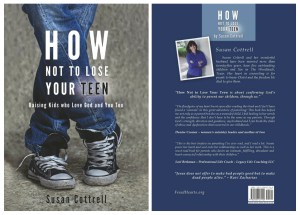
From a sea of parenting advice, emerges How Not to Lose Your Teen—it is a break-through, and intelligent look at parents and teens. Intimate and relatable, Susan shows parents how to decrease their teens’ dependence on them and increase their dependence on Christ. You will be relieved and encouraged as you walk this entertaining and heart-rending journey with Susan.
To reach Susan, buy her books, or schedule her to teach:
- Facebook: Freed Hearts Ministry
- Email: freedhearts@gmail.com
- Site: marriagerenovation.com
- Twitter: @freedhearts
- Tell her you heard about her on editingaddict.com!
Susan’s husband, Rob:
Robert Cottrell, is an indie recording worship artist, his music can be downloaded for free on reverbnation.com, or found on facebook.com. Robert Cottrell Music is contemporary Christian worship, a style that is both uplifting and relaxing, with a focus on the grace and love of Jesus. Tender and intimate, his music is not only enjoyable, but also recognizable.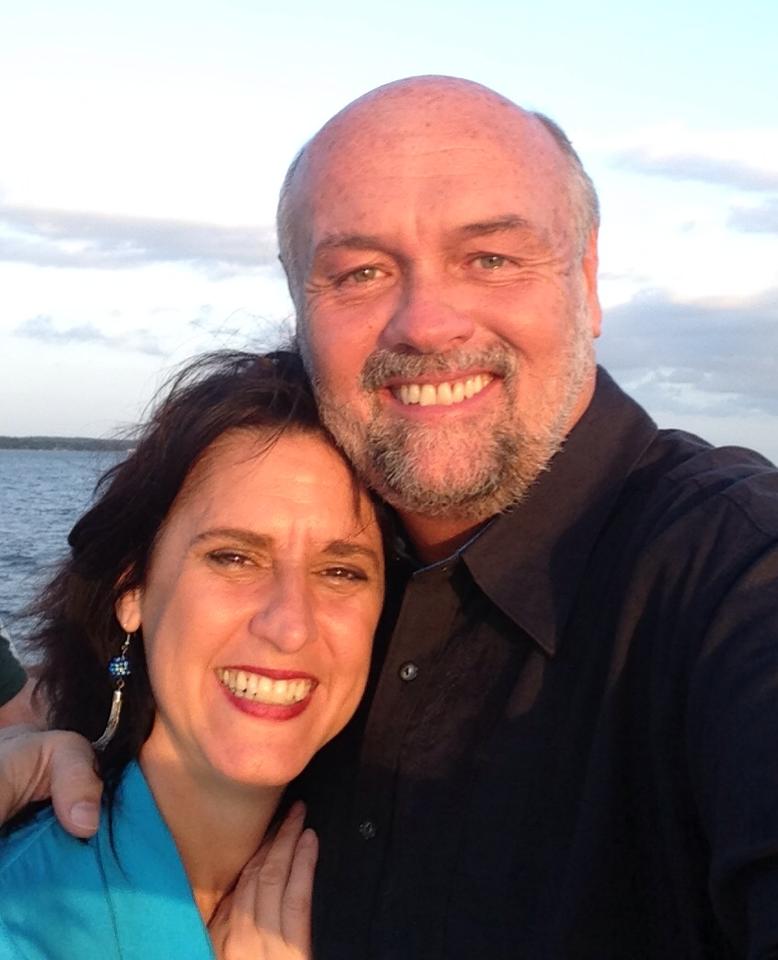
Share this:

How To Create A Plot Outline In 8 Easy Steps
[found on how-to-write-a-book-now.com; by Glen C. Strathy*]
“Here’s an easy way to come up with a brief plot outline for your novel.
One of the most powerful secrets to creating plots that are emotionally compelling is to incorporate the 8 Basic Plot Elements. Starting with your story idea, you only need to make eight choices to ensure the plot of your future novel hangs together in a meaningful way.
The best part is that you can make these choices and construct a brief plot outline in less than an hour.
Sound intriguing? Then let’s get started.
I’ll describe each of the eight elements in turn. If you already have an idea for a novel you’re working on, open your file or get a pad of paper or your writer’s notebook. As you read through the rest of this page, jot down ideas for how each element might work in your story. At the end, I’ll show you how to use your choices to create a brief, well-rounded plot outline for your novel. If you don’t have an idea for a novel yet, just grab one from your imagination. It doesn’t have to be good. It’s just an exercise after all.
On the other hand, if you already have a draft for a novel, that you’re looking to revise, then ask yourself, as we go through these elements, whether you have included them in your story. Create a plot outline for your novel in the way suggested below. You may find you can strengthen your novel plot considerably by incorporating any plot element you neglected before.
1. Story Goal
The first element to include in your plot outline is the Story Goal, which we covered in detail in the previous article, The Key to a Solid Plot: Choosing a Story Goal. To summarize, the plot of any story is a sequence of events that revolve around an attempt to solve a problem or attain a goal. The Story Goal is, generally speaking, what your protagonist wants to achieve or the problem he/she wants to resolve. It is also the goal/problem that involves or affects most, if not all the other characters in the story. It is “what the story is all about.”
For instance, let’s say we want to write a story about a 38-year-old female executive who has always put off having a family for the sake of her career and now finds herself lonely and regretting her choices. In this case, we might choose to make the Story Goal for her to find true love before it’s too late.
There are many ways we could involve other characters in this goal. For instance, we could give our protagonist …
… a mother who wants her to be happier.
… friends and colleagues at her company who are also unmarried and lonely (so that her success might inspire them).
… a jealous ex-boyfriend who tries to sabotage her love life.
… an elderly, lonely spinster of an aunt who doesn’t want the protagonist to make the same mistake she did.
… a happy young family who give her an example of what she has missed.
… a friend who married and divorced, and is now down on marriage. (Forcing the protagonist to work out whether her friend’s experience really applies to her – or whether it was just a case of choosing the wrong partner, or bad luck.)
We could even make the company where the protagonist works in danger of failing because it doesn’t appreciate the importance of family. It could be losing good employees to other companies that do.
In other words, after we have chosen a Story Goal, we will build a world around our protagonist that includes many perspectives on the problem and makes the goal important to everyone in that world. That’s why choosing the Story Goal is the most important first step in building a plot outline.
If you haven’t chosen a goal for your novel yet, do so now. Make a list of potential goals that fits the idea you are working on. Then choose choose one goal to base your plot outline on.
2. Consequence
Once you have decided on a Story Goal, your next step is to ask yourself, “What disaster will happen if the goal is not achieved? What is my protagonist afraid will happen if he/she doesn’t achieve the goal or solve the problem?”
The answer to these questions is the Consequence of the story. The Consequence is the negative situation or event that will result if the Goal is not achieved. Avoiding the Consequence justifies the effort required in pursuing the Story Goal, both to the characters in your novel and the reader, and that makes it an important part of your plot outline.
The combination of goal and consequence creates the main dramatic tension in your plot. It’s a carrot and stick approach that makes the plot meaningful.
In some stories, the protagonist may begin by deciding to resolve a problem or pursue a goal. Later, that goal becomes more meaningful when he discovers that a terrible consequence will occur if he fails. Other times, the protagonist may start off threatened by a terrible event, which thus motivates him/her to find way to avoid it.
As Melanie Anne Phillips points out, in some stories the consequence seems to be in effect when the story opens. Perhaps the evil despot is already on the throne and the Story Goal is to depose him. In that case, the consequence, if the protagonist fails, is that things will stay the way they are.
In our novel plot about the female executive, we’ve already come up with one possible Consequence – that she could end up like her spinster aunt. We could make the Consequence worse (perhaps the aunt dies of starvation because she is feeble and has no immediate family looking after her). Or we could create a different Consequence. Her employer may go bankrupt unless it becomes more family-friendly.
Write a list of possible Consequences you could have in your plot outline. Then choose one to be the counterpoint to your chosen Story Goal.
3. Requirements
The third element of your plot outline, Requirements, describes what must be accomplished in order to achieve the goal. You can think of this as a checklist of one or more events. As the Requirements are met in the course of the novel, the reader will feel the characters are getting closer to the attainment of the goal.
Requirements create a state of excited anticipation in the reader’s mind, as he looks forward to the protagonist’s success.
What could the Requirements be in our executive story? Well, if the goal is for our protagonist to find true love, perhaps she will need to join a singles club or dating service so she can meet single men. Perhaps she will need to take a holiday or leave of absence from her job.
Ask yourself what event(s) might need to happen for the goal in your novel to be achieved. List as many possibilities as you can think of. To keep things simple for the moment, just choose one requirement for now to include in your plot outline.
4. Forewarnings
Forewarnings are the counterpart to requirements. While requirements show that the story is progressing towards the achievement of the goal, forewarnings are events that show the consequence is getting closer. Forewarnings make the reader anxious that the consequence will occur before the protagonist can succeed.
In the plot outline for our story, events that could constitute Forewarnings might be…
- the company loses one of its key employees to another firm that was more family-friendly.
- the protagonist has a series of bad dates that make it seem like she will never find the right guy.
- the protagonist meets a woman at a singles club who tells her that at their age all the good men are already married.
- one of the protagonist’s friends goes through a messy divorce, showing that marriage may not be the source of happiness it’s purported to be.
While the Story Goal and Consequences create dramatic tension, Requirements and Forewarnings take the reader through an emotional roller coaster that oscillates between hope and fear. There will be places in the plot where it seems the protagonist is making progress, and others where it seems that everything is going wrong. Structure these well, and you will keep your reader turning pages non-stop.
For example, here’s how our plot outline might look so far …
“A female executive in her late 30s has been married to her job. But she has a wake-up call when her elderly, spinster aunt dies alone and neglected (consequence). The executive decides that she needs to have a family before she suffers the same fate (goal). In order to do this, she hires a dating service and arranges to go on several dates (requirements). But each date ends in disaster (forewarnings).”
As you can see, using just these four elements, a story plot is starting to emerge that will take the reader on a series of emotional twists and turns. And we’re only halfway through our 8 plot elements! (Of course, we started with the four most important ones.)
Notice too that these elements come in pairs that balance each other. This is an important secret for creating tension and momentum in your plot.
Before moving on to the remaining elements, list some possible events that could serve as Forewarnings in your story. For now, just choose one. See if you can create a brief plot outline like the example above using just the first four elements.
5. Costs
Generally speaking, good plots are about problems that mean a lot to the characters. If a problem is trivial, then neither the protagonist nor the reader has a reason to get worked up about it. You want your readers to get worked up about your novel. So you must give your protagonist a goal that matters.
One sign that a problem or goal matters to the protagonist is that he/she is willing to make sacrifices or suffer pain in order to achieve it. Such sacrifices are called Costs.
Classic examples of Costs include the hard-boiled detective who gets beaten up at some point in his investigation, or the heroic tales in which the hero must suffer pain or injury or give up a cherished possession to reach his goal. However, Costs can come in many other ways. Protagonists can be asked to give up their pride, self-respect, money, security, an attitude, an idealized memory, the life of a friend, or anything else they hold dear. If you make the costs steep and illustrate how hard the sacrifice is for the protagonist, the reader will feel that the protagonist deserves to achieve the goal.
In the case of our female executive, perhaps she must give up a promotion she has worked hard for because it would require her to travel so much that she would have no chance of settling down and raising a family.
Make a list of possible Costs your protagonist might be forced to endure in order to achieve the Story Goal. Again, just choose one idea to include in your plot outline for now.
6. Dividends
The element that balances Costs in your plot outline is Dividends. Dividends are rewards that characters receive along the journey towards the Story Goal. Unlike Requirements, Dividends are not necessary for the goal to be achieved. They may be unrelated to the goal entirely. But they are something that would never have occurred if the characters hadn’t made the effort to achieve the goal.
In the case of our executive, perhaps her efforts to meet men give her an idea for creating a business of her own – a kind of executive dating service, for instance, that will lead her to a happier career. Or perhaps the quest for love and family forces her to become more compassionate towards her co-workers when their family responsibilities interfere with work.
List possible ways to reward your characters and choose one that feels appropriate for your plot outline. Then move on to our final pair of elements.
7. Prerequisites
Prerequisites are events that must happen in order for the Requirements to happen. They are an added layer of challenges to your plot outline. Like Requirements, as Prerequisites are met, the reader feels progress is being made towards the goal. For instance, in order to free the Princess, the hero must recovery the key from its hiding place, but first (Prerequisite) he must defeat the dragon guarding it. In order to win the maiden’s hand, the gallant suitor must show he would not risk losing her for anything. But before he has a chance to do that, he must show he is willing to risk everything to win her (Shakespeare’s The Merchant of Venice).
If the Requirement for our novel about the executive is that she must go out on several dates, perhaps the Prerequisite is that she must sign up at a dating service, buy a new wardrobe, or get a make-over.
Take a look at your chosen Requirement and make a list of possible Prerequisites that must be accomplished before the requirement can be met. Choose one.
8. Preconditions
The last element to balance your plot outline, Preconditions, is a junior version of Forewarnings. Preconditions are small impediments in the plot. They are stipulations laid down by certain characters that make it more difficult for the Story Goal to be achieved.
A classic example is Pride and Prejudice in which Elizabeth’s quest for happiness is made more difficult by the terms of her grandfather’s will, which state that the family property can only be inherited by males. This means that, upon her father’s death, Elizabeth and her sisters will be penniless unless they find good husbands first.
However there are many other ways characters can impose conditions that impede the attainment of the Story Goal. They can make their help conditional on favours, insist on arduous rules, or negotiate tough terms.
For instance, perhaps the company where our female executive works has a rule that executives must attend meetings very early in the day – say 6AM on Saturdays. This rule makes it very hard for her to go on Friday night dates and be alert in the meetings. Or perhaps the singles club she joins has some seemingly unfair rules that cause her problems.
You know what to do by now. List possible Preconditions your characters might encounter, and choose one you like.
Organizing Your Plot Summary
Once you have chosen your eight elements, the next step is to arrange them into a brief plot summary. It doesn’t matter what order you put them in, so long as all eight are included. In fact, most of the elements can be repeated or included in more than one way.
For example, here’s how we might put together all eight elements for our executive story together into a one-paragraph plot outline…
“A female executive in her late 30s has been married to her job. But she has a wake-up call when her elderly, spinster aunt dies alone and neglected (consequence). The executive decides that she needs to have a family before she suffers the same fate (goal). So she buys a new wardrobe and signs on with a dating service (prerequisites). Her boss offers her a promotion that would involve a lot of travel, but she turns it down, so that she will have time to meet some men (cost). She goes on several dates (requirements). But each one ends in disaster (forewarnings). On top of that, because the agency arranges all her dates for Friday nights, she ends up arriving tired and late for the company’s mandatory 6AM Saturday morning meetings (preconditions). Along the way, however, she starts to realize how the company’s policies are very unfair to people with families or social lives outside work, and she begins to develop compassion for some of her co-workers that leads to improved relationships in the office (dividend).”
*Based on Dramatica theory created by Melanie Anne Phillips and Chris Huntley.
 Editing Addict, LLC