Tag: poet

I’m a poet…now what?
[found on poets.org]
“How can I become a poet? The best advice for writing poetry is to read lots of poetry. Read everything you can get your hands on: contemporary and classic; English and translation, formal and experimental. Read literary journals and magazines geared toward writers.
How can I get my poems published? Start small. Everyone wants to publish a book, but you should be aware that most writers start their careers by submitting their work to literary magazines and journals, gaining recognition from editors, agents, and peers. Creep up the ranks. After your work has appeared in a variety of periodicals and you have amassed a solid manuscript, try approaching small presses and university publishers. There are also several well-respected first-book contests, including the Walt Whitman Award, which you could enter.
Where should I submit my poems? Research is key. Spend some time finding journals and ‘zines, online or in print, that publish work that you enjoy or is similar to your style. Poet’s Market, published annually, is an essential sourcebook for poets interested in sending out their work. It contains listings of publishers with descriptions, contact information, and submission guidelines.Poets & Writers magazine, published six times per year, is another excellent resource.”
For more excellent tools, and expounding on how-to for poetry, check out their site: poets.org.
[found on http://www.poets.org/page.php/prmID/56]
Share this:
Featured Writing Addict: Katie Manning
Katie Manning

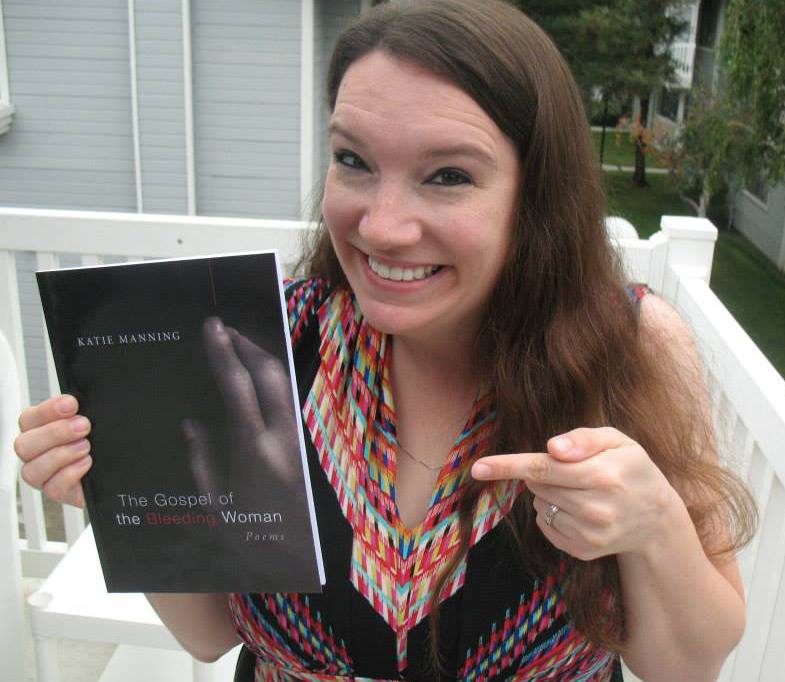
Katie Manning began creating poems at age four because she loved to play with the sounds of language. She is now the author of three poetry chapbooks, all published in 2013: The Gospel of the Bleeding Woman (Point Loma Press), I Awake in My Womb (Yellow Flag Press), and Tea with Ezra (Boneset Books). She lives in the Los Angeles area with her husband and son, and she is an Assistant Professor of English at Azusa Pacific University.
What’s Katie’s Genre?
Poetry
What’s Katie’s Inspiration?
“I am inspired by stories, and I especially love to write in the voices of people, real or fictional, whose perspectives have been left out. Motherhood and language itself have also been major inspirations for my poetry.”
What are Katie’s published works?
* * * * * * * * * * * * * * * * * * * * * * * * * * * * * * * * * * * * * * * * * * * * * * * * * * * * * * * * * * * * * * * * * *
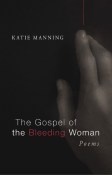
The Gospel of the Bleeding Woman imagines a life for an interesting, unnamed biblical character. In these poems, the bleeding woman has a name and gets to tell her own story.
* * * * * * * * * * * * * * * * * * * * * * * * * * * * * * * * * * * * * * * * * * * * * * * * * *

I Awake in My Womb is a collection of bizarre poems that are based directly on dreams that Katie Manning had immediately before, during, and after pregnancy. Through the shifting images of dream states, these poems explore the fears and joys of impending motherhood.
* * * * * * * * * * * * * * * * * * * * * * * * * * * * * * * * * * * * * * * * * *
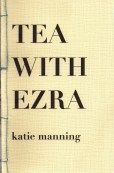
Tea with Ezra is a collection of poems that respond to familiar texts: fairy tales, biblical narratives, songs, poems, novels, and more. These are some of Katie Manning’s favorite poems to read aloud to an audience. [Sold out]
* * * * * * * * * * * * * * * * * * * * * * * * * * * * * * * * * * * * * * * * * * * * * * * * * *
To reach Katie, or buy her published works:
- Facebook: Facebook.com/katiemanningpoet
- Site: katiemanningpoet.com
- Purchase Books: The Gospel of the Bleeding Woman; I Awake in My Womb; Tea with Ezra [Sold out]
- Tell her you heard about her on editingaddict.com!
Share this:

Language-Speaker Does Not A Writer Make
“Just because everybody uses language, that doesn’t mean that they can write even tolerable prose.”
― Stephen Jones
Share this:
Want to Write a Sonnet?
[found on livingapex.com; by Josh Rueff]
“Less is not less but more, more is not more but is less – unless less becomes less by becoming more. That being said, this is the formula for a sonnet:
The Shakespearean Sonnet
3 Quatrains + a Couplet = Sonnet.
Quick definition:
A quatrain is a set of 4 lines.
A couplet is a set of 2 lines.
It’s almost that simple. The sonnet is composed of nothing more, however, there are two more rules to follow while composing the sonnet:
Iambic Pentameter and
Sonnet rhyming pattern.
Each line of the sonnet contains 5 sets of “iambs”.
The Iamb
Quick definition:
One unstressed syllable, one stressed syllable.
Don’t get hung up on strange words – an iamb is simple – it sounds like this: baBOOM.
And looks like this: the CLOCK, or com PARE.
Iambic Pentameter
Quick definition:
Iambic Pentameter is 5 sets of iambs.
Iambic Pentameter looks and sounds like this: baBOOM / baBOOM / baBOOM / baBOOM / baBOOM.
Example: When I / do COUNT / the CLOCK / that TELLS / the TIME
Sonnet rhyming pattern
Quick definition:
ABAB/CDCD/EFEF/GG.
Example:
First quatrain
Shall I compare thee to a Summer’s day? A
Thou art more lovely and more temperate: B
Rough winds do shake the darling buds of May, A
And Summer’s lease hath all too short a date: B
Second quatrain
Sometime too hot the eye of heaven shines, C
And oft’ is his gold complexion dimm’d; D
And every fair from fair sometime declines, C
By chance or nature’s changing course untrimm’d: D
Third quatrain
But thy eternal Summer shall not fade E
Nor lose possession of that fair thou owest; F
Nor shall Death brag thou wanderest in his shade, E
When in eternal lines to time thou growest: F
Couplet
So long as men can breathe, or eyes can see, G
So long lives this, and this gives life to thee. G
So a sonnet consists of 3 quatrains and a couplet, following the sonnet rhyming pattern and iambic pentameter.”
[found on http://www.livingapex.com/how-to-write-a-sonnet-like-shakespeare]
Share this:
More Rhyming, and I Mean It!
“When you’ve got a thing to say,
Say it! Don’t take half a day.
When your tale’s got little in it
Crowd the whole thing in a minute!
Life is short–a fleeting vapor–
Don’t you fill the whole blamed paper
With a tale which, at a pinch,
Could be cornered in an inch!
Boil her down until she simmers,
Polish her until she glimmers.”
― Joel Chandler Harris
Share this:
I’m a poet, but I don’t know it.
[found on writingforward.com]
“36 Poetry Writing Tips
- Read lots of poetry. In fact, read a lot of anything if you want to produce better writing.
- Write poetry as often as you can.
- Designate a special notebook (or space in your notebook) for poetry writing.
- Try writing in form (sonnets, haiku, etc.).
- Use imagery.
- Embrace metaphors but stay away from clichés.
- Sign up for a poetry writing workshop.
- Expand your vocabulary.
- Read poems over and over (and aloud). Consider them, analyze them.
- Join a poetry forum or poetry writing group online.
- Study musicality in writing (rhythm and meter).
- Use poetry prompts when you’re stuck.
- Be funny. Make a funny poem.
- Notice what makes others’ poetry memorable. Capture it, mix it up, and make it your own.
- Try poetry writing exercises when you’ve got writer’s block.
- Study biographies of famous (or not-so-famous) poets.
- Memorize a poem (or two, or three, or more).
- Revise and rewrite your poems to make them stronger and more compelling.
- Have fun with puns.
- Don’t be afraid to write a bad poem. You can write a better one later.
- Find unusual subject matter — a teapot, a shelf, a wall.
- Use language that people can understand.
- Meditate or listen to inspirational music before writing poetry to clear your mind and gain focus.
- Keep a notebook with you at all times so you can write whenever (and wherever) inspiration strikes.
- Submit your poetry to literary magazines and journals.
- When you submit work, accept rejection and try again and again. You can do it and you will.
- Get a website or blog and publish your own poetry.
- Connect with other poets to share and discuss the craft that is poetry writing.
- Attend a poetry reading or slam poetry event.
- Subscribe to a poetry podcast and listen to poetry.
- Support poets and poetry by buying books and magazines that feature poetry.
- Write with honesty. Don’t back away from your thoughts or feelings. Express them!
- Don’t be afraid to experiment. Mix art and music with your poetry. Perform it and publish it.
- Eliminate all unnecessary words, phrases, and lines. Make every word count.
- Write a poem every single day.
- Read a poem every single day.”
 Editing Addict, LLC